










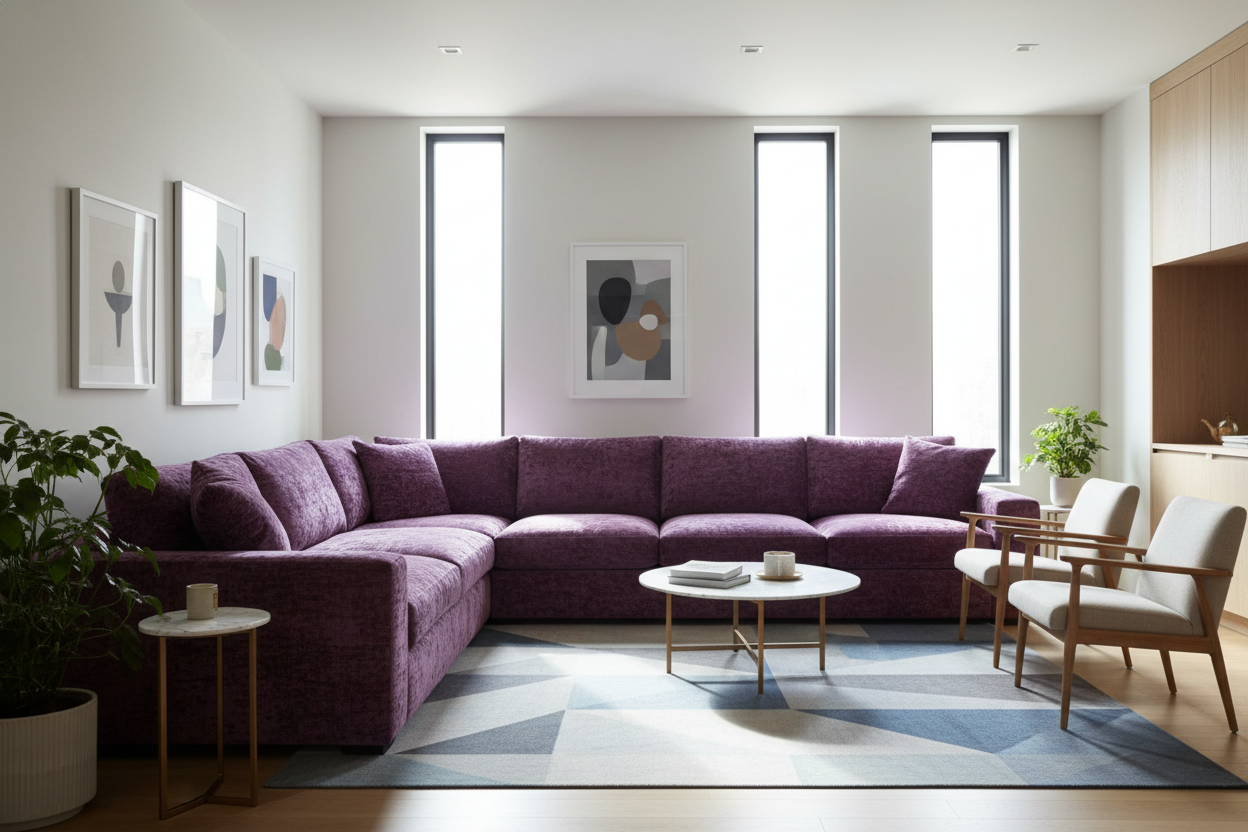
There is nothing quite as frustrating as walking into a beautifully architectural space only to find the flow completely disrupted by poor furniture scaling. It creates visual friction that no amount of throw pillows can fix. As the anchor of your living space, the lounge room couch dictates the circulation, the conversation, and the comfort level of your entire home. Yet, too many homeowners prioritize color over construction or trend over tactile longevity. Let’s correct that approach and treat this purchase with the design rigour it deserves.
Key Features to Look For
- Frame Construction: Look for kiln-dried hardwood frames to prevent warping over time.
- Suspension System: 8-way hand-tied springs offer superior longevity compared to basic sinuous springs.
- Fabric Durability: Check the Martindale rub count; anything over 25,000 is suitable for heavy domestic use.
- Cushion Fill: A high-density foam core wrapped in down provides the best balance of structure and slouch.
- Seat Depth: Standard depth is 21-24 inches; deeper seats require more floor space but offer a luxurious lounge feel.
Mastering Scale and Proportion
The most frequent error I see in floor plans is a disconnect between the room's volume and the furniture's visual weight. A heavy, rolled-arm lounge room sofa can suffocate a modest apartment, while a low-profile, mid-century piece might look lost in a cavernous open-plan living area.
Before committing, map out the footprint with painter's tape. Ensure you have at least 18 inches between the coffee table and the seat edge, and a minimum of 30 inches for walkways behind or around the piece. The silhouette should complement your architecture, not fight against it.
Material Selection: Beyond the Swatch
The Tactile Experience
Your choice of upholstery defines the room's atmosphere. A washed linen brings a relaxed, organic texture that softens modern lines, while a cotton velvet adds depth and light reflection, elevating the sense of luxury. However, aesthetics must meet reality. If you have pets or sunlight exposure, natural fibers like silk or unblended linen will deteriorate. In these cases, high-performance crypton fabrics or solution-dyed acrylics mimic the hand-feel of natural cloth without the fragility.
Cushion Composition
The internal architecture of your cushions determines how the piece sits six months from now. Pure down is undeniably soft but requires daily fluffing to avoid looking dishevelled. For a tailored look that retains its shape, specify a high-resiliency foam core wrapped in a feather-down blend. This gives you the initial sink-in comfort without the permanent impression marks.
Color Theory and Visual Balance
While a bold emerald or terra cotta couch can serve as a stunning focal point, it locks you into a specific palette for the next decade. From a design investment perspective, I often advise clients to choose a neutral, textural base—oatmeal, charcoal, or taupe—and introduce color through occasional chairs, rugs, and art. This allows the room to evolve seasonally without necessitating a major furniture replacement.
Lessons from My Own Projects
I learned a hard lesson early in my career regarding delivery logistics versus design dreams. I once specified a stunning, single-frame Italian deep-seat sofa for a client's second-floor apartment. We measured the living room perfectly, but we forgot to account for the pivot radius of the stairwell.
The couch physically would not fit around the banister. We had to hire a crane to hoist it through the balcony doors—a costly oversight that ate into the project's styling budget. Now, I carry a laser measure everywhere, and I don't just measure the room; I measure the diagonal clearance of every doorway and hallway leading to it. Also, a note on chenille fabrics: I recently used a gorgeous textured chenille for a family room, and within weeks, the client's cat had pulled loops simply by walking across it. If you have claws in the house, stick to tight weaves or velvet.
Conclusion
Selecting the right seating is about balancing architectural constraints with human comfort. When you prioritize the frame quality and select a fabric that aligns with your actual lifestyle, your investment pays dividends in daily comfort. Take your time, measure twice, and choose a silhouette that speaks to your personal style.
Frequently Asked Questions
How do I know if a couch is too big for my room?
A couch is generally too big if it obstructs traffic flow or touches other furniture. Visually, it should occupy roughly two-thirds of the wall it sits against. If it blocks a window view or forces you to shimmy sideways to get past it, the scale is too large.
What is the difference between a lounge room sofa and a couch?
historically, "couch" implies a piece designed for lying down or sleeping (from the French "coucher"), while "sofa" suggests a more formal bench with arms for sitting. In modern interior design, the terms are used interchangeably, though "sofa" often connotes a slightly more formal structure.
How long should a quality couch last?
A well-made piece with a kiln-dried hardwood frame and high-quality suspension should last between 15 to 25 years. The fabric may need replacing or cleaning after 7 to 10 years, but the structural integrity should remain sound.


Dejar un comentario
Este sitio está protegido por hCaptcha y se aplican la Política de privacidad de hCaptcha y los Términos del servicio.