










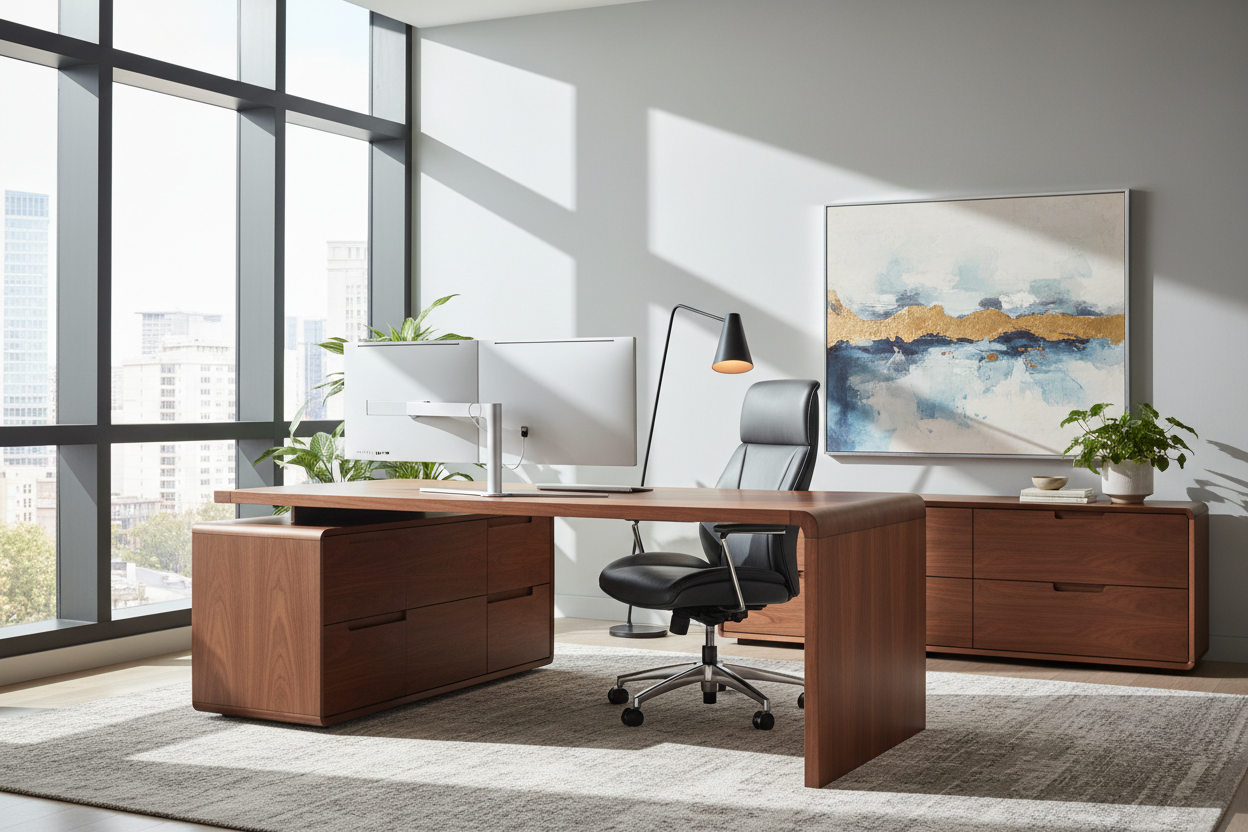
We have all been there: staring at a wobbly desk leg after just six months of use, or nursing lower back pain because that "sleek" chair lacked structural integrity. As an interior designer, I see this constantly. Clients often prioritize immediate aesthetics over engineering, only to regret it when the laminate starts peeling. Investing in high-quality office furniture is not merely about luxury; it is about securing your physical health and ensuring your workspace endures the daily grind without losing its visual appeal.
Key Features of Investment-Grade Furniture
If you are scanning options online or in a showroom, look for these specific indicators of craftsmanship to determine if a piece is truly built to last:
- Joinery Techniques: Look for dovetail or mortise-and-tenon joints rather than staples and glue.
- Material Density: Solid hardwoods (walnut, oak) or high-grade plywood offer superior longevity compared to low-density particle board.
- Hardware Quality: Drawers should glide on ball-bearing slides with full extension; hinges should be soft-close and adjustable.
- Commercial-Grade Fabrics: For seating, look for high rub counts (Wyzenbeek rating) to ensure the upholstery won't pill or tear.
- Weight & Stability: Quality pieces have significant heft; a desk should not shudder when you type.
Defining Material Excellence
When sourcing quality home office furniture, the core material dictates the lifespan of the piece. In my design practice, I often have to demystify the difference between "solid wood" and "veneer."
High-end veneer is not a dirty word. In fact, premium architectural veneer over a stable core often resists warping better than solid wood in fluctuating humidity. However, you must avoid paper-thin laminates that bubble at the first sign of a coffee spill. For good quality office furniture, I recommend kiln-dried hardwoods which prevent splitting. If you prefer metal, ensure it is powder-coated rather than spray-painted to resist chipping and corrosion over time.
The Ergonomic Equation
Beyond the Silhouette
A chair might look sculptural, but if it cuts off circulation at the back of your knees, it is a design failure. High-quality home office furniture marries form with rigorous function. When selecting seating, look for "synchro-tilt" mechanisms where the seat and backrest move in a synchronized ratio, keeping your feet flat on the floor while you recline. The foam density matters immensely; high-resilience (HR) foam retains its shape for years, whereas cheaper fillers flatten within months.
Visual Weight and Residential Blending
The challenge with quality office furniture for the home is preventing your study from looking like a corporate cubicle. We want the durability of commercial furniture with the soul of residential decor.
Focus on pieces that feature "finished backs." A high-quality desk should look impeccable from all 360 degrees, allowing you to float it in the center of the room rather than pushing it against a wall. This layout command authority and improves the room's flow. Look for warm textures—leathers that patina, woods with visible grain, and matte metals—to soften the clinical feel of technology.
Lessons from My Own Projects: The "Knuckle Test"
I want to share a raw detail from a project I managed last year that highlights the nuance of buying. I was sourcing a desk for a client who fell in love with a glossy, Italian lacquer piece online. It looked stunning in the render.
However, when we visited the showroom, I performed my standard "knuckle test"—simply rapping my knuckles hard against the desktop. It sounded hollow and tinny, a dead giveaway of a honeycomb cardboard core disguised by a pretty finish. I steered the client toward a less flashy, solid white oak desk instead.
Six months later, I visited for a follow-up. The client admitted he had spilled an entire mug of hot tea on the desk a week prior. Because we chose a piece with a marine-grade seal and solid timber, there was zero damage. Had we gone with the hollow lacquer desk, the heat and moisture likely would have clouded the finish or swelled the seams. Real quality is often silent until disaster strikes—that is when you realize what you paid for.
Elevate Your Workflow
Curating a workspace is an investment in your own output. By prioritizing superior joinery, ergonomic engineering, and authentic materials, you create an environment that respects your time and your body. Don't settle for the disposable; choose pieces that will age gracefully alongside your career.
Frequently Asked Questions
How do I maintain a solid wood office desk?
Dust frequently with a microfiber cloth and avoid silicone-based polishes which build up over time. For high-quality oil finishes, you may need to re-oil the wood once a year to keep it nourished and water-resistant.
Is custom furniture worth the extra cost over retail?
If you have a difficult room layout (e.g., alcoves or sloped ceilings), custom is often the only way to maximize space efficiently. However, many high-end retail brands now offer modular systems that mimic the custom look without the bespoke lead time.
What is the ideal desk depth for a home office?
For a functional setup, aim for a depth of at least 30 inches. This provides enough distance between your eyes and the monitor while leaving ample room for a keyboard, notebook, and task lamp without clutter.

Dejar un comentario
Este sitio está protegido por hCaptcha y se aplican la Política de privacidad de hCaptcha y los Términos del servicio.