










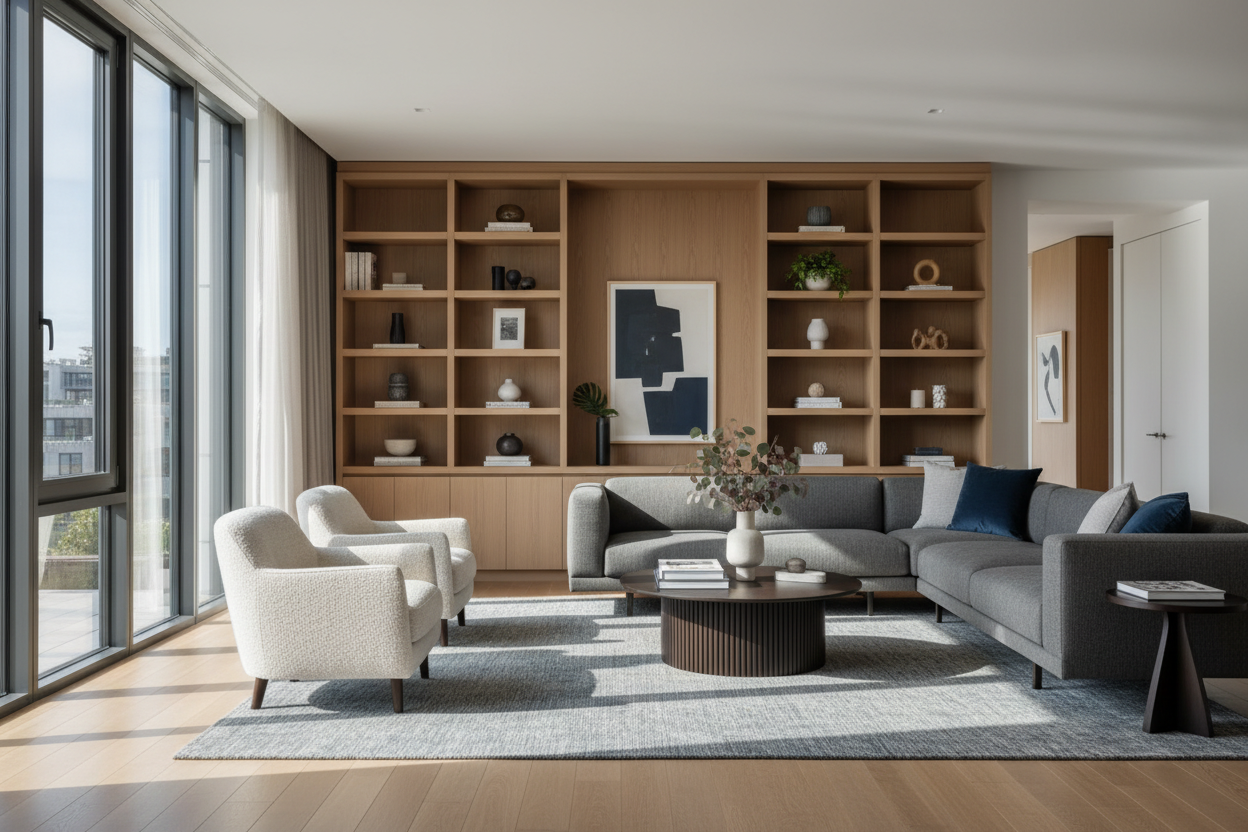
You walk into a showroom, sink into a cloud-like sectional, and immediately visualize it in your living room. It feels perfect. Yet, six months later, the cushions are sagging, the fabric is pilling, and the piece feels disproportionately large for the room. This is the most common grievance I hear from clients who purchase on impulse rather than calculation. Selecting the right sofa for furniture layouts is not just about initial comfort; it is about understanding structural integrity, scale, and how the piece interacts with the surrounding design elements.
Key Features to Look For
- Frame Construction: Always look for kiln-dried hardwood frames rather than particleboard or soft pine to prevent warping.
- Suspension System: Eight-way hand-tied springs are the gold standard for longevity, though high-quality sinuous springs are acceptable for modern profiles.
- Cushion Fill: A high-resiliency foam core wrapped in down provides the best balance of structure and softness.
- Fabric Durability: Check the "double rub" count; anything over 30,000 is suitable for heavy domestic use.
- Scale & Depth: Ensure the seat depth complements your height and the sofa's length doesn't overcrowd traffic flow.
Analyzing Frame Integrity and Suspension
When curating sofa furniture for a client, I start from the inside out. The aesthetic appeal of a sofa is irrelevant if the "bones" are brittle. A true investment piece relies on joinery. I advise looking for frames that are dowelled, glued, and screwed. If a manufacturer uses staples alone, walk away.
Similarly, the suspension dictates how the sofa sits over time. While webbed suspension is common in budget-friendly options, it often lacks the tensile strength required for daily use. For a piece that retains its buoyancy for a decade, prioritize steel spring systems.
Textiles: Beyond the Aesthetic
The upholstery you choose must align with your lifestyle, not just your color palette. Natural fibers like linen and cotton offer a breathable, crisp hand-feel but are susceptible to staining and wrinkling. For high-traffic living rooms, I often steer clients toward performance velvets or crypton fabrics.
Understanding Martindale Cycles
In the industry, we measure durability via the Martindale or Wyzenbeek test. If you are looking at a delicate silk blend, it might only withstand 10,000 rubs—perfect for a formal sitting room that is rarely used, but disastrous for a family TV room.
Visual Weight and Spatial Planning
Integrating a sofa for furniture coherence requires managing "visual weight." A chesterfield sofa with rolled arms and tufting is visually heavy; it demands substantial accompanying pieces, like a solid wood coffee table, to balance it. Conversely, a mid-century modern sofa on tapered legs allows light to pass underneath, making a small room feel airier.
Pay close attention to the silhouette. If your ceilings are low, a low-profile sofa back helps maintain vertical openness. If you have a grand, double-height ceiling, a high-back sofa is necessary to prevent the furniture from looking like dollhouse miniatures.
Lessons from My Own Projects
I want to share a specific reality check from a project I handled in a pre-war apartment last year. The client was adamant about a 100% down-filled "cloud" style sofa. It looked ethereal in the catalog. I warned them about the maintenance, but they insisted on the aesthetic.
Three weeks after installation, I received a frantic call. The sofa looked "deflated" and messy. The reality of 100% down is that it requires aggressive fluffing every single time you stand up. It doesn't snap back. We ended up having to have a custom upholsterer insert a high-density foam core into the existing cushions to give it structure. The lesson? Pure comfort often sacrifices architectural shape. Unless you enjoy wrestling with your furniture daily, always opt for a foam core with a down wrap, rather than pure down.
Conclusion
Your sofa is the anchor of your living space. By looking past the showroom styling and scrutinizing the construction, mechanics, and textile grade, you ensure that your investment serves your home for years. Don't just buy a seat; curate a piece that elevates your entire interior landscape.
Frequently Asked Questions
How long should a quality sofa last?
A well-constructed sofa with a kiln-dried hardwood frame and high-quality suspension should last between 15 to 25 years. The fabric may need replacing sooner depending on usage, but the structure should hold.
What is the ideal seat depth for an average user?
Standard seat depth varies between 21 and 24 inches. If you prefer to sit upright, 21 inches is ideal. If you prefer to lounge or tuck your legs up, look for a depth of 23 inches or more.
Can I mix a modern sofa with traditional furniture?
Absolutely. This creates a transitional style. The key is to find a common thread, such as a similar color palette or wood finish, to bridge the gap between the modern silhouette of the sofa and the traditional antiques.


Dejar un comentario
Este sitio está protegido por hCaptcha y se aplican la Política de privacidad de hCaptcha y los Términos del servicio.