










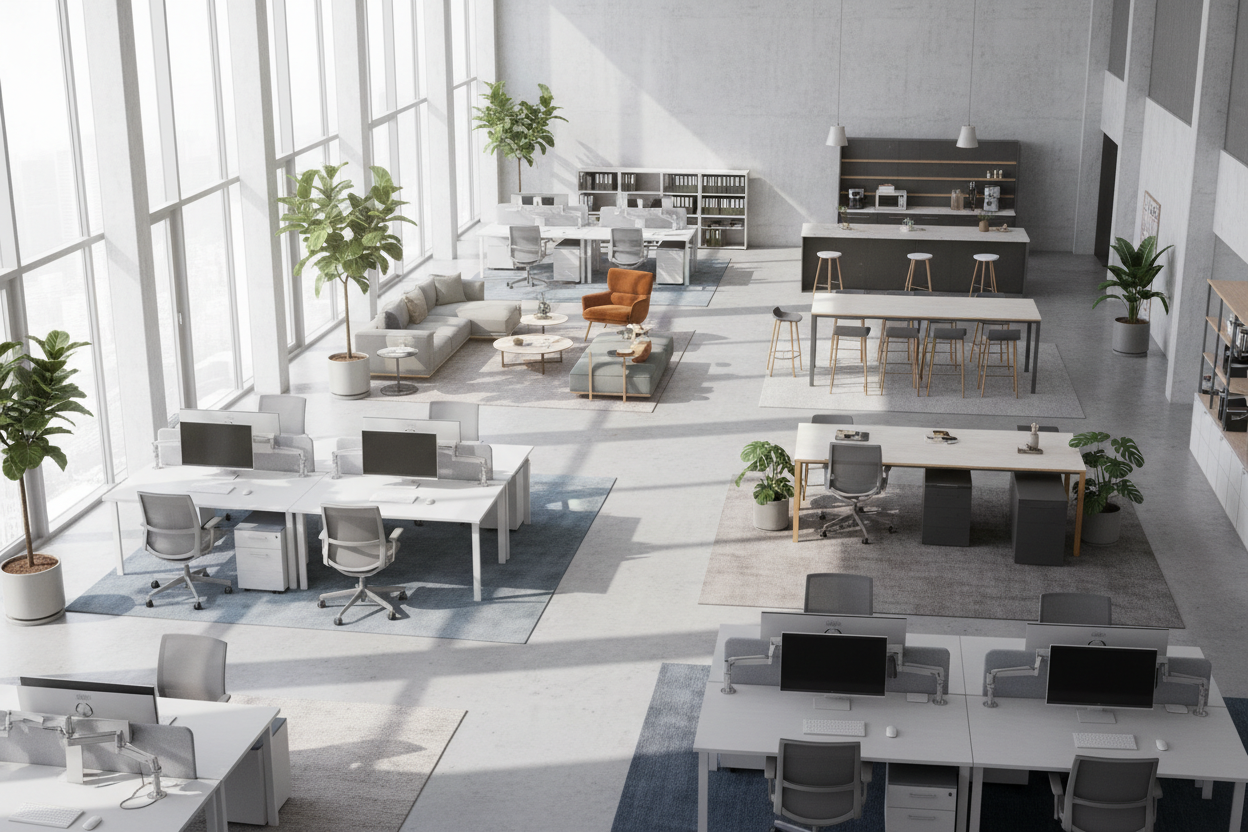
We often treat the workspace as a single, static room, assuming a desk and a chair are enough to create a functional environment. This is a design oversight. Whether you are outfitting a dedicated room in your home or refining a boutique corporate suite, the most effective interiors treat spaces in office layouts as dynamic ecosystems. The goal isn't just to fill a room with furniture; it is to curate zones that respond to different cognitive modes—deep focus, collaboration, and restoration.
Key Features for High-Functioning Office Zones
- Acoustic Control: Look for materials with high NRC (Noise Reduction Coefficient) ratings, such as wool felt panels or heavy drapery, to dampen sound.
- Lighting Layers: Ensure a mix of ambient (overhead), task (desk-level), and accent lighting to reduce eye strain.
- Ergonomic Flow: Maintain at least 36 to 48 inches of clearance behind desks for comfortable movement.
- Material Tactility: Balance cold surfaces (glass, metal) with warm textures (wood grain, leather) to prevent a sterile atmosphere.
Defining Your Office Work Areas
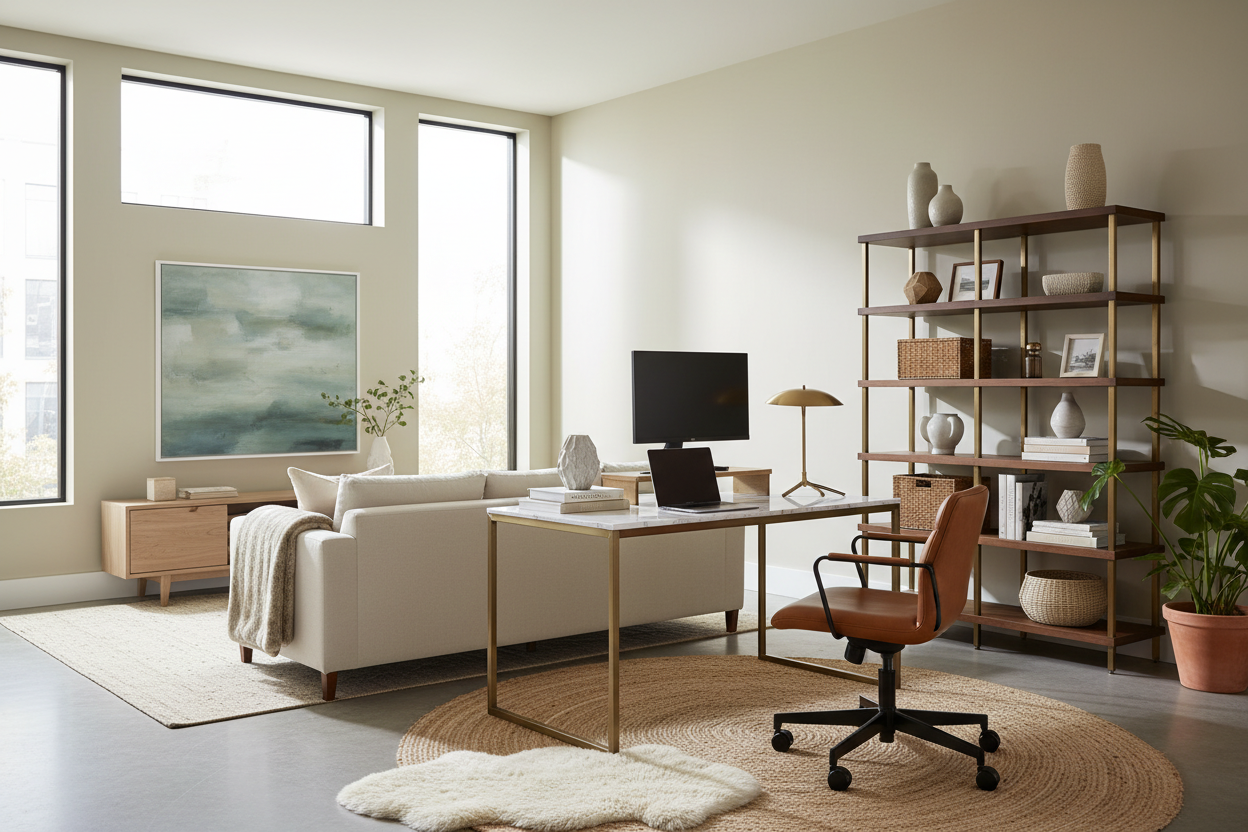
The first step in professional space planning is identifying the specific functions required. In a well-designed layout, office work areas should be distinct from reference or storage zones. If you are working with a limited footprint, visual zoning is your best tool. Use an area rug to anchor the desk, creating a psychological boundary that signals "focus time."
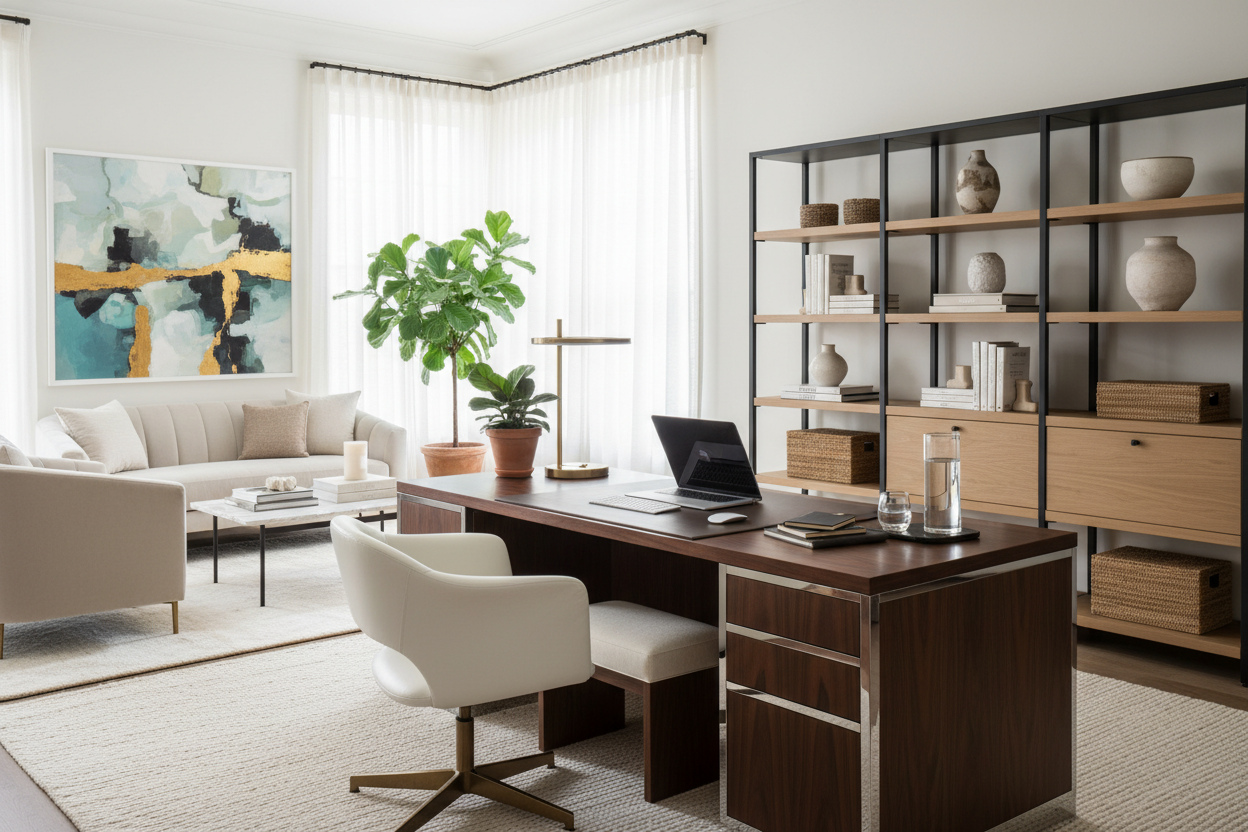
For the primary workstation, the position of the desk is paramount. Avoid the "cubicle facing the wall" setup if possible. Positioning the desk to face the door (the command position) or perpendicular to a window allows for better light control and a sense of authority within the room.
Materiality: Durability vs. Aesthetics
When selecting furniture for your office work place, the finish dictates longevity. While solid wood offers an undeniable sense of luxury and permanence, it reacts to humidity and can ring easily if you aren't diligent with coasters. For high-traffic surfaces, I often recommend high-pressure laminates (HPL) or engineered wood veneers with a matte polyurethane finish. These mimic the warmth of timber but offer superior resistance to scratches and heat from electronics.
Textural Balance
An office heavy on metal and glass feels clinical. To counter this, introduce organic elements. A leather desk blotter not only protects the surface but provides a better tactile experience for writing than a hard laminate. Similarly, upholstered task chairs should prioritize breathable fabrics or mesh over cheap bonded leather, which tends to peel after a year of daily use.
Navigating the Common Office Space
If your design includes a common office space or a breakout area (even a reading nook in a home office), the furniture selection must shift from rigid ergonomics to relaxed support. Here, a lounge chair with a lower seat height and softer fill encourages a change in posture, which is vital for creative thinking.
However, keep the visual language consistent. If your main workspace features walnut and brass, the common area should echo these notes—perhaps through a walnut side table or brass lighting fixtures—to maintain a cohesive narrative throughout the room.
Lessons from My Own Projects
I learned the hard way about surface finishes during a project for a client who wanted a sleek, ultra-modern aesthetic. I specified a stunning, high-gloss black lacquer desk for their primary workspace. It looked incredible in the portfolio photos. However, two weeks later, the client called me in frustration.
The issue wasn't the build quality; it was the reality of daily use. Every single fingerprint, dust mote, and smudge was visible instantly. The client felt compelled to wipe it down five times a day, which broke their workflow. Since then, I always steer clients toward matte or satin finishes for horizontal surfaces where hands rest. It’s a small detail, but "unpolished" insights like these save you from becoming a slave to your furniture maintenance.
Conclusion
Designing effective spaces in an office is about more than buying a desk; it is about engineering an environment that respects your workflow. By prioritizing zoning, acoustic comfort, and honest materials, you elevate the space from a simple room to a productivity engine. Invest in pieces that feel good to the touch and support your body, and the aesthetic appeal will naturally follow.
Frequently Asked Questions
How much space do I need for a functional home office?
Ideally, you need a minimum of 50 to 70 square feet to accommodate a standard desk and chair with proper circulation. However, with wall-mounted shelving and compact furniture, functional nooks can be created in smaller footprints.
What is the best lighting temperature for office work areas?
Aim for a color temperature between 3500K and 4000K. This range mimics natural daylight, keeping you alert without being as harsh and clinical as the 6000K lighting often found in commercial warehouses.
Can I use a dining chair in my office work place?
For short periods, yes. However, dining chairs lack the lumbar support, seat depth adjustment, and casters necessary for long-term ergonomic health. If aesthetics are a concern, look for "resimercial" task chairs that hide ergonomic features inside fabric upholstery.

Dejar un comentario
Este sitio está protegido por hCaptcha y se aplican la Política de privacidad de hCaptcha y los Términos del servicio.