










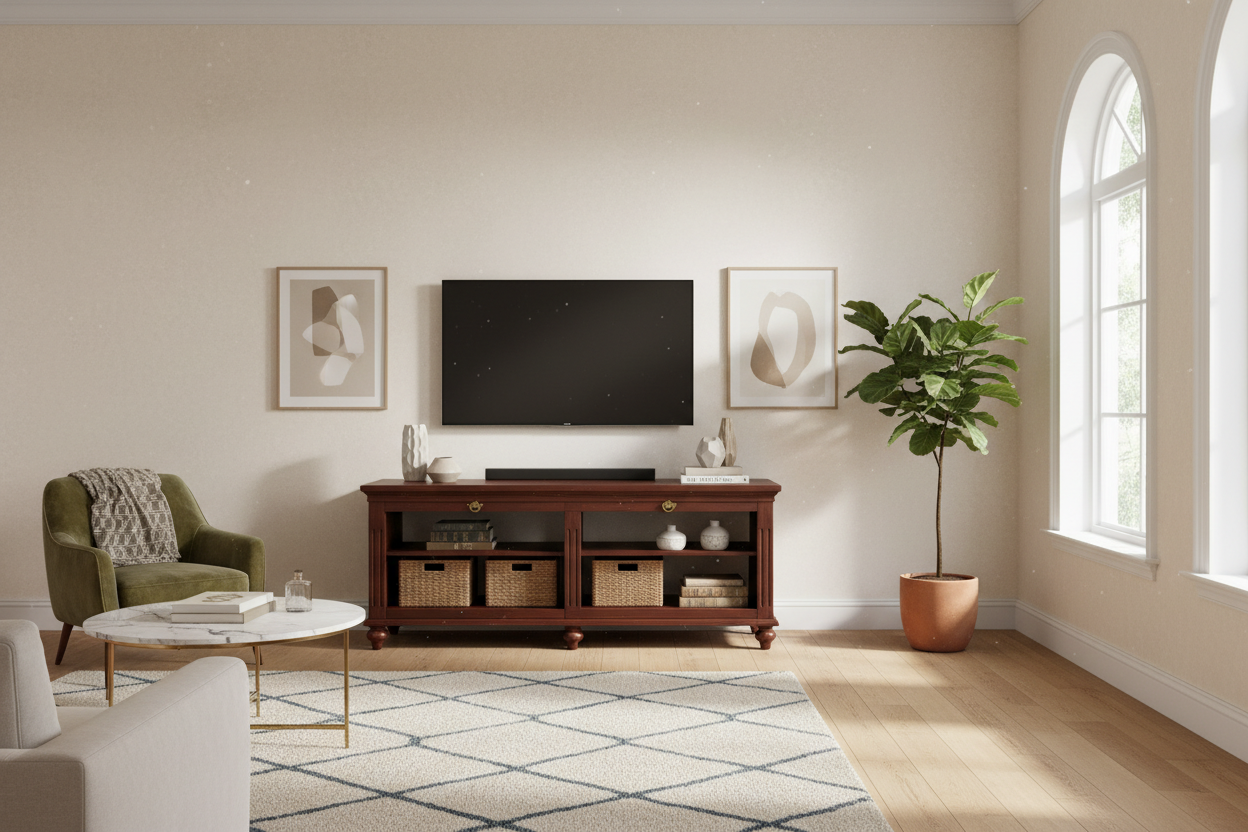
It happens all the time: you spend weeks curating the perfect living room seating, only to realize the giant black rectangle of your television completely dominates the space. A flimsy, ultra-modern glass rack often makes the room feel cold and unfinished. This is exactly where traditional television stands prove their worth. By introducing classic silhouettes, substantial hardware, and rich wood tones, you anchor the room and give the technology a proper, grounded home. In this guide, I will walk you through how to select and style a classic piece without making your living room feel like a time capsule.
Quick Decision Guide
- Scale matters: Your stand should be at least 2-3 inches wider than your TV on both sides to prevent a top-heavy look.
- Check the ventilation: Traditional designs often feature closed cabinetry; ensure there are cutouts in the back to prevent modern gaming consoles from overheating.
- Prioritize solid hardwoods: Oak, walnut, and cherry offer the best longevity, though high-quality veneers over solid plywood are an acceptable alternative.
- Hardware is the tell: Cheap brass-plated pulls give away a budget piece instantly. Look for solid, antiqued hardware or swap it out yourself.
Material and Build Quality
When you are shopping for a classic aesthetic, the materials dictate both the lifespan and the visual authenticity of the piece. You want furniture that can handle the reality of North American homes—fluctuating humidity, curious toddlers, and the occasional spilled drink.
The Truth About Traditional TV Stands Wood
Solid wood is the gold standard for traditional tv stands wood construction. Pieces crafted from mahogany, cherry, or oak carry a natural heft that anchors a room. However, do not immediately dismiss veneers. A high-grade wood veneer applied over cabinet-grade plywood is actually more resistant to warping in climate-controlled homes than solid slabs of wood. What you must avoid at all costs is printed paper laminate over particleboard, which will inevitably peel at the corners within a year.
Style and Coordination
The biggest fear clients have when looking at traditional tv consoles is that their living room will end up looking stuffy. The trick is intentional contrast. You do not need to match your coffee table, end tables, and media unit perfectly. In fact, you shouldn't.
Modernizing the Media Console Traditional Look
To keep a media console traditional in style but fresh in execution, pair it with transitional or slightly modern seating. A heavily carved, dark wood stand looks stunning opposite a clean-lined, neutral linen sofa. This creates a balanced visual weight. Pay attention to the negative space around the unit, too. Avoid flanking a heavy stand with equally heavy, tall bookcases unless you have soaring ceilings, or the room will quickly feel claustrophobic.
Space Planning and Proportions
Even the most beautifully crafted traditional tv stands will look awkward if the scale is wrong for your room. Most North American suburban living rooms can handle substantial furniture, but apartments require a more delicate approach.
The Clearance Rules
Always leave a minimum of 36 inches of walkway clearance between your seating and the television stand. For the viewing height, the center of your television screen should ideally sit at eye level when you are seated on your sofa. Because traditional cabinets often sit a bit higher than low-profile modern units (typically 28 to 32 inches high), they are excellent for spaces where the seating is slightly firmer and more upright.
Lessons from My Own Projects
Early in my career, I sourced a magnificent, heavily distressed walnut television stand for a client's 1920s Tudor revival home. In the showroom, the piece was breathtaking. But once it was delivered to their living room, which featured dark espresso hardwood floors, the entire space swallowed the light. The room felt like a cave.
I learned the hard way that a dark, traditional piece needs breathing room and contrast. We ended up having to layer a massive, light cream wool rug underneath it just to separate the dark wood of the stand from the dark floor. Additionally, the beautiful solid wood doors blocked the infrared signals for their media boxes, forcing us to install an aftermarket IR repeater. Always check if the doors have glass panels or if your devices use Bluetooth instead of infrared before committing to solid cabinetry.
Frequently Asked Questions
How much wider should traditional tv stands be than the television?
Your stand should be at least two to three inches wider than your TV on each side. Remember that TVs are measured diagonally, so a 65-inch TV is about 57 inches wide. You would want a stand that is at least 61 to 63 inches wide to maintain proper proportion.
Can I mix a modern television with a traditional stand?
Absolutely. The sleek, minimalist lines of a modern flat-screen create a beautiful contrast against the rich wood tones and detailed molding of a traditional stand. Just ensure the cables are properly hidden so the technology does not detract from the craftsmanship.
How do I clean and maintain a wood media console?
Dust weekly with a dry, soft microfiber cloth. Avoid aerosol dusting sprays that contain silicone, as they can build up over time and dull the finish. Twice a year, use a high-quality paste wax or a specialized wood polish to protect the surface from drying out.


Dejar un comentario
Este sitio está protegido por hCaptcha y se aplican la Política de privacidad de hCaptcha y los Términos del servicio.