










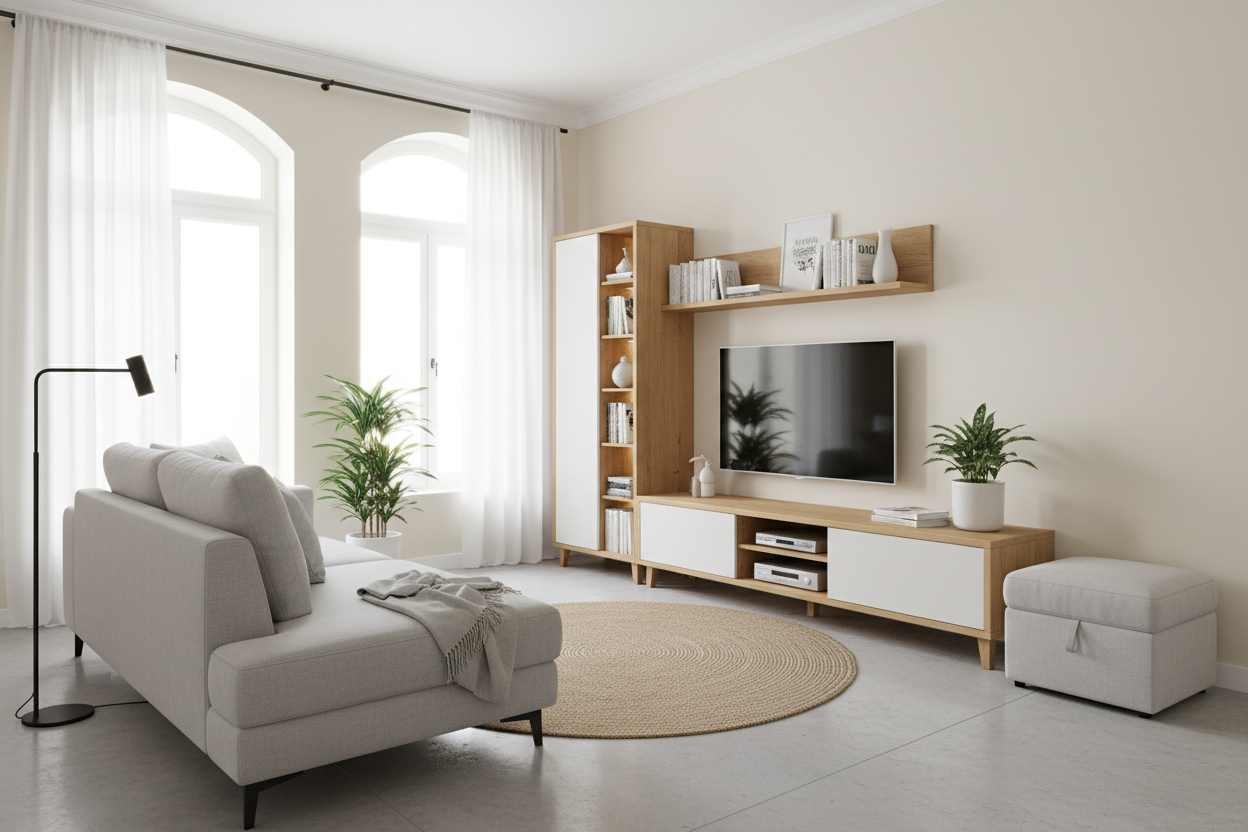
We've all seen it: a beautiful, cozy living room completely hijacked by a bulky, oversized media console. When square footage is tight, picking the wrong furniture can make your room feel like a cramped electronics store rather than a relaxing retreat. Finding the right tv stand for small space layouts requires a delicate balance. You need a piece that grounds the television, hides the inevitable spaghetti-tangle of cords, and doesn't eat up your precious walking paths.
By the end of this guide, you will know exactly how to scale, style, and select a piece that makes your living area feel intentionally designed and noticeably larger.
Quick Decision Guide
- Keep depth under 16 inches: Standard consoles are 18-20 inches deep. Shaving off just a few inches drastically improves traffic flow in tight rooms.
- Follow the 2-inch rule: Your small simple tv stand should be at least two inches wider than your TV on both sides to prevent a top-heavy, precarious look.
- Opt for closed storage: Open shelving creates visual clutter. Slatted or solid doors hide cable boxes, gaming consoles, and routers effectively.
- Leverage negative space: Pieces with taller legs (at least 6 inches off the floor) expose more flooring underneath, tricking the eye into perceiving a larger room footprint.
Scaling a Media Console for Small Spaces
In North American apartments and older suburban homes, the living room layout often forces the TV into an awkward corner or a narrow walkway. Proportion is everything here. A small living room tv stand needs to hold its own against the size of the television without swallowing the floor plan.
The Width and Depth Formula
When shopping for a tv stand for small room setups, measure your TV's actual physical width, not just the diagonal screen size. If you have a 50-inch TV (which is roughly 44 inches wide), your stand should be at least 48 to 50 inches wide. More importantly, pay attention to depth. A standard entertainment center for small spaces should hover around 14 to 16 inches deep. Anything deeper encroaches on your clearance—you should always leave at least 30 to 36 inches of walking space between the console and your coffee table or sofa.
Designing a Small Living Room Entertainment Center
Choosing a small space entertainment center isn't just about tape measures; it is about managing visual weight. Dark, chunky wood blocks sitting flush on the floor will anchor the room down heavily. Instead, we want to create breathing room.
Floating vs. Legged Designs
A wall-mounted small modern entertainment center is an excellent trick for tight footprints. By removing the legs entirely, you free up the floor space underneath. If wall-mounting isn't an option, look for a small apartment tv stand with tapered mid-century legs or a slim metal frame. Lifting the piece off the ground allows light to pass underneath, making the room feel instantly more expansive.
Material Matters
Solid wood is durable, but in a tight area, a heavy oak piece can feel oppressive. Consider lighter materials or mixed media. Fluted wood details, cane webbing, or perforated metal doors are fantastic for an entertainment center small space setup. They allow infrared signals from remotes to pass through while keeping the messy tech out of sight, all while adding texture without bulk.
Designer's Honest Take: Lessons from My Own Projects
Early in my career, I designed a compact condo in downtown Toronto. The client wanted a sleek, minimalist vibe, so I sourced a beautiful, low-profile small room tv stand made of matte black engineered wood. It looked incredible in the initial renderings.
The reality? It was a nightmare to live with. First, the matte black finish showed every single speck of dust and every fingerprint. Because it was so low to the ground, the client's robotic vacuum kept getting wedged underneath it. Worst of all, the interior compartments were just half an inch too shallow for their specific AV receiver. We had to cut out the entire back panel just to make the cords fit. That project taught me a hard lesson: never sacrifice internal dimensions for a slim exterior silhouette. Always check the internal depth, and if you are using small furniture stands, make sure the back panel has adequate ventilation and cord routing.
Frequently Asked Questions
How do I hide cords on a small simple tv stand?
Use adhesive cable clips along the back edge of the console to route wires down the legs. If your stand has an open back, use a paintable cord cover that matches your wall color to run cables straight down from the TV to the outlets.
Can I use a dresser as a tv stand for small room?
Yes, but with caveats. Dressers are typically taller (around 30-36 inches), which means your TV might sit above the ideal ergonomic viewing height. If you go this route, ensure your sofa seating is upright enough so you aren't straining your neck.
Is a corner small space entertainment center outdated?
Not necessarily. While the bulky 1990s oak corner units are out, a modern, angled media console for small spaces can be incredibly efficient. It utilizes dead space and often allows for deeper storage in the back corner without protruding into the room's main footprint.

Dejar un comentario
Este sitio está protegido por hCaptcha y se aplican la Política de privacidad de hCaptcha y los Términos del servicio.