










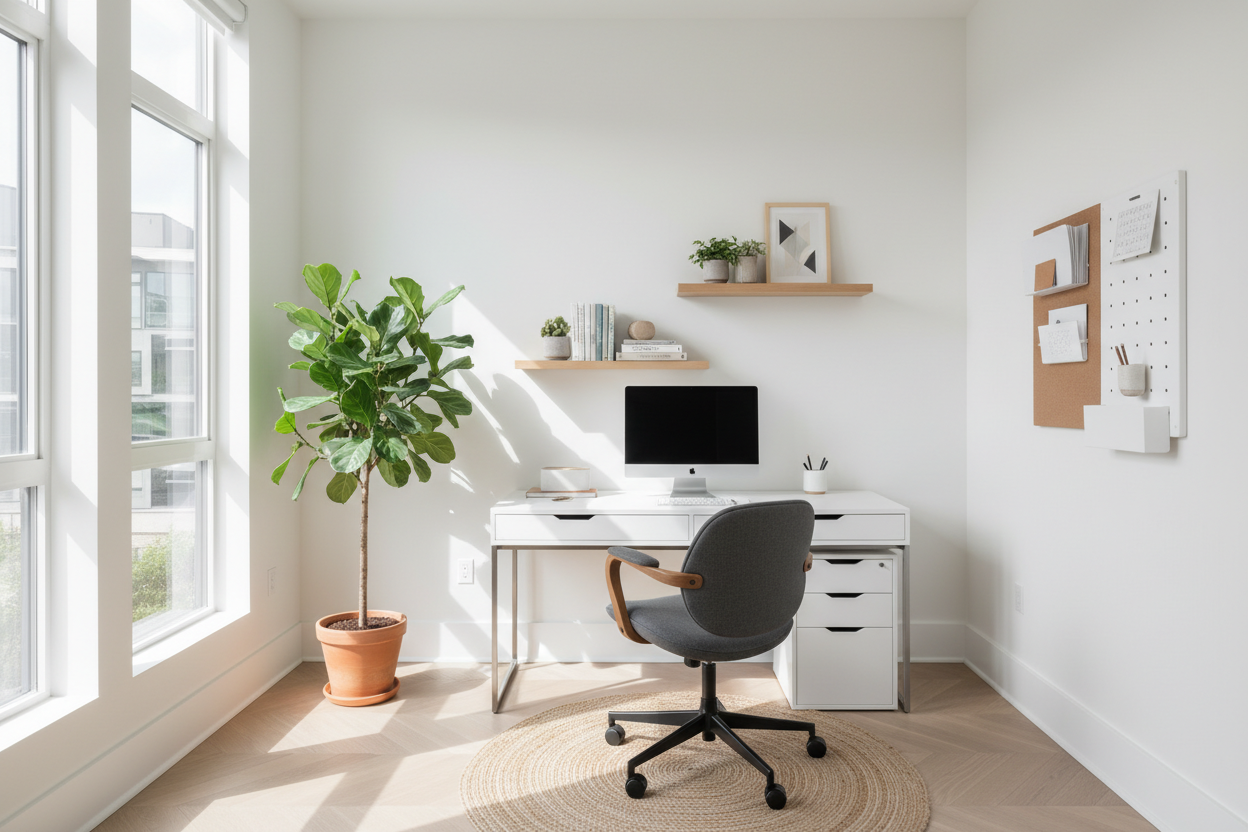
There is a pervasive myth in interior design that limited square footage equates to limited productivity. I see this constantly with clients who assume their compact rooms are destined to feel cramped and chaotic. The truth is, the most impactful design ideas for small office spaces are born from restriction, forcing us to be intentional with every square inch. A well-executed compact workspace does not just fit a desk; it curates a flow that enhances focus and minimizes visual noise.
Core Elements of Compact Design
Before purchasing furniture or choosing paint swatches, review these foundational pillars. This checklist ensures your small office designs remain functional rather than just decorative.
- Scale and Proportion: Furniture must fit the room's volume, not just the floor plan. Low-profile pieces make ceilings feel higher.
- Vertical Utilization: Floor space is premium; wall space is abundant. Look for floor-to-ceiling shelving options.
- Material Transparency: Glass, acrylic, or fine wireframes allow light to pass through, reducing visual bulk.
- Lighting Layering: A single overhead light creates shadows and shrinks the room. Combine task, ambient, and accent lighting.
- Ergonomic Flow: Ensure there is at least 30-36 inches of clearance behind your chair for movement.
Strategic Space Planning and Layouts
The most common error in office design in small space scenarios is pushing every piece of furniture against the walls. While this clears the center, it often creates a "waiting room" effect that lacks energy. Instead, consider the "Command Position." If space permits, float your desk perpendicular to the wall or face the door. This layout empowers the user and allows for better cable management behind the desk, a crucial aspect of simple office designs.
Zoning Your Workspace
Even in a 60-square-foot room, zoning is possible. Use an area rug to define the "work zone" versus the "reference zone" (shelving). For contemporary small office design, I often recommend L-shaped layouts utilizing a corner. This maximizes surface area without encroaching on the central circulation path, creating a highly efficient cockpit for work.
Material Selection and Visual Weight
When curating interior design small office ideas, the visual weight of your furniture is just as important as the physical dimensions. A solid mahogany desk with closed drawers feels significantly heavier than a walnut veneer desk with open metal legs, even if they share the exact same measurements.
For small office remodel ideas, I lean towards materials that reflect light. High-gloss lacquers or polished metals bounce light around the room, expanding the perceived space. However, be wary of solid wood in dark stains for small room office design; unless you have abundant natural light, these materials can absorb the room's energy, making it feel cave-like.
The Ergonomic Compromise
Never sacrifice your spine for style. One of the great small office design challenges is finding an ergonomic chair that doesn't dominate the room. Avoid high-back executive leather chairs; they are visually suffocating in tight quarters. Instead, opt for mid-back mesh chairs or upholstered pieces with slim profiles. They provide necessary lumbar support while maintaining a breathable aesthetic suitable for modern small office design ideas.
Lighting and Color Coordination
Lighting is the silent architect of small office workspace ideas. Relying solely on a ceiling fixture creates harsh shadows that close the walls in. Introduce a slim floor lamp or wall sconces to wash the walls with light, pushing them outward visually.
regarding color, monochromatic palettes work best for small office building ideas or home setups. Painting the shelving the same color as the walls creates a built-in look that disappears, reducing visual clutter. If you crave color, apply it to the ceiling or the floor, keeping the eye-level walls neutral to maintain a sense of airiness.
My Personal Take on Design Ideas for Small Office
I learned a hard lesson early in my career regarding "floating" desks in small spaces. I designed a custom wall-mounted desk for a client's small office at work—a tight 5x7 nook. It looked sleek and architectural in the renderings. However, I failed to account for the depth of the monitor stand and the client's preferred viewing distance.
Once installed, the client felt like their nose was pressed against the screen because the floating desk depth (20 inches) was too shallow for a large monitor setup. We had to retrofit a keyboard tray to pull the user back, which ruined the clean lines we aimed for. The lesson? In small space office design, always measure your technology first. The footprint of your hardware dictates the furniture, not the other way around. Now, I always insist on a minimum 24-inch depth for primary work surfaces, regardless of how small the room is.
Conclusion
Transforming a compact area requires a shift in perspective. By prioritizing vertical storage, selecting visually light materials, and respecting ergonomic clearances, you can turn a cramped corner into a sanctuary of efficiency. The best small office room design ideas are those that balance necessary function with breathable form.
Frequently Asked Questions
What is the best color for a small office to make it look bigger?
Off-whites, soft greys, and "greige" are standard, but cool colors like soft sage green or sky blue actually recede visually, making walls appear further away. Avoid warm, dark colors like red or brown, which advance and make the space feel smaller.
How do I hide cables in a small office with an open desk?
Since open-leg desks are best for small spaces, cable management is critical. Use adhesive cable clips along the back legs of the desk and mount a power strip to the underside of the desktop. A chaotic web of wires will instantly make a small room feel messy.
Can I use a standing desk in a small office?
Absolutely. In fact, standing desks can be beneficial for small office space design ideas because they often lack bulky storage drawers. Look for a single-column pneumatic riser or a compact motorized frame that fits within your width constraints.


Dejar un comentario
Este sitio está protegido por hCaptcha y se aplican la Política de privacidad de hCaptcha y los Términos del servicio.