










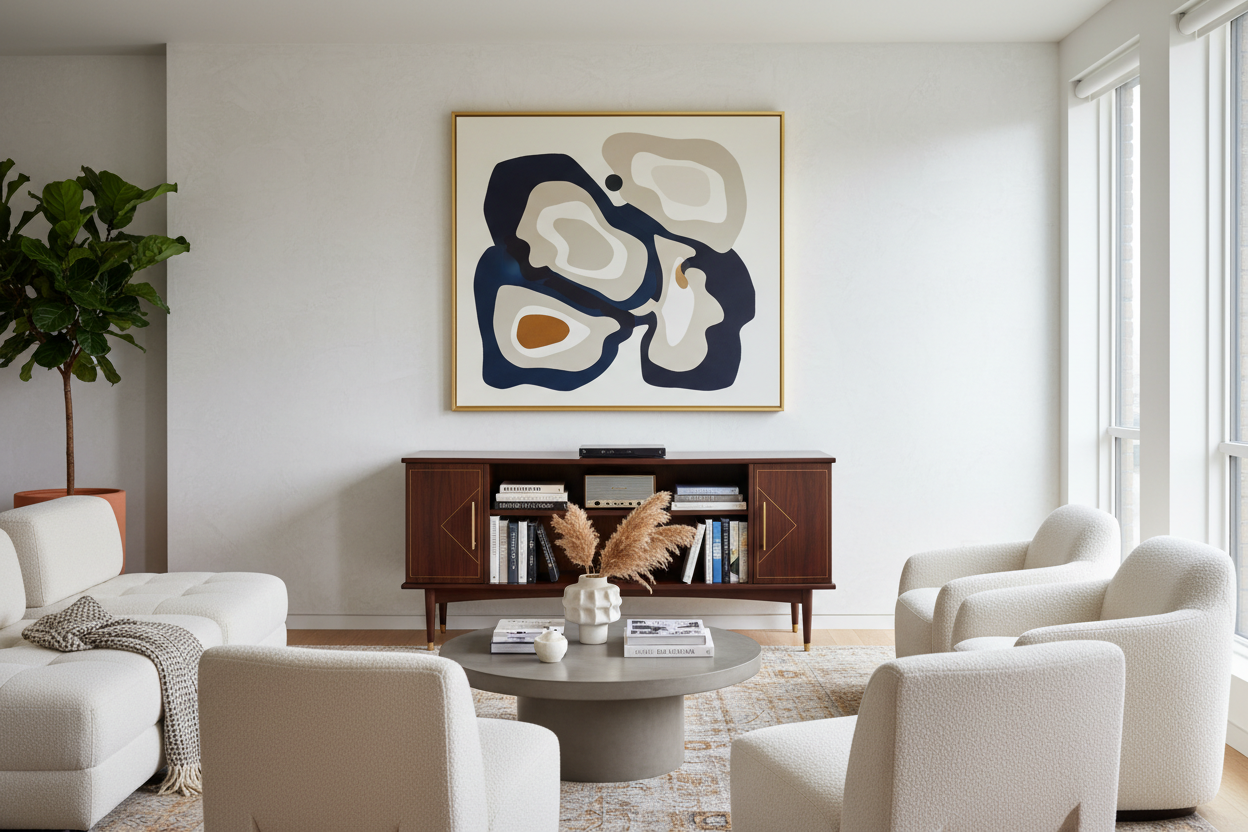
We have all faced the living room layout dilemma: the television is a giant black rectangle that demands attention, but you do not want your furniture to feel like an electronics showroom. Often, clients buy a sleek, modern stand online, only to realize it is made of flimsy particleboard that bows under the weight of their books and soundbars.
This is exactly why a vintage tv console is one of my favorite pieces to source for North American residential projects. It grounds the room with solid construction, adds undeniable character, and softens the harsh technology of modern screens. But bringing an older piece into a contemporary living room requires a bit of strategy. Here is what you need to know before you start hunting for that perfect piece.
Quick Decision Guide
- Check internal depth: Older cabinets were not built for modern AV receivers. Ensure you have at least 16 to 18 inches of internal clearance if you plan to house heavy electronics.
- Look for solid wood or high-quality veneer: Mid-century pieces often use excellent wood veneers over solid cores. Avoid anything with peeling edges or swollen joints, which indicates water damage.
- Plan for ventilation: Old wood console tv cabinets run hot when filled with modern gaming systems. You will likely need to drill ventilation holes in the backboard.
- Mind the visual weight: A heavy, dark antique needs to be balanced with lighter textiles, rugs, or modern artwork to keep the room from feeling like a museum.
Finding and Modifying Old TV Consoles
Material and Build Quality
When browsing vintage tv consoles, the build quality is usually far superior to modern flat-pack furniture, but you still need to be discerning. Solid wood is excellent, but do not dismiss veneers. Many high-end vintage media cabinets from the 1950s and 60s used beautiful walnut or teak veneers over solid wood substrates to achieve seamless grain patterns. Check the drawers for dovetail joints and ensure the legs are structurally sound. If you are looking at a tv console antique, be prepared for heavier woods like oak or mahogany, which offer incredible longevity but carry a lot of visual weight in a room.
The Cord Management Dilemma
The biggest hurdle with a retro tv console is that it was designed for record players and old tube televisions, not HDMI cables and smart home hubs. When modifying a vintage tv console cabinet or an old box tv stand, you will almost certainly need a hole saw. I recommend cutting a two-inch circular hole in the lower back panel for cords, and potentially a second hole higher up for passive heat exhaust. If you are shopping for an old tv console for sale, always check if the back panel is structurally necessary or just a thin dust cover. Thin covers are easy to modify; structural backs require a bit more carpentry skill.
Blending Retro Pieces with Modern Decor
Scale and Proportion
Scale is everything in interior design. A common mistake is pairing a massive 65-inch modern television with a delicate retro stand that is too short or too narrow. As a general rule, your vintage media console should be at least six to eight inches wider than the television itself on both sides. This creates a pleasing visual pyramid and prevents the setup from looking top-heavy. If you fall in love with a tv stand retro in style but it is slightly too short, consider mounting the TV on the wall a few inches above the console to create breathing room.
Styling a Vintage Style Media Console
To keep vintage tv console cabinets from looking like thrift store cast-offs, contrast is your best friend. Pair a warm, old wood console tv with crisp, modern coffee table books, a structural ceramic vase, or a sleek metallic lamp. This mix of eras—often called transitional design—makes the tv console vintage piece look intentional rather than accidental. Avoid placing too many small trinkets on top; let the wood grain and the silhouette of the retro media console be the focal point.
Designer's Honest Take
A few years ago, I sourced a stunning mid-century retro media cabinet for a client's suburban family room. The walnut grain was gorgeous, and the tambour sliding doors were a work of art. But I learned a hard lesson about vintage dimensions: the interior depth was just 14 inches. Modern AV receivers often need 16 to 18 inches plus room for heavy-gauge cables. We had to cut out the entire back panel and pull the piece two inches off the wall to make it work.
Additionally, those beautiful old sliding doors look great until the track gets warped by modern indoor heating systems. I spent hours rubbing beeswax into the wood tracks just to get them to open smoothly. The lesson? When hunting for a vintage tv console for sale, always bring a tape measure, check the depth, and expect to do a little retrofitting to accommodate modern life.
Frequently Asked Questions
How do I hide cords in a retro media console?
The easiest method is to use a hole saw attachment on a drill to create a pass-through in the back panel. Group your cables using velcro ties and run them down the back leg of the vintage media stand to keep them out of sight.
What size vintage media stand do I need for a 65-inch TV?
A 65-inch TV is roughly 57 inches wide. To maintain proper visual proportion, your old console tv cabinet should be at least 70 to 75 inches wide. Anything smaller will make the television look like it is overpowering the room.
Where is the best place to find an old tv console for sale?
Estate sales, local antique malls, and online marketplaces like Facebook Marketplace or Chairish are your best bets. Search for broad terms like 'credenza' or 'sideboard' rather than just 'tv stand', as many sellers list vintage tv consoles under their original dining or office designations.
Can I paint a tv console vintage piece?
If the piece is made of damaged veneer or a lower-quality wood from the 1980s, painting it can give it a fresh, modern look. However, if you find a genuine mid-century piece with high-quality walnut or teak veneer, please restore the wood rather than painting it. The natural grain is what gives a retro stand its enduring value.

Dejar un comentario
Este sitio está protegido por hCaptcha y se aplican la Política de privacidad de hCaptcha y los Términos del servicio.