










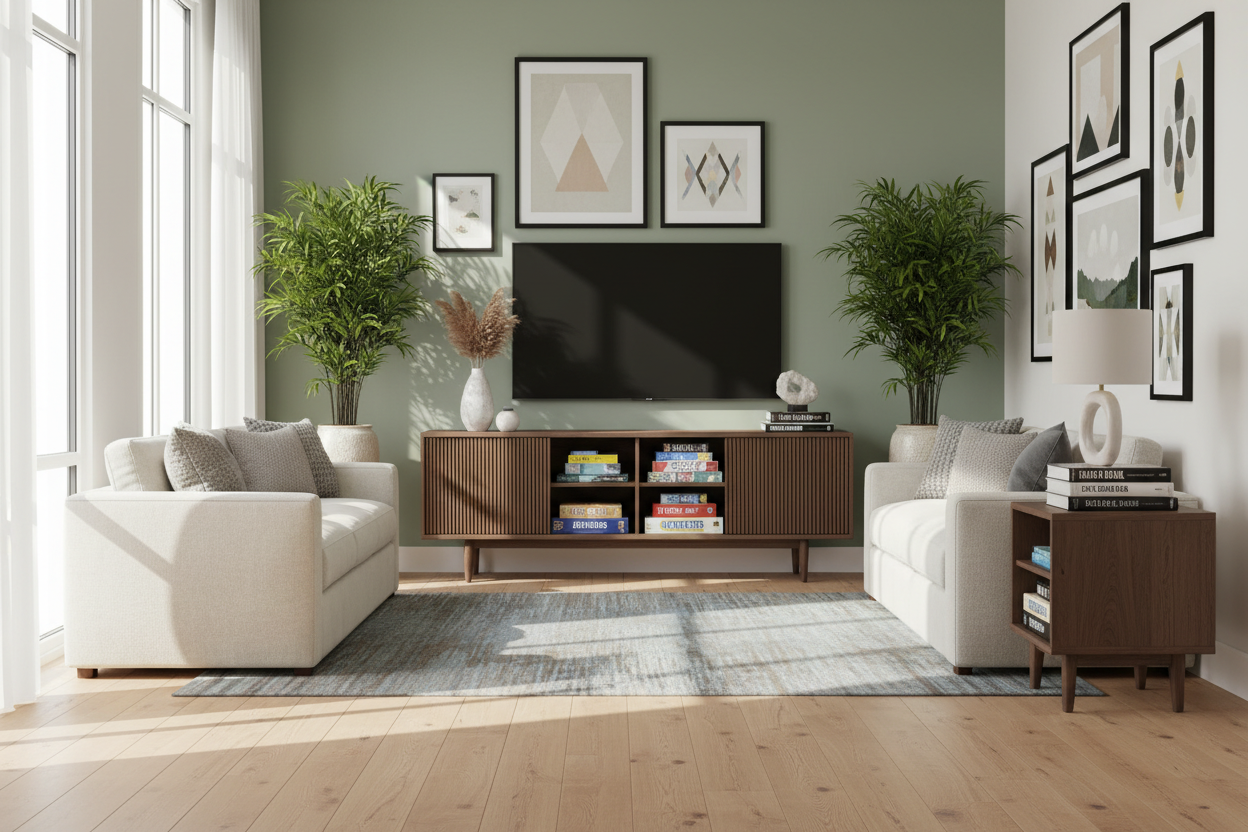
I spent three years staring at a stack of board games that looked like a structural hazard. My old media console was sleek, sure, but it was about as deep as a pizza box. Every time I tried to shove a copy of Gloomhaven inside, it just hung off the edge like a cliffhanger nobody asked for. That is when I realized a sideboard tv stand was the only way to save my sanity and my floor space.
We have all been there—trying to make 'minimalist' furniture work for a maximalist hobby. It does not work. You end up with piles on the floor and a living room that feels like a storage unit with a couch. Switching to a sideboard changed the entire energy of the room.
Quick Takeaways
- Depth is king: Sideboards usually offer 18-20 inches of depth, while standard media units often stop at 14.
- Closed doors are a miracle for hiding 'visual noise' like controllers and mismatched game boxes.
- Height matters: Measure your eye level while seated to ensure you are not looking up at an awkward angle.
- Airflow is non-negotiable if you are putting gaming consoles inside solid wood cabinets.
The Shallow Storage Trap of Standard Consoles
Most furniture companies design for the idea of a living room, not the messy reality of one. They give you these 14-inch deep shelves because they assume you only own a slim soundbar and maybe a single remote. If you have a collection of bulky board games, a massive AV receiver, or a stack of extra wool blankets, those shallow units are functionally useless.
I measured my old unit and realized I was losing the battle against clutter because the furniture physically could not hold my stuff. A standard sideboard tv cabinet, however, is built for dining rooms—meaning it is designed to hold stacks of dinner plates and serving platters. That extra four to six inches of depth is the difference between a tidy cabinet and a mess that spills onto the rug.
Why a Sideboard TV Stand Was Our Ultimate Fix
The lightbulb moment happened when I stopped looking at 'media centers' and started looking at buffets and sideboards. I spent weeks falling down a rabbit hole of TV stand and cabinet mistakes, realizing I was prioritizing labels over actual utility. A sideboard and tv unit is essentially just a heavy-duty storage chest that happens to be the perfect height for a screen.
By choosing tv sideboards with solid doors rather than glass ones, I managed to hide the neon-colored chaos of my game collection. It anchors the room. Instead of a flimsy piece of particle board that wobbles when the cat jumps on it, I have a substantial piece of furniture that makes the TV look like a deliberate design choice rather than an afterthought. Using tv stands and sideboards interchangeably is the best 'hack' for anyone who actually lives in their home.
Will a Taller Sideboard TV Cabinet Dwarf the Room?
The biggest fear people have is the 'neck strain' factor. We have been told for years that a TV should be low. But if you have a modern, deep-seated sofa, a 30-inch high sideboard cabinet tv stand actually puts the screen right at eye level. It does not dwarf the room; it fills it. It makes the wall feel more complete.
When I compared the height to a standard collection of TV stands, the difference was usually only about six to eight inches. To balance the visual weight, I styled the top of the sideboard with a few taller vases on one side of the TV. This keeps the sideboard entertainment center from looking like a giant block of wood and helps it blend into the decor. Just make sure you measure from the floor to your eyeballs while sitting down before you commit to a height.
How to Hack a Sideboard and TV Unit for Tech
If you are using sideboards for under tv setups that were originally meant for dining rooms, you have to get comfortable with a drill. Most dining furniture does not come with cord holes. I used a 2-inch hole saw bit to create clean paths for my HDMI and power cables in the back panel. It took ten minutes and saved me from 'cable spaghetti' trailing over the top.
Airflow is the other big one. Gaming consoles get hot. I left the back panel off one section of my sideboard tv unit to let the heat escape. If you are not the DIY type, you might prefer a modern TV console cabinet that comes with the cord management and ventilation already figured out. But for me, the custom drill-hole route was worth it to get that deep, furniture-grade storage.
The Glorious, Clutter-Free Aftermath
Closing those solid doors for the first time felt like a physical weight lifting off my shoulders. No more tangled cords, no more leaning towers of cardboard boxes, and no more dust bunnies congregating under a leggy, open-shelf unit. Using a sideboard with tv unit capabilities has made my living room feel like a space for adults.
It is the best of both worlds: I still get to keep my obsessive board game collection, but I do not have to look at it while I am trying to watch a movie. My living room finally looks like the Pinterest boards I have been saving for years, even if there is a messy 'junk drawer' reality hidden behind those cabinet doors.
FAQ
Can I put a heavy TV on a dining sideboard?
Usually, yes. Sideboards are built to hold heavy stacks of china and stoneware. Just check the weight rating; most solid wood or high-quality MDF sideboards can easily handle a 65-inch screen without bowing.
How do I handle the remote signal through solid doors?
You have two choices: leave the door slightly cracked while you are using the devices, or buy a cheap IR repeater kit. The repeater sits on top of the unit and passes the signal to the devices inside.
Is a sideboard too high for a bedroom TV?
Actually, it is often better for bedrooms. Since you are usually lying down, a slightly taller sideboard tv stand prevents you from having to tuck your chin to your chest to see the screen.


Dejar un comentario
Este sitio está protegido por hCaptcha y se aplican la Política de privacidad de hCaptcha y los Términos del servicio.