










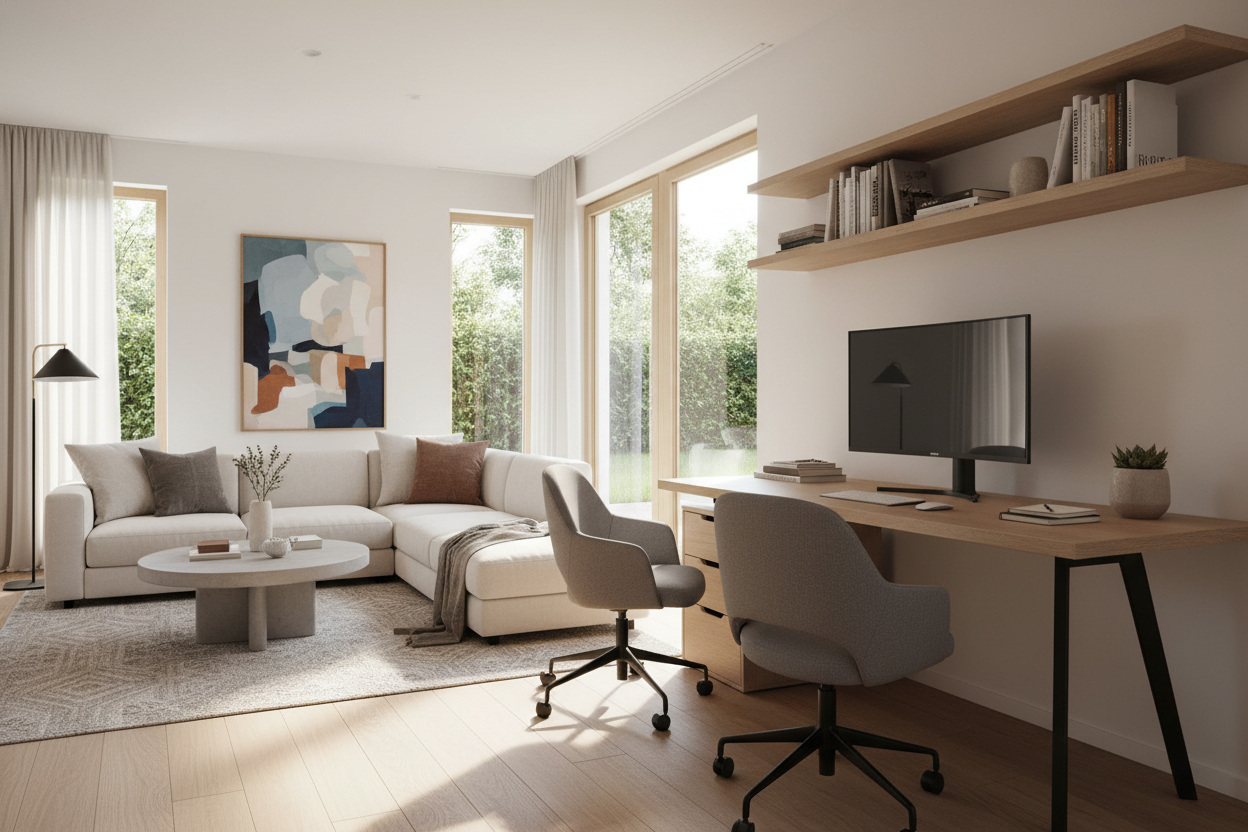
We have all been there: you drag a desk into the corner, plop down a monitor, and suddenly your relaxing lounge area feels like a corporate cubicle. Designing a functional wfh living room is one of the most common challenges my clients face today. It is incredibly frustrating when your downtime space is constantly overshadowed by the looming presence of your 9-to-5. In this guide, I will walk you through exactly how to carve out a productive workspace that seamlessly blends into your existing decor, hiding the visual clutter of work when the day is done.
Quick Decision Guide: The Living Room Office
- Float the furniture: Avoid shoving a desk flush against a wall if you have an open-concept layout; placing it behind a sofa creates a natural room divider.
- Choose closed storage: Opt for desks with drawers or nearby credenzas to hide laptops and papers at 5 PM.
- Match the wood tones: Ensure your desk materials coordinate with your coffee table and media console to maintain a cohesive silhouette.
- Ditch the gaming chair: Select an ergonomic office chair upholstered in a residential fabric (like bouclé or linen) to soften the corporate vibe.
Space Planning: Where to Put the Desk
Finding the Right Zone
When you set up home office in living room spaces, the layout dictates whether the room feels intentional or chaotic. If you are working with a typical North American suburban family room, look for architectural alcoves or the negative space behind a floating sofa. A console-style desk placed directly behind the sofa acts as a functional workspace by day and a sofa table by night.
Managing Visual Weight
A massive, heavy executive desk will anchor the room in the wrong way. Instead, opt for pieces with slimmer profiles and open legs. This allows light to pass through the furniture, keeping the visual weight light. If you must place your work from home office in living room corners, flank the desk with tall bookshelves to draw the eye upward and integrate the workspace into a larger library wall.
Style & Coordination: Hiding in Plain Sight
Desks That Don't Look Like Desks
The secret to a beautiful dual-purpose room is selecting office furniture that mimics residential pieces. A writing desk with tapered legs fits perfectly into a mid-century modern aesthetic, while a rustic secretary desk can hide a monitor behind closed doors in a farmhouse setting. Avoid anything with a modesty panel or wire-mesh baskets.
Lighting is Everything
Standard office lighting is notoriously harsh. Swap the sterile LED ring lights for a stylish, articulated brass task lamp. Layering this with your ambient living room lighting ensures the space feels warm and inviting, even during late-night spreadsheet sessions.
Lessons from My Own Projects
A few years ago, I designed a stunning minimalist workspace for my own apartment. I bought a sleek, glass-topped desk with slim architectural metal legs. It looked incredible in photos. But I learned the hard way that glass desks offer zero cable management. Within a week, the beautiful negative space beneath the desk was a tangled, dusty rat's nest of monitor cords and power strips. It completely ruined the relaxing vibe of the room.
Now, I strictly source desks with built-in cable routing or solid wood backing for my clients. If a desk does not have a drawer to stash a laptop charger, it does not make the cut. You have to design for how you actually live, not just how the room looks on day one.
Frequently Asked Questions
How do I hide my computer monitors in the living room?
The easiest method is using a secretary desk or an armoire that physically closes over your equipment. If you use an open desk, invest in a monitor arm so you can push the screen flat against the wall, or drape a textured throw over the back of your chair to distract the eye.
What size desk fits best in a living room?
For most residential setups, a desk between 42 and 48 inches wide is the sweet spot. It provides enough surface area for a laptop and a secondary monitor while maintaining the proportions of a standard console table.
Is it bad for sleep to have a desk in the living room?
While better than having a desk in the bedroom, a visible workspace in your primary relaxation area can still cause stress. The trick is to establish a strict shut-down ritual—putting away the mouse, closing the laptop, and turning off the task lamp to signal the end of the workday.


Dejar un comentario
Este sitio está protegido por hCaptcha y se aplican la Política de privacidad de hCaptcha y los Términos del servicio.