










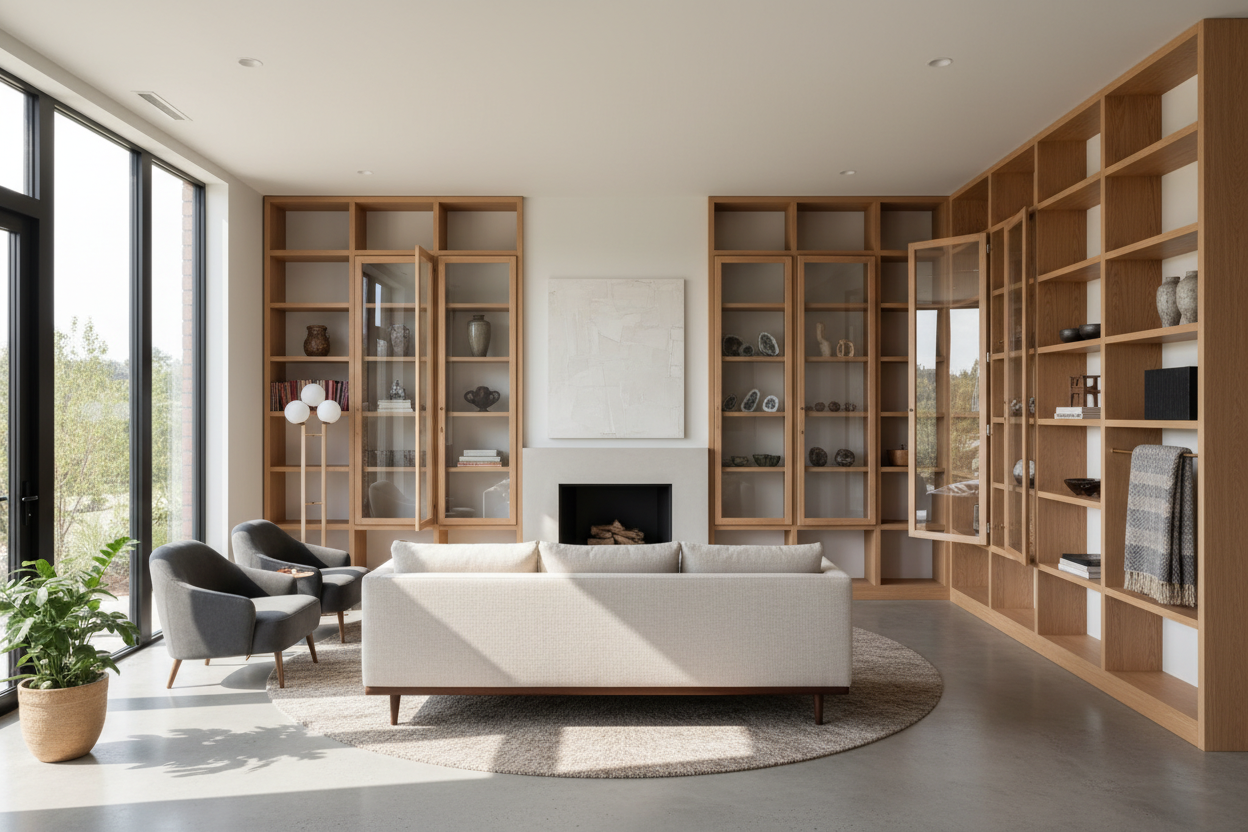
I spent years fighting with a sliding-door cabinet that felt like a puzzle box designed by someone who hates me. Every time I wanted to swap out a single vase or dust a shelf, I had to slide the glass halfway, watch it jump the track, and pray it didn't shatter my vintage ceramics. It was a high-stakes game of Operation that I was losing.
The shift to front opening display cases wasn't just about aesthetics; it was about reclaiming my Saturday mornings from the tyranny of the 'glass screech.' If you have ever spent twenty minutes trying to realign a heavy glass pane into a gunked-up aluminum track, you know exactly why I finally made the switch to hinged doors.
Quick Takeaways
- Hinged doors offer 100% access to the shelf width, eliminating 'dead zones' behind overlapping glass.
- Magnetic push-latches mean you never have to touch the glass and leave oily fingerprints.
- Cleaning is 5x faster when you can swing a door wide open rather than reaching through a narrow slit.
- Always measure your 'swing zone' to ensure the door doesn't hit your coffee table or floor lamps.
The Day the Sliding Door Jammed (My Breaking Point)
It happened on a Tuesday. I was trying to reach a small crystal bowl tucked into the back corner of my old cabinet. As I slid the left pane over, it hit a tiny pebble of dust—or maybe just bad vibes—and derailed. The glass tilted dangerously toward my face, stuck at a 45-degree angle.
I spent forty-five minutes sweating, holding the glass with one hand while trying to shimmy it back into the groove with a flathead screwdriver. I didn't break the glass, but I did scratch the wood finish and swear off sliding tracks forever. That was the moment I realized that 'space-saving' sliding doors are actually just 'stress-inducing' barriers for anyone who actually touches their collection.
Why a Front Opening Display Case Just Makes More Sense
The physics of a front opening display case are just superior. When you open a hinged door, the entire interior is exposed. You aren't playing Tetris with your hand to reach a figurine in the back row without knocking over the three pieces in front of it. It makes the act of rearranging or adding new finds a five-minute task instead of a logistical nightmare.
Dusting is the other big win. With sliding doors, dust settles in the tracks and becomes a grimy paste over time. With a front-opening model, there are no tracks. You just wipe the flat bottom of the shelf and you are done. It is the difference between detailing a car and just wiping off a countertop.
No More Smudged Fingerprints in the Middle
Is there anything more annoying than a giant thumbprint right in the center of your view? Sliding doors practically demand that you press your hand against the glass to get enough traction to move them. Even if they have those tiny recessed 'finger pulls,' they are usually too shallow to be useful.
A proper front opening glass display case usually comes with a discrete handle or, my personal favorite, a magnetic push-to-open latch. You tap the corner of the frame with your knuckle, the door pops open, and the glass stays pristine. It keeps your collection looking like a museum exhibit rather than a toddler's playroom.
Finding the Right Material for Hinged Doors
When you move to a swing-out door, the weight of the material starts to matter. If you go with cheap, thin glass, the door feels flimsy and rattles. If you go too heavy without high-quality hinges, the door will eventually sag and scrape the bottom of the frame. I usually look for 5mm to 6mm tempered glass for that satisfying 'thunk' when it closes.
I've experimented with different builds, and I tested glass vs acrylic to see which held up better over time. While acrylic is lighter and easier on the hinges, glass provides a level of clarity and scratch resistance that you just can't beat for a permanent living room fixture. Just make sure your hinges are bolted into solid wood or reinforced metal, not thin MDF.
The Setup I Actually Recommend for Living Rooms
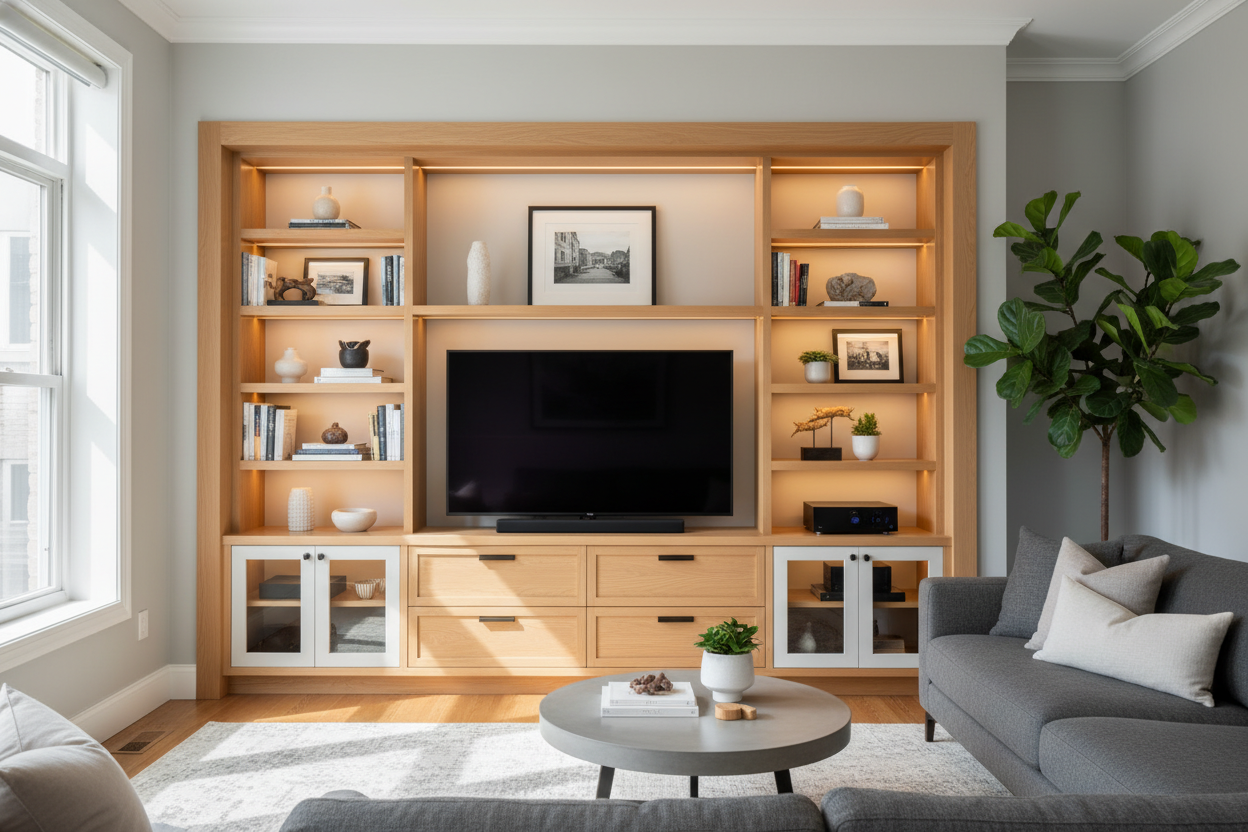
For a living room, you want something that looks like furniture, not a retail store fixture. I prefer a vertical orientation with a minimal frame. I’ve found that a 4 layer glass door display case with led light is the sweet spot for most homes. The built-in lighting is crucial because front-opening doors often have a slightly thicker frame that can cast shadows if you rely only on overhead room lights.
The lighting makes your items pop, and the four-layer height keeps everything at eye level without taking up a massive footprint. It’s sturdy enough that the shelves don't vibrate when you walk past, which is a common issue with those ultra-cheap wire-frame units you see online.
A Quick Warning About Swing Clearance Space
Before you rush out and buy a hinged model, you have to do some floor planning. This is the one area where sliding doors actually win: they don't need 'swing room.' If you have a cramped apartment, a front-opening door might be a literal obstacle. I once bought a beautiful mahogany case only to realize I couldn't open the door more than six inches because my armchair was in the way.
Check your clearance. You need at least the width of the door plus a few inches of 'elbow room' to reach inside comfortably. If you're struggling with a tight layout, read up on where to put a big glass display case to ensure you aren't creating a bottleneck in your hallway every time you want to admire your hobby. Trust me, measuring twice saves you from moving your sofa three times.
FAQ
Do front opening cases let in more dust?
Actually, they usually let in less. Sliding doors require a gap between the two panes of glass to move, which is a highway for dust. Hinged doors usually sit flush against a frame or have a small gasket, keeping the interior much cleaner.
Are the hinges hard to adjust?
Most modern cases use European-style 'cup' hinges. They have two or three screws that allow you to adjust the door up, down, left, or right. It takes about five minutes with a Phillips head screwdriver to get them perfectly level.
Can I add locks to front opening cases?
Yes, and it is much easier than locking a slider. You can install a simple cam lock on the edge of the door or even use a discrete magnetic lock if you want to keep kids out without ruining the clean look of the glass.


Dejar un comentario
Este sitio está protegido por hCaptcha y se aplican la Política de privacidad de hCaptcha y los Términos del servicio.