










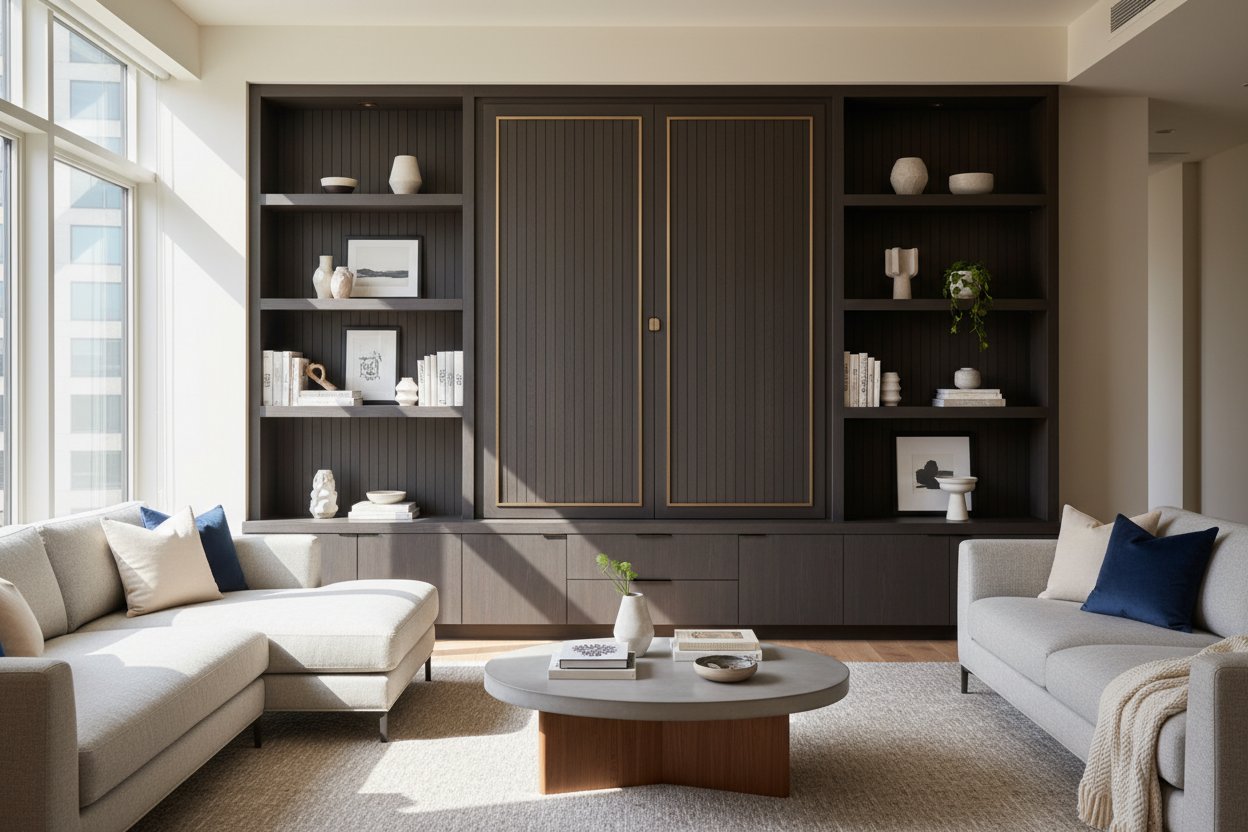
I spent months hunting for the perfect vintage Persian rug and a velvet sofa that didn't feel like a brick. I finally got the lighting right, the art was hung, and the vibe was immaculate. Then I sat down and realized my entire aesthetic was being held hostage by a giant, 65-inch matte black rectangle that looked like a portal to a very boring dimension.
It turns out, no matter how much you spend on 'greige' paint, a massive screen will always make your home look like a sports bar at 2:00 AM. That is why I finally caved and started looking into enclosed television cabinets. I wanted my living room back, and I wanted the tech to disappear when I wasn't actually using it.
Quick Takeaways
- Hiding the TV instantly makes a room feel more 'designed' and less like a showroom.
- Modern enclosed units are much slimmer than the bulky oak armoires of the 90s.
- They are the ultimate solution for hiding 'rat king' cord clusters and ugly routers.
- Ventilation and IR-friendly doors are the two most important technical specs to check.
The 'Giant Black Void' Problem in Modern Living Rooms
We are living in an era of screen bloat. Every year, the 'standard' TV size seems to jump another five inches. While that is great for watching prestige dramas, it is a disaster for interior design. That screen is a giant black void that sucks the life out of your color palette and dictates exactly where every piece of furniture has to point.
Reclaiming your wall space isn't about being anti-tech; it is about boundaries. When the TV is behind closed doors, the focal point of the room shifts back to the conversation, the fireplace, or that overpriced coffee table book you bought. It is the ultimate design flex to acknowledge that the TV exists, but it doesn't get to run the show.
Why Enclosed Television Cabinets Are Making a Huge Comeback
If you grew up in the 90s, you probably remember those massive, honey-oak 'entertainment centers' that took up half a ZIP code. They were heavy, ugly, and designed for tube TVs that were as deep as they were wide. Thankfully, the enclosed tv entertainment center has evolved. We are seeing a massive shift toward furniture that looks like a high-end sideboard but functions as a media hub.
Design lovers are ditching the minimalist 'floating shelf' look for something with more presence. I swapped my TV stand for a wide storage cabinet recently, and the visual weight of a solid piece of furniture makes the room feel grounded. Enclosed tv cabinets are no longer just for hiding 'ugly' tech; they are statement pieces in their own right, featuring fluted wood, cane door inserts, and mid-century silhouettes.
Yes, They Actually Make TV Cabinets With Doors for Flat Screens
The biggest myth I hear is that you can't find an enclosed tv cabinet with doors that fits a modern 4K screen. People assume the cabinet will be four feet deep. In reality, modern units are incredibly slim—often under 18 inches deep. Because flat screens are so thin, manufacturers can use bifold doors or pocket doors that tuck away into the sides of the frame, so they don't block your walkway when the TV is on.
The Unexpected Perks of an Enclosed Entertainment Cabinet
Let's talk about the 'rat king.' You know exactly what I mean: that tangled mess of HDMI cables, power strips, and dust bunnies living behind your open console. An enclosed entertainment cabinet kills that clutter instantly. It provides a literal barrier between your guests and your messy cable management. Plus, it keeps the dust off your expensive gaming consoles.
If you want to go full James Bond, you can even look into a hidden TV mechanism. These motorized units pop the TV up from the top of the cabinet and disappear completely when you're done. It is the cleanest possible look, especially if you have an open-concept floor plan where you don't want a TV back-panel facing your kitchen.
What to Measure Before You Buy (Please Don't Skip This)
Buying an enclosed tv stand requires way more math than a standard open shelf. First, measure your TV's actual width, not the screen size. A 65-inch TV is usually about 57 inches wide. You need at least an inch of clearance on either side so the doors don't scrape the bezel. Also, check the depth of your TV's feet. Some 'wasp-waist' stands are surprisingly deep, and you don't want to find out your cabinet doors won't shut because the TV stand is poking out by half an inch.
If you have a massive wall to fill, consider an entertainment center with overhead cabinets. This gives you a built-in look without the cost of custom millwork. Just make sure the unit has ventilated back panels or 'cord escapes.' Electronics get hot, and trapping a PS5 in a small, unventilated wooden box is a recipe for a very expensive hardware failure.
My Personal Lesson: The IR Blaster Struggle
I once bought a stunning solid-wood enclosed tv cabinet with doors, only to realize my remote didn't work through the wood. I had to sit there with the doors wide open just to change the volume, which defeated the whole purpose. If you don't want to leave the doors open, look for cabinets with 'IR-friendly' materials like perforated metal, glass, or cane. If you fall in love with solid wood, you'll need to spend $20 on an IR repeater kit to relay the signal inside. Trust me, it's worth the extra step.
FAQ
Will my TV overheat inside a cabinet?
Only if you don't have airflow. Look for units with cutouts in the back or slatted doors. If you’re running a high-end gaming PC or a hot receiver, I’d suggest adding a small, silent USB fan to the back panel to pull hot air out.
Can I mount the TV inside the cabinet?
Yes, many people prefer this. It allows you to center the TV perfectly and leaves the 'floor' of the cabinet free for a soundbar or center-channel speaker. Just make sure the back panel of the furniture is reinforced or designed to handle a bracket.
Do I need a special remote to work through closed doors?
If your remote uses Bluetooth (like many modern smart TV remotes), it will work fine. If it uses traditional Infrared (IR), you’ll need a cabinet with mesh/glass doors or a simple IR repeater kit.


Dejar un comentario
Este sitio está protegido por hCaptcha y se aplican la Política de privacidad de hCaptcha y los Términos del servicio.