










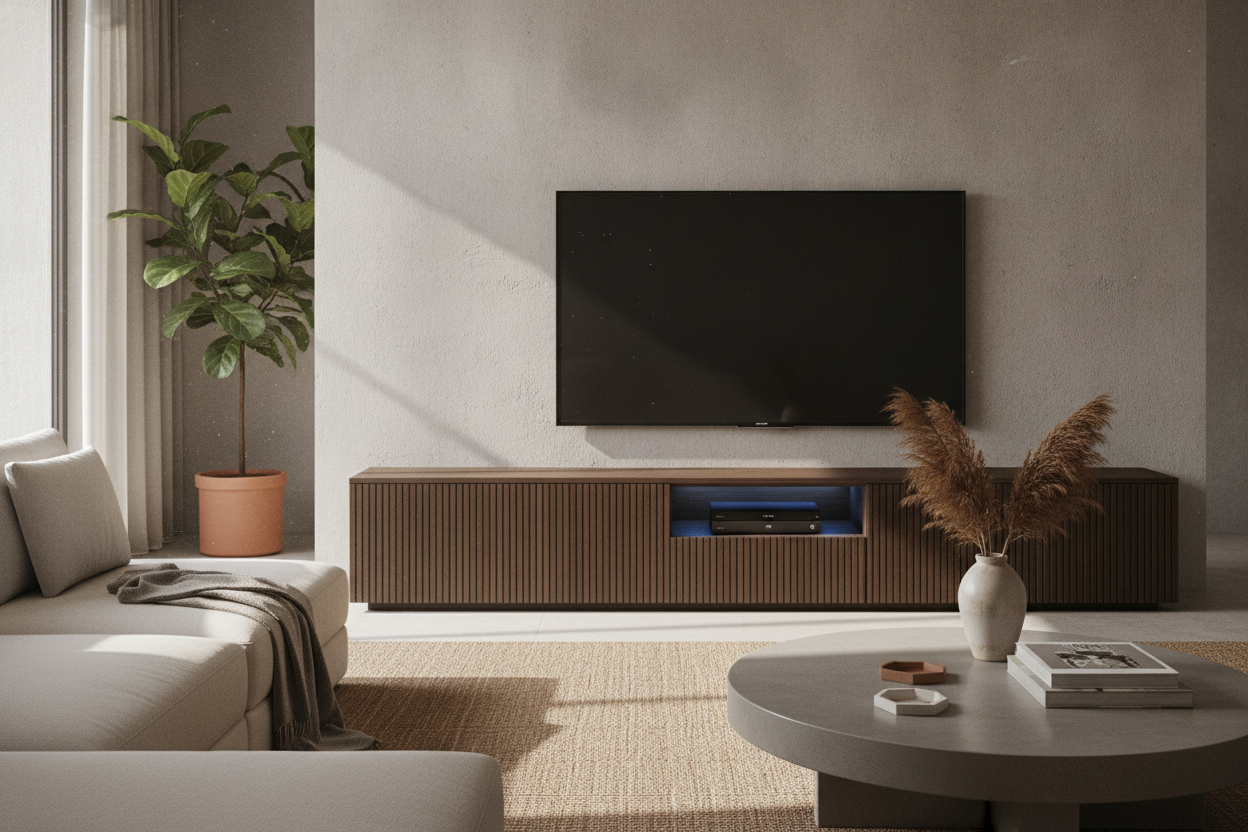
I spent three hours last Sunday with a microfiber cloth and a can of compressed air, trying to get the gray fuzz out of my PlayStation's vents. It was then I realized my minimalist, mid-century modern console with its 'airy' open slats was a total lie. I didn't need airflow; I needed a real tv stand door—one that actually closes and locks the chaos away from my sight and my lungs.
- Solid doors hide the 'cable spaghetti' that ruins your room's aesthetic.
- Closed cabinets significantly reduce dust buildup on expensive electronics.
- Media stands with doors provide extra storage for non-tech items like board games or blankets.
- IR repeaters are a cheap fix if your remote signal can't pierce solid wood.
The Open Shelving Delusion
Pinterest is a liar. Every 'living room goals' photo shows a pristine console with one ceramic vase and maybe a single, leather-bound book. They never show the blinking blue light of a router, the tangled mess of HDMI cables, or the way a black glass shelf highlights every single speck of dust within a five-mile radius.
I lived that lie for two years. My gaming setup looked like a back-alley electronics repair shop. No matter how many velcro ties I used, the back of the TV always looked like a nest of snakes. Open shelving is for people who don't actually use their tech; for the rest of us, it is just a high-maintenance nightmare.
The Turning Point: Why Closed Storage Won
The breaking point was hosting a dinner party where I realized my guests were staring at my dusty Xbox instead of the art on my walls. I finally admitted defeat and swapped my TV stand for a wide storage cabinet. The change was instant. The room felt ten times cleaner without me actually cleaning anything.
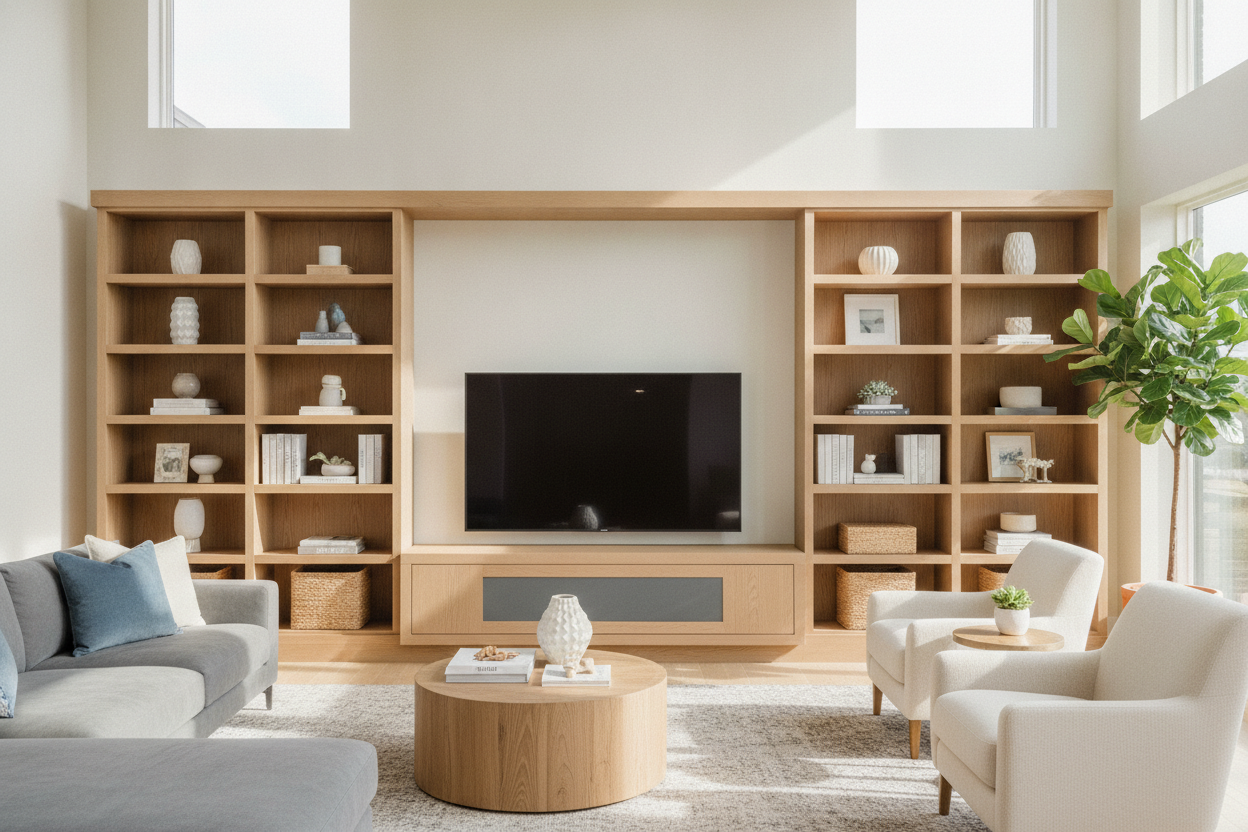
A media stand with doors isn't just about hiding a mess; it's about reclaiming the 'living' part of your living room. When the tech is tucked away, the furniture becomes the focus. I opted for a solid oak front that matches my coffee table, and suddenly, my 65-inch screen didn't feel like the only personality trait of the room.
Finding the Right Setup for Your Space
Not all doors are created equal. If you are in a tight studio, a small stand with doors can double as a sideboard. If you have a sprawling suburban basement, you can go much bigger. The goal is to match the scale of your TV to the 'heaviness' of the cabinet so it doesn't look like a giant black mirror floating over a tiny box.
The TV Chest with Doors (For Maximum Hoarding)
If you are like me and still refuse to get rid of your physical media or you have a collection of vintage controllers, you need height. A tv chest with doors offers vertical storage that a standard low-profile unit just can't touch. It’s basically a dresser for your tech.
For those with a massive wall to fill, I've seen people kill it with an extra long barn door TV stand. It gives you that farmhouse look but with enough internal cubic footage to hide a small server farm. The sliding doors are a lifesaver in narrow rooms where swinging doors would hit the coffee table.
The All-in-One: Mounts and Cabinets
Renters, listen up. You don't have to choose between a wall-mounted look and storage. A tv stand with mount and doors gives you that floating effect without the 'where do I put the wires?' panic. The mount holds the screen high, and the cabinet doors below swallow the cable box and the power strips whole.
Wait, Will My Remotes Still Work?
This is the first thing everyone asks: 'How do I change the channel if the door is closed?' First, most modern remotes use Bluetooth or RF, which pass through wood just fine. If you're stuck with an old-school infrared (IR) remote, a $15 IR repeater kit solves the problem. You stick a tiny sensor on the outside, and it beams the signal to the 'brains' inside the cabinet.
Heat is the other concern. Don't cram a high-powered PC into a sealed box. Look for units with pre-drilled cable management holes—they double as vents. If things get toasty, I usually just pop the back panel off the cabinet. Nobody sees the back anyway, and it keeps the airflow moving without sacrificing the clean look of the front.
Glass vs. Solid Wood: The Compromise
If you absolutely can't commit to a total blackout, there is a middle ground. A storage credenza with sliding glass doors allows you to see your gear while still keeping the dust out. If you go this route, get tinted or fluted glass—it blurs the cables but lets the remote signals through.
I personally love a black cabinet with glass doors. Because the interior is dark, the black plastic of your consoles and receivers effectively disappears. It’s the ultimate 'stealth' move for someone who wants the convenience of glass without the visual clutter of seeing every wire and port.
FAQ
Do TV stands with doors cause overheating?
Only if you have zero ventilation. Make sure there are at least two inches of clearance around your console and that the back of the stand has holes for cables and air to escape.
How do I hide cables inside the cabinet?
Use adhesive cable clips to run wires along the interior walls of the stand. It keeps the floor of the cabinet clear so you can actually use the shelves for storage.
Will my game console work through a wooden door?
Controllers for PS5, Xbox Series X, and Switch use Bluetooth, which works through wood. You won't notice any lag or connectivity issues.


Dejar un comentario
Este sitio está protegido por hCaptcha y se aplican la Política de privacidad de hCaptcha y los Términos del servicio.