










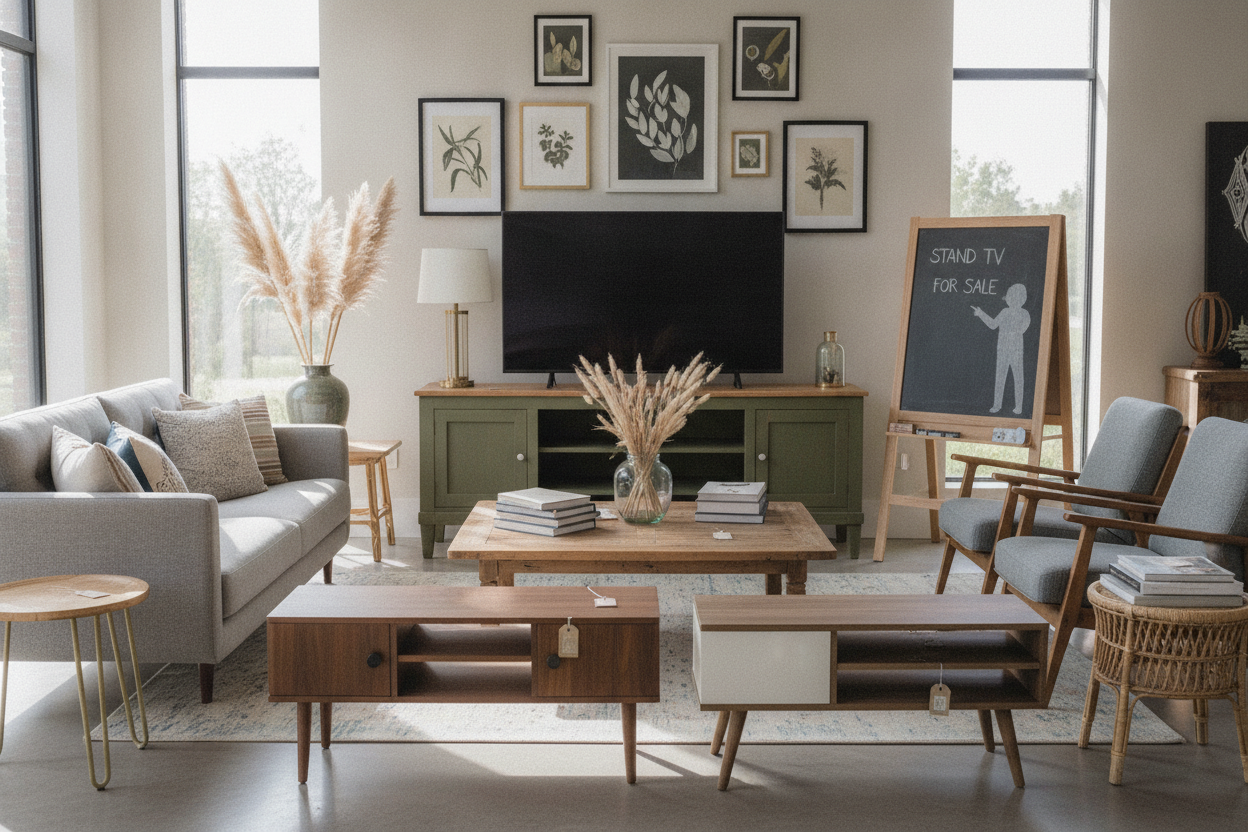
I have spent too many Sunday nights staring at 47 browser tabs of media consoles that all look the same and cost twice my rent. We have all been there—trying to find a piece of furniture that doesn't wobble when the cat jumps on it. After years of flipping furniture for a side hustle, I stopped looking for the polished listings and started searching for stand tv for sale on local marketplaces.
It sounds counterintuitive to use bad grammar when hunting for high-end decor. But if you want a solid wood piece that will actually last ten years instead of a flat-pack unit that sags under a 50-pound screen, you have to change your strategy. The best deals are hidden behind the worst descriptions.
- Stressed sellers use simple, non-designer language when they are in a rush.
- Backward phrasing like 'stand tv' helps you bypass professional flippers.
- Solid wood pieces are often mislabeled as 'heavy brown cabinets.'
- Retail tv stands sales are better if you need a specific warranty or a massive 85-inch fit.
The Secret Language of Stressed Sellers
When someone is moving out of a three-story walk-up in 48 hours, they aren't thinking about SEO. They aren't typing 'Mid-Century Modern Walnut Credenza' into their listing. They are stressed, they are sweaty, and they just want that 75-pound beast out of their living room. They type the first three words that pop into their head: 'stand tv for sale.'
I once scored a genuine teak sideboard for $40 because the seller listed it as a 'long wood box.' If you only search for the 'correct' terms, you are competing with every other designer and flipper in the city. By the time you see a properly labeled 'Media Console,' it’s already been sold. You have to find the people who don't know—or don't care—what they have.
Why Searching 'Stand TV For Sale' Actually Works
Most professional furniture flippers use automated alerts for keywords like 'West Elm,' 'Vintage,' or 'Danish.' When you intentionally use clunky, backward phrasing, you are operating in a digital blind spot. You are seeing the listings that haven't been picked over yet. It’s the digital equivalent of digging through the 'junk' bin at a thrift store and finding a silk scarf.
This strategy also helps you find older, sturdier furniture. Newer, cheaper brands are usually sold by people who know the exact model name because they bought it six months ago. But that 1990s solid oak unit? That’s being sold by someone who just calls it a 'stand tv.' It might need a fresh coat of paint or some new hardware, but the bones will be ten times better than the hollow-core stuff you find at big-box retailers.
Other Grammatically Incorrect Goldmines
Don't stop at just one weird phrase. If you're on the hunt, try these variations to find the unpolished gems: 'TV table wood,' 'Entertainment cupboard,' 'Telly stand,' and even 'Drawer for TV.' I’ve found that the more 'incorrect' the listing feels, the more likely the seller is to accept a lower offer just to get the transaction over with.
My 3-Second Quality Check for Secondhand Consoles
Once you find a potential winner, don't just load it into your trunk. I have a strict 3-second rule. First, I check the weight. If I can lift a 60-inch console with one hand, it’s made of low-density fiberboard and I’m walking away. You want the weight of real timber. Second, I check the glides. Metal side-mount glides are okay, but I’m looking for wood-on-wood joinery or soft-close hardware.
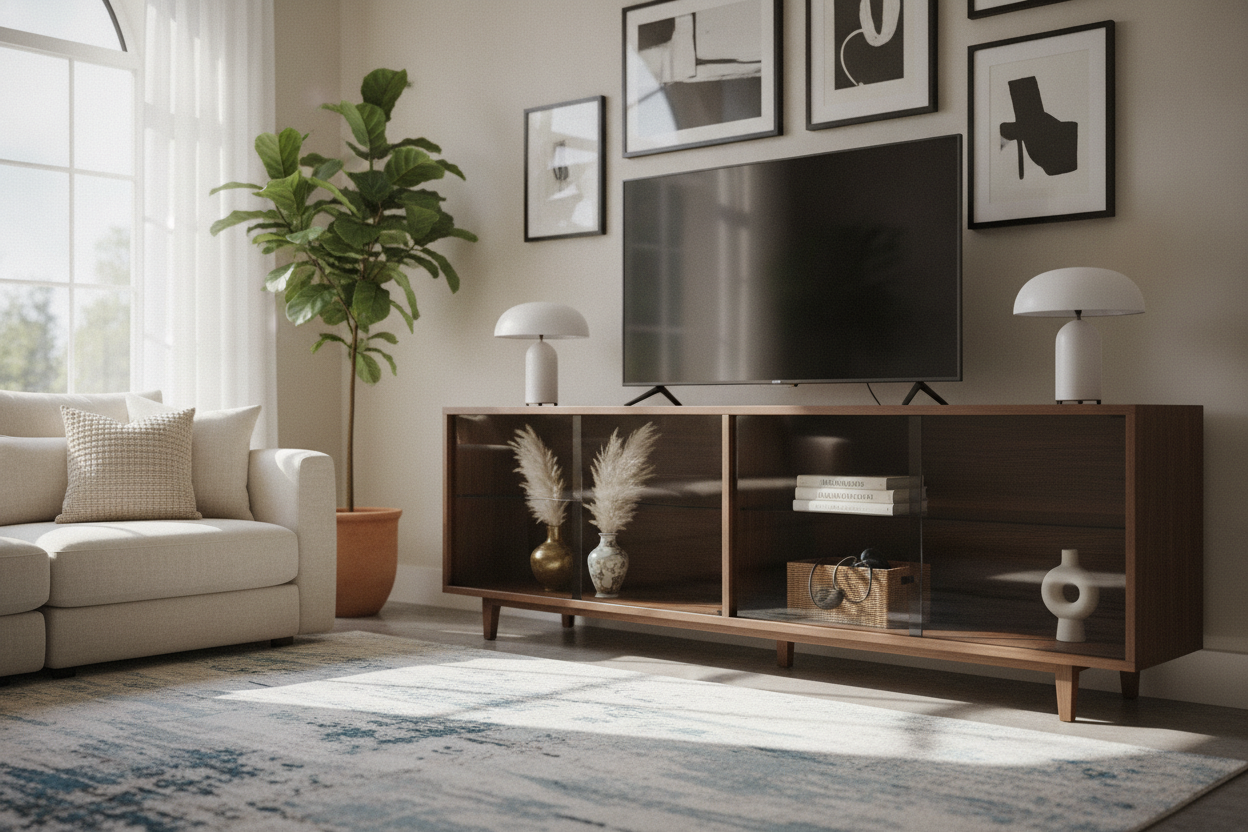
Third, I look at the back panel. If it’s that flimsy, stapled-on cardboard that’s already bowing, the piece won't handle your cable management well. When choosing the perfect tv stand for style, you also have to consider the practical stuff. Does it have pre-drilled holes for cords? Is the height right for your eye level when you're sitting on the sofa? A 22-inch height is usually the sweet spot for modern 65-inch screens.
When to Skip the Hunt and Shop TV Stands Sales Instead
Look, I love the thrill of the chase, but thrifting isn't for everyone. If you have a specific, awkward nook that requires a console exactly 58.5 inches wide, you're going to drive yourself crazy looking for a used match. Or, if you just bought a massive 85-inch OLED, you probably shouldn't trust a $20 'stand tv' from a stranger's garage to hold it up.
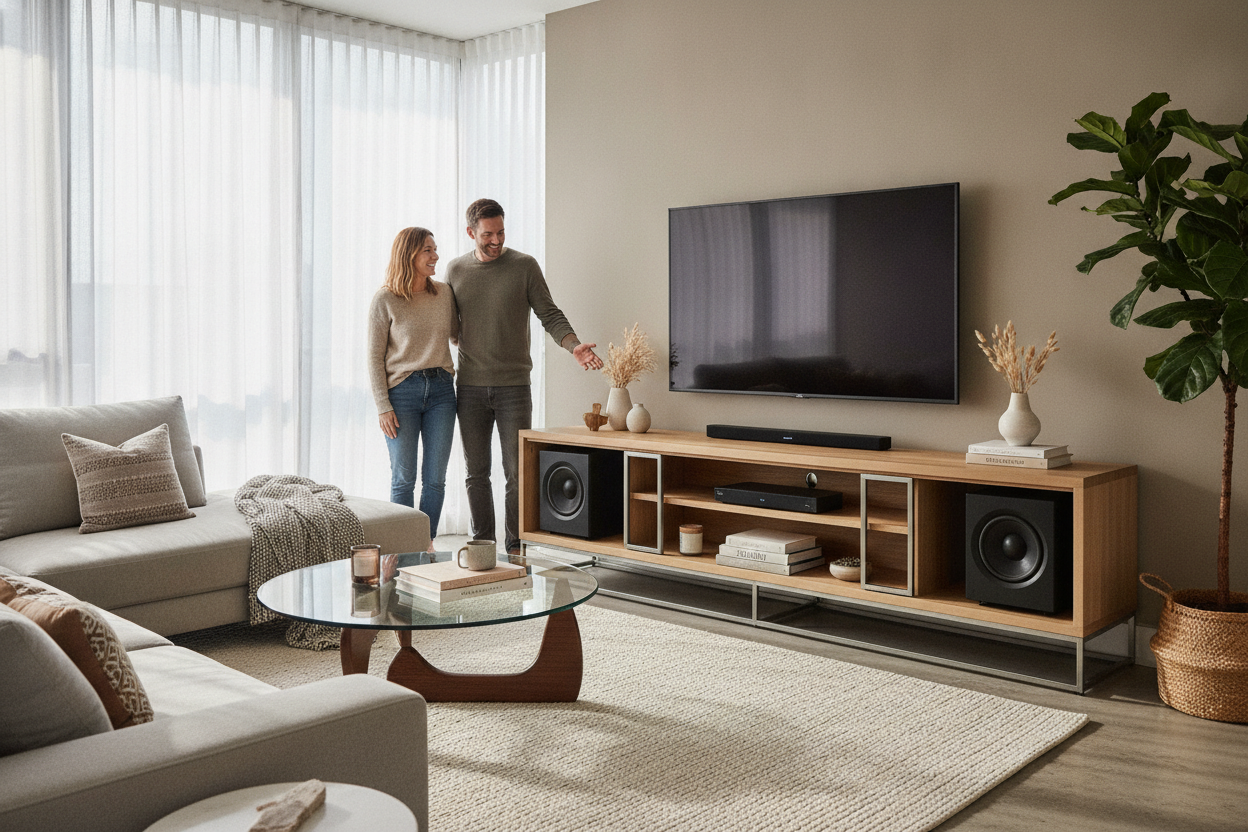
In those cases, waiting for retail tv stands sales is the smarter move. You get a warranty, you know the weight capacity is tested, and you don't have to worry about hidden termite damage. If you need a modern tv stand with cabinets and drawers that can hide a gaming console and three different controllers, buying new ensures the internal shelving is actually adjustable. If you're tired of the marketplace flakes, you can always browse standard tv stands online and have one delivered by Thursday.
Is it better to buy a TV stand larger than the TV?
Always. I recommend at least 3 to 5 inches of clearance on each side. It prevents the 'top-heavy' look and keeps you from accidentally knocking the TV over if you bump into the corner of the room.
How can I tell if a used stand is real wood?
Look at the edges. If you see a thin 'tape' or a repeating grain pattern that looks like a sticker, it’s laminate or veneer over MDF. Real wood has irregular grain patterns that wrap around the corners of the piece.
What is the best height for a TV stand?
Your eyes should be level with the middle of the screen. For most standard sofas, this means a stand height between 18 and 24 inches. Anything higher and you'll be giving yourself a neck ache within an hour.

Dejar un comentario
Este sitio está protegido por hCaptcha y se aplican la Política de privacidad de hCaptcha y los Términos del servicio.