










I spent three months stalking a vintage apothecary cabinet on Facebook Marketplace, only to have the seller ghost me three times. Then I pivoted to estate sales, where I found plenty of glass hutches that smelled like forty years of mothballs and cost more than my first car. I just wanted a clean place to put my ceramics without the 'antique' tax or the structural wobbles.
Eventually, I gave up the ghost and realized that a curio cabinet Lowes carries could be the blank canvas I actually needed. It felt like a defeat at first—buying a box-store unit instead of a 'piece with a soul'—but once I got it home, I realized I was just paying for the bones, not the finish. If you are tired of hunting for overpriced junk, this might be your path too.
Quick Takeaways
- Big-box cabinets offer structural stability and tempered glass that vintage pieces often lack.
- The 'out of the box' look is boring, but the customization potential is massive.
- Swapping factory hardware for unlacquered brass or matte black pulls makes an instant difference.
- Peel-and-stick wallpaper on the back panel removes that 'flat-pack' feeling immediately.
- You can get the high-end look for about a third of the price of a boutique furniture store.
The Exhausting Reality of Thrifting for Glass Furniture
We’ve all seen the Pinterest boards: a perfectly weathered French hutch filled with cream-colored ironstone. What those photos don't show is the reality of trying to move a 200-pound solid oak beast up a flight of stairs, or the fact that the glass panes are held in by brittle putty that crumbles the moment you touch it. I’ve bought those pieces before, and frankly, I'm over it.
Thrifting for glass furniture is a unique kind of hell. Most vintage cabinets have seen better days; the doors don't quite latch, the shelves are bowed from decades of heavy plates, and the wood often has a persistent, musty odor that no amount of vinegar can kill. Plus, the 'shabby chic' markup is real. People are asking $800 for cabinets that literally need a full restoration.
I realized I was spending my weekends driving to remote suburban garages only to be disappointed. I didn't want a project that would take six months to strip and refinish. I wanted a functional, sturdy display that didn't require a tetanus shot to open. That’s when I started looking at the modern, mass-produced options that I could actually fit in my SUV.
Why I Pivoted to a Curio Cabinet Lowes Actually Had in Stock
The turning point happened during a mundane trip for light bulbs. I walked past a lowes display cabinet and stopped. It wasn't 'charming' in the traditional sense—it was white, sterile, and very straightforward. But it was also level. The glass was clear and tempered. The hinges didn't groan like a haunted house door. It was a clean slate.
I started comparing the specs. While I was browsing, I looked at a white display case with glass doors that had a slightly more modern silhouette. The price was roughly a quarter of what the local 'curated' vintage shop was charging for something similar. I realized that if I stopped looking at the finish and started looking at the silhouette, I could make this work.
The biggest selling point? Availability. I didn't have to wait for a shipping container from Europe or hope that a Craigslist stranger would show up. I could load a lowes curio cabinet into my car and have it assembled by dinner. For a decorator with zero patience, that is the ultimate luxury. I bought the unit, ignored the 'basic' vibes, and headed home with a plan to make it look like I’d found it in a Belgian flea market.
Evaluating the Build Quality (Is It Flimsy?)
Let's be honest: this isn't heirloom-grade mahogany. It’s usually a mix of MDF and solid pine or poplar. However, for a lowes display case, the build quality is surprisingly decent where it counts. The shelves are typically rated for 15-20 pounds each, which is plenty for glassware and books. If you try to stack a full set of heavy stoneware on one shelf, you might see some sag, but for a standard display, it holds up.
The tempered glass is the real winner here. Old cabinets often have thin, wavy glass that breaks if you sneeze on it. These modern units use thick, safety-rated glass that can handle the occasional bump from a vacuum cleaner. The hinges are basic, but they are adjustable. If your doors are slightly crooked (a common complaint with flat-pack furniture), you can usually turn a couple of screws to line them up perfectly. It’s a level of precision you just don't get with 100-year-old warped wood.
How I Faked a Custom, High-End Look in One Weekend
Once the unit was assembled, it looked... fine. But 'fine' isn't the goal. To get away from that big-box aesthetic, the first thing I did was ditch the factory hardware. Those cheap, silver-painted plastic knobs are a dead giveaway. I replaced them with heavy, solid brass pulls I found online. It’s a $30 upgrade that makes the doors feel ten times more expensive every time you open them.
Next, I tackled the back panel. Most affordable cabinets have a plain white or wood-grain cardboard back. I used a textured, linen-look peel-and-stick wallpaper to cover it before I nailed it on. This adds depth and makes the items inside pop. If you're feeling bold, you can use styling hacks for a high end look like adding battery-operated LED puck lights hidden behind the top frame to create a museum-style glow.
Finally, I painted the exterior. I went with a deep, moody charcoal—almost a black cabinet with glass doors vibe. Using a high-quality cabinet paint (like Sherwin-Williams Emerald Urethane) ensures the finish is smooth and durable. By the time I was done, the 'hardware store' origins were completely erased. It looked like a custom built-in that cost thousands, all because I spent forty-eight hours tweaking the details.
The Secret to Styling Behind Glass Without Looking Cluttered
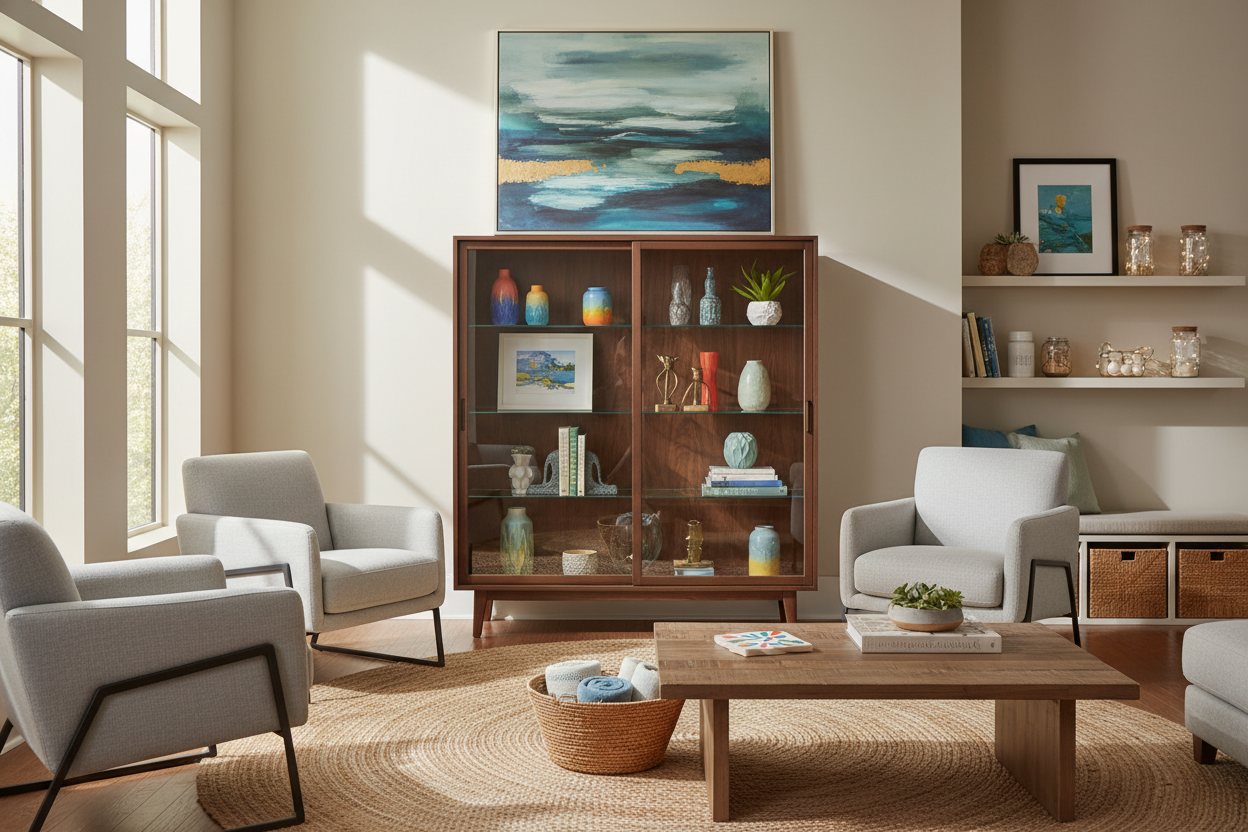
The hardest part of owning a curio cabinet is the 'curio' part. It is very easy for these things to turn into a glass-fronted junk drawer. My rule is simple: 30% empty space. If every inch of the shelf is covered, your eye doesn't know where to land, and it just looks like a mess. I group items in odd numbers—threes and fives—and vary the heights.
I like to mix textures inside. I’ll put a rough, unglazed ceramic vase next to a stack of smooth, linen-bound books. Avoid the temptation to line everything up in a straight row like a grocery store shelf. Instead, stagger items from front to back to create layers. If you have smaller trinkets, put them on top of a small pedestal or a stack of coasters so they don't get lost in the sea of glass. For more ideas on composition, you can learn how to display your treasures without the clutter to keep the look intentional.
Don't be afraid to change it up seasonally. In the winter, I might fill a bowl with dried pinecones; in the summer, it’s all white coral and light-colored pottery. The beauty of a glass cabinet is that it protects your favorite things from dust while keeping them front and center. It’s a rotating gallery of your own life, and it’s much easier to enjoy when the cabinet itself isn't falling apart.
FAQ
Is the glass in these cabinets safe for homes with kids?
Yes, unlike many vintage pieces, modern display units use tempered glass. If it does break, it shatters into small, blunt cubes rather than long, jagged shards. It’s much safer for high-traffic family areas.
How do I stop the cabinet from tipping over?
Always use the wall anchor kit that comes in the box. Even if it feels sturdy, a glass-heavy cabinet is top-heavy once you open the doors. Five minutes of drilling into a stud is worth the peace of mind.
Can I add extra shelves to a Lowes cabinet?
Usually, yes. You can have glass or acrylic pieces cut to size at most local glass shops. Just make sure you buy extra shelf pins that match the pre-drilled holes in your unit.

Dejar un comentario
Este sitio está protegido por hCaptcha y se aplican la Política de privacidad de hCaptcha y los Términos del servicio.