










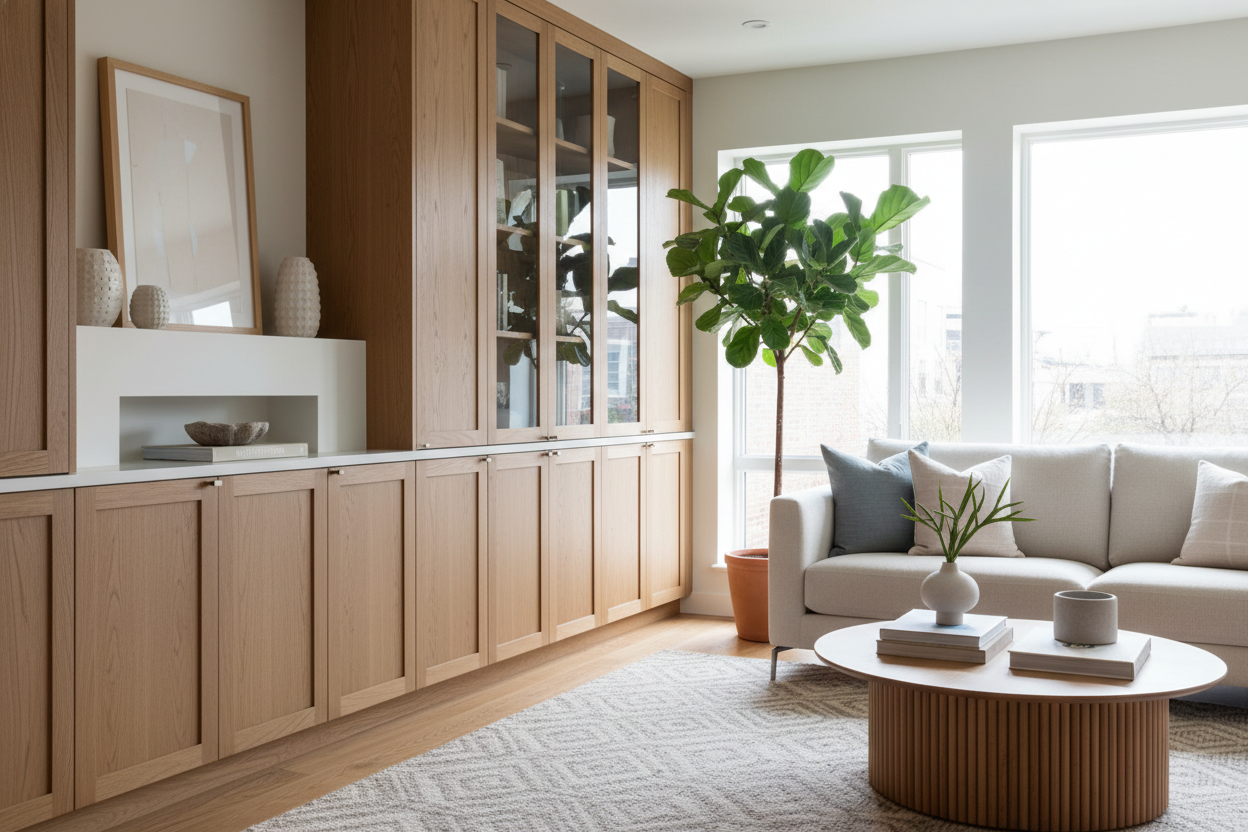
I used to spend my Saturdays color-coding my book spines and dusting a collection of vintage ceramic bowls that I never actually used. It looked great for the five minutes after I finished, but then life happened. Mail piled up, chargers tangled, and my living room looked like a high-end thrift store exploded. I finally realized that my obsession with cabinets and storage wasn't about being 'boring'—it was about survival.
- Open shelves are a part-time job you don't get paid for; doors are a lifestyle.
- Always check the depth—anything less than 15 inches won't actually hold a standard board game box.
- Solid wood or high-quality veneers beat 'paper-wrapped' MDF every single time if you want the hinges to stay attached.
- Mixing glass doors with solid drawers gives you the best of both worlds: display and 'shove-it-away' space.
The Open Shelving Lie We All Bought Into
We’ve all seen the photos. Those perfectly spaced vases, the three artfully leaned frames, and not a single piece of junk mail in sight. I bought into it hard. I installed three tiers of floating oak shelves and spent a fortune on 'aesthetic' baskets to hide my actual belongings. It was a disaster.
Those baskets quickly became aesthetic trash cans. I’d throw a half-used candle in one, a stack of unpaid bills in another, and a tangle of USB-C cables in the third. Because they were open at the top, I could still see the chaos from the hallway. Then there’s the dust. If you aren't wiping down every individual book and tchotchke once a week, your 'curated' look just looks like a neglected attic. It was exhausting, and I felt like a failure every time a guest sat down and saw my 'organized' mess.
The Day I Gave Up and Embraced Cabinets and Storage
The breaking point was a Tuesday night when I couldn't find my passport because it was buried at the bottom of a 'decorative' seagrass bin. I tore the room apart, and the visual noise of all those exposed items finally snapped something in me. I didn't need more shelves; I needed doors. I needed a real living room storage solution that didn't require me to be a professional stylist just to feel calm in my own house.
Switching to closed cabinets with storage felt like a weight lifting off my shoulders. There is a specific kind of peace that comes from taking a pile of clutter, shoving it into a cupboard for storage, and clicking the door shut. It’s not about being messy; it’s about having a place where life can exist without being on constant display. I stopped worrying about whether my coffee table books were 'on trend' and started focusing on whether my cabinet for home actually fit my vacuum attachment.
Finding a Cabinet for Home That Doesn't Look Like an Office
The biggest fear people have with room storage cabinets is the 'dentist office' vibe. You don't want your living room to look like a file room. The trick is looking for furniture cabinet storage that has soul—think tapered legs, interesting wood grains, or brass hardware that doesn't feel like it came from a bulk bin. I’m a huge fan of this solid wood modern sideboard because it uses kiln-dried wood, which won't warp like the cheap 1.5 lb density particle board you find at big-box retailers.
When you're looking for storage cabinets, check the back panel. If it’s that flimsy, fold-out cardboard held on by tiny nails, keep walking. You want a solid back or at least a thick ply. It adds structural integrity so the whole thing doesn't lean to the left the second you put a few heavy vases on top. Also, look for adjustable shelves inside. Life changes; your room storage furniture should be able to accommodate a tall vase today and a stack of board games tomorrow.
The Genius of Sofa Cabinets Storage
If you have an open-concept layout, you probably have a 'floating' sofa. Instead of a thin console table that just holds one lamp and a dead plant, try sofa cabinets storage. A low, long set of room storage units placed directly against the back of the couch acts as a functional room divider.
It’s the perfect height to hide the back of the sofa while giving you a massive amount of storage cabinet for room essentials. I use mine to hide my router, the PlayStation, and all the controllers. I even drilled a small hole in the back panel to run the cords through. No more 'spaghetti' wires trailing across the floor, and the room feels anchored instead of just having a sofa drifting in the middle of the carpet.
How to Sneak a Color Storage Cabinet Into a Neutral Space
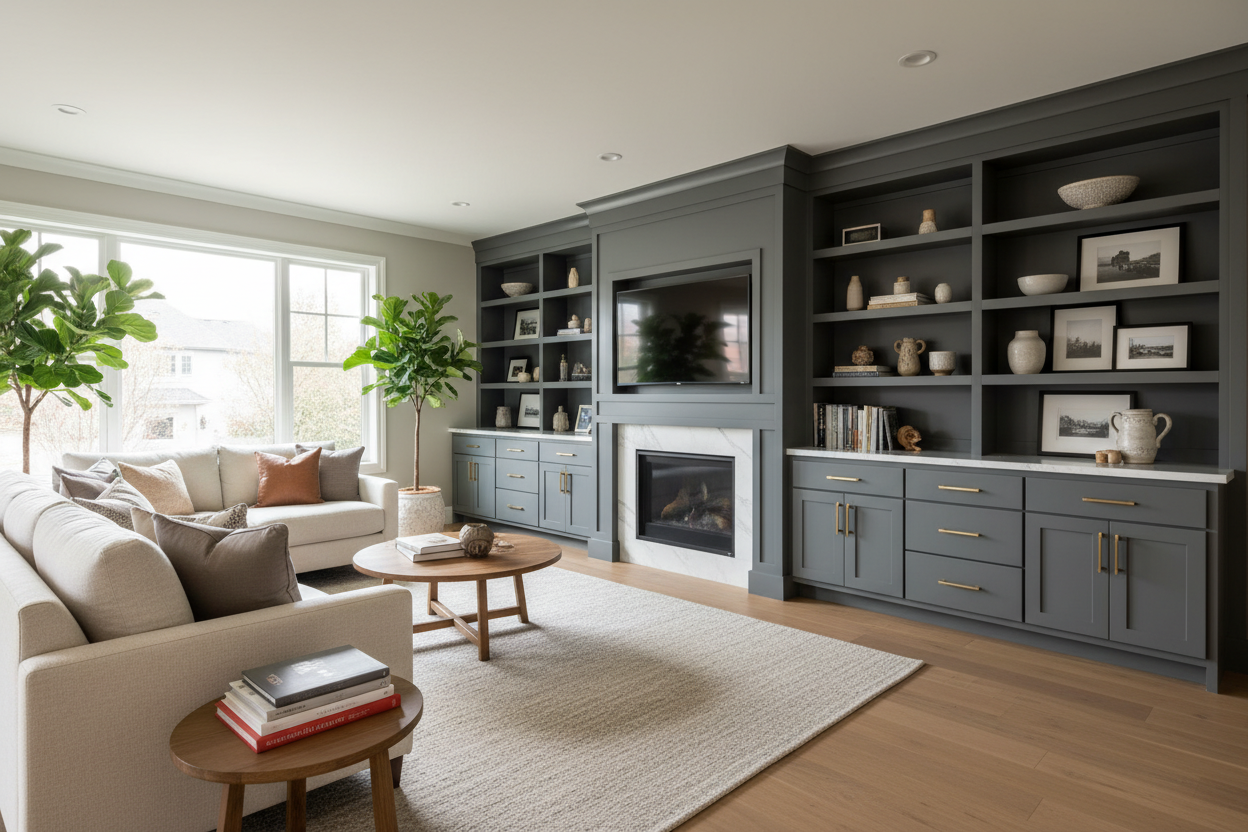
I know the trend is 'sad beige' right now, but a color storage cabinet can actually make a neutral room feel intentional rather than unfinished. If your walls are white and your rug is grey, a deep forest green or navy storage cabinets for room setup adds depth without the commitment of a painted accent wall. It’s a piece of furniture, not a marriage contract.
If you're nervous about a solid block of color, try a large sideboard display buffet. These often feature glass-front doors on top with solid room drawers cabinets below. It lets you show off the 'good' stuff—the fancy glassware or the vintage camera collection—while the drawers hide the junk drawers and the linens. It breaks up the visual weight of the color and makes the piece feel lighter in the room.
My 3 Rules for Buying Room Drawers & Cabinets Online
I've bought enough 'assembly required' nightmares to know the red flags. First, check the depth. A lot of 'best storage cabinet' lists include pieces that are only 11 or 12 inches deep. That's barely enough for a dinner plate. Aim for 15 to 18 inches if you want it to be truly useful. Second, look for soft-close hinges. There is nothing worse than the 'bang' of a cabinet door hitting the frame in a quiet house.
Third, and most importantly, read the weight limits. I once bought a room storage unit that looked beautiful but had a shelf limit of 10 pounds. I put my heavy art books on it and the shelf snapped within two days. Before you buy, make sure you pick the perfect storage cabinet by checking the specs for 'per shelf' capacity. If it isn't listed, it's probably because it's weak. Don't be afraid to ask the seller for the 'static load' numbers—real furniture companies will have them.
FAQ
Is it better to have drawers or doors?
Drawers are better for small items like cutlery, chargers, or remotes because you can see everything from above. Doors are better for bulky items like stand mixers, stacks of plates, or oversized books. A mix of both is usually the sweet spot for a living room.
How do I stop my cabinet from tipping?
Always use the anti-tip kit. I don't care if you don't have kids. A heavy drawer pulled all the way out can shift the center of gravity and bring the whole thing down. Anchor it to a stud, not just the drywall.
How much should I spend on a decent cabinet?
For something that isn't going to fall apart in two years, expect to spend between $400 and $900. Anything under $200 is likely paper-covered MDF that will peel the first time you spill a glass of water on it. You're paying for the joinery and the finish quality.


Dejar un comentario
Este sitio está protegido por hCaptcha y se aplican la Política de privacidad de hCaptcha y los Términos del servicio.