











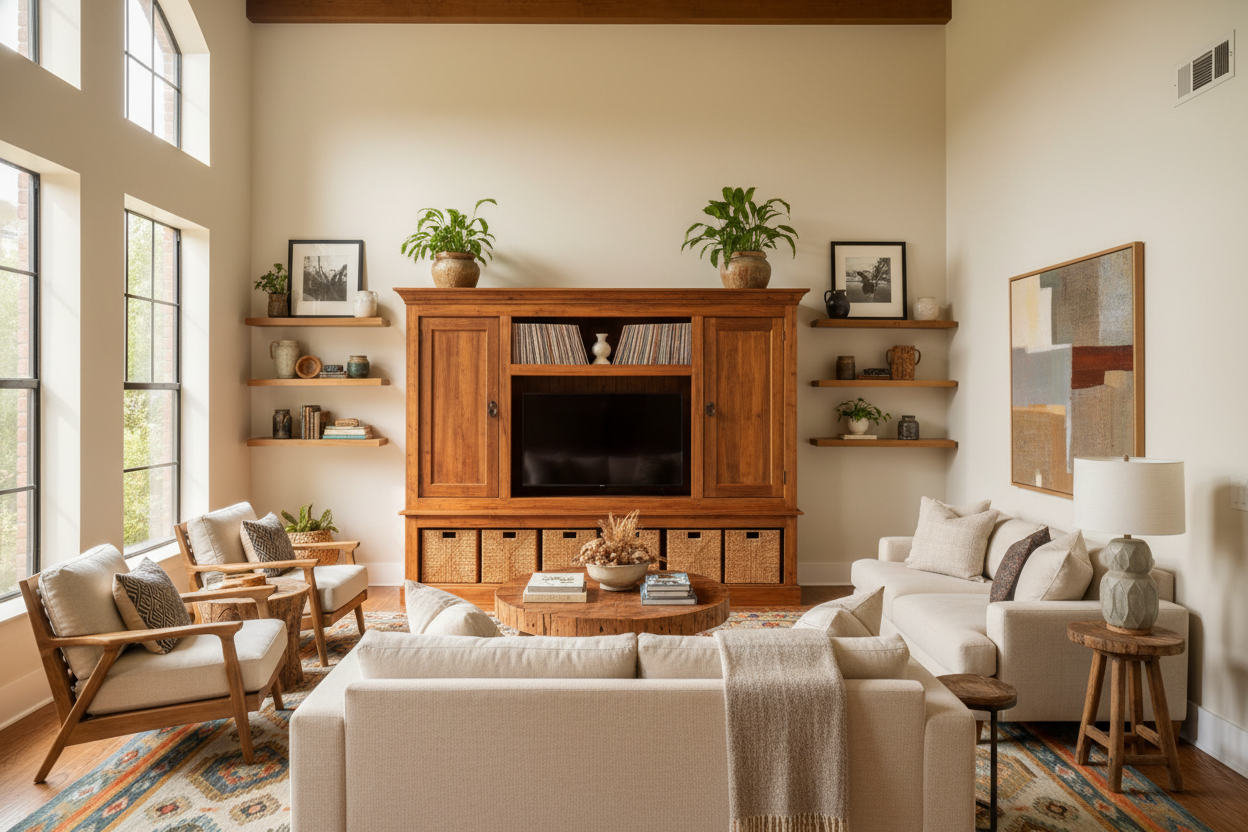
I remember spending four hours on a Tuesday night wrestling with an Allen wrench and a 40-page instruction manual for a 'modern' media console. It cost me $350, but the second I slid my 55-inch TV onto the top shelf, I heard a sickening crack. The particle board was already bowing under the weight. That was the moment I realized I was done with disposable furniture.
If you are looking for a piece of furniture that actually survives a move and doesn't wobble when you walk past it, buying an entertainment center used is the only way to go. You get real wood for the price of cardboard, and you get a piece of history that doesn't smell like factory chemicals.
- Real Wood vs. Veneer: Older pieces are almost always solid wood or high-quality plywood, not compressed sawdust.
- Weight Capacity: Vintage units were built to hold 150-pound CRT televisions; they won't even flinch at your modern flat screen.
- Zero Assembly: The best part of buying second-hand? It is already put together.
- Resale Value: A used solid wood piece holds its value; a flat-pack unit is worth zero the moment you open the box.
The Flimsy Flat-Pack Furniture Exhaustion
We have all been seduced by the clean lines of a $400 media console online. It looks great in the professional renders. Then it arrives in two heavy boxes, and you realize the 'oak finish' is actually a thin layer of contact paper. Within six months, the edges start peeling where your vacuum hit them, and the middle sags because the support legs are made of plastic.
It is exhausting to keep buying furniture that is designed to fail. I have lived in five apartments in ten years, and not a single piece of flat-pack furniture survived more than two moves. They aren't built for tension; they are built for shipping efficiency. When you spend hundreds on something that feels like a temporary prop, you aren't decorating — you are just renting trash.
Why Buying an Entertainment Center Used is My Ultimate Hack
The cost-to-quality ratio of the used market is honestly insane. You can often find a 1990s oak entertainment center wall unit for less than $100 on Marketplace because people think they are 'dated.' In reality, those pieces are tanks. They were engineered to support the crushing weight of tube TVs and heavy stereo receivers.
I once found a mid-century teak sideboard being sold as an entertainment unit used for fifty bucks. It had a tiny water stain on the top that I buffed out in ten minutes. That piece is now the anchor of my living room. Even if you don't find a designer gem, a standard solid pine or maple unit from twenty years ago will be ten times sturdier than anything you can buy at a big-box store today for under $1,000.
3 Red Flags When Shopping for an Entertainment Unit Used
Buying used requires a sharp eye. My first rule: if it smells like a basement or a pack of cigarettes, walk away. You can fix a scratch, but you cannot easily kill the ghost of 30 years of chain-smoking. Second, check the back panel. If the back is just a thin sheet of stapled cardboard that is wavy or water-damaged, the rest of the frame might be compromised too.
Third, look at the hardware. If the drawer slides are plastic and cracked, or if the screws are stripped and the joints are loose, it means the previous owner didn't take care of it. I always bring a small flashlight to check the corners for 'sawdust'—which is often a sign of pests or just the wood literally disintegrating from age and moisture. If the bones are good, though, a little sandpaper goes a long way.
Beware the Dreaded 'Tube TV' Dimensions
Here is where I made my biggest mistake. I bought a gorgeous, 80s-era cherry wood armoire for my TV. It was deep—like, 24 inches deep—because it was meant to house a giant boxy television. The problem? The interior width was only 32 inches. My modern 65-inch TV didn't stand a chance. Always measure the interior opening, not just the outer shell. Many older units have 'cubby' designs that are useless for modern wide-screen setups unless you are handy with a saw.
When the Thrift Gods Fail (And What to Buy Instead)
I'll be honest: sometimes the used market is a desert. If you live in a small town or don't have a truck, spending three months hunting for the perfect vintage credenza isn't realistic. If you find yourself shopping for an entertainment center brand new, you have to be picky about construction. Look for 'kiln-dried' wood and avoid anything that lists 'MDF' as the primary material.
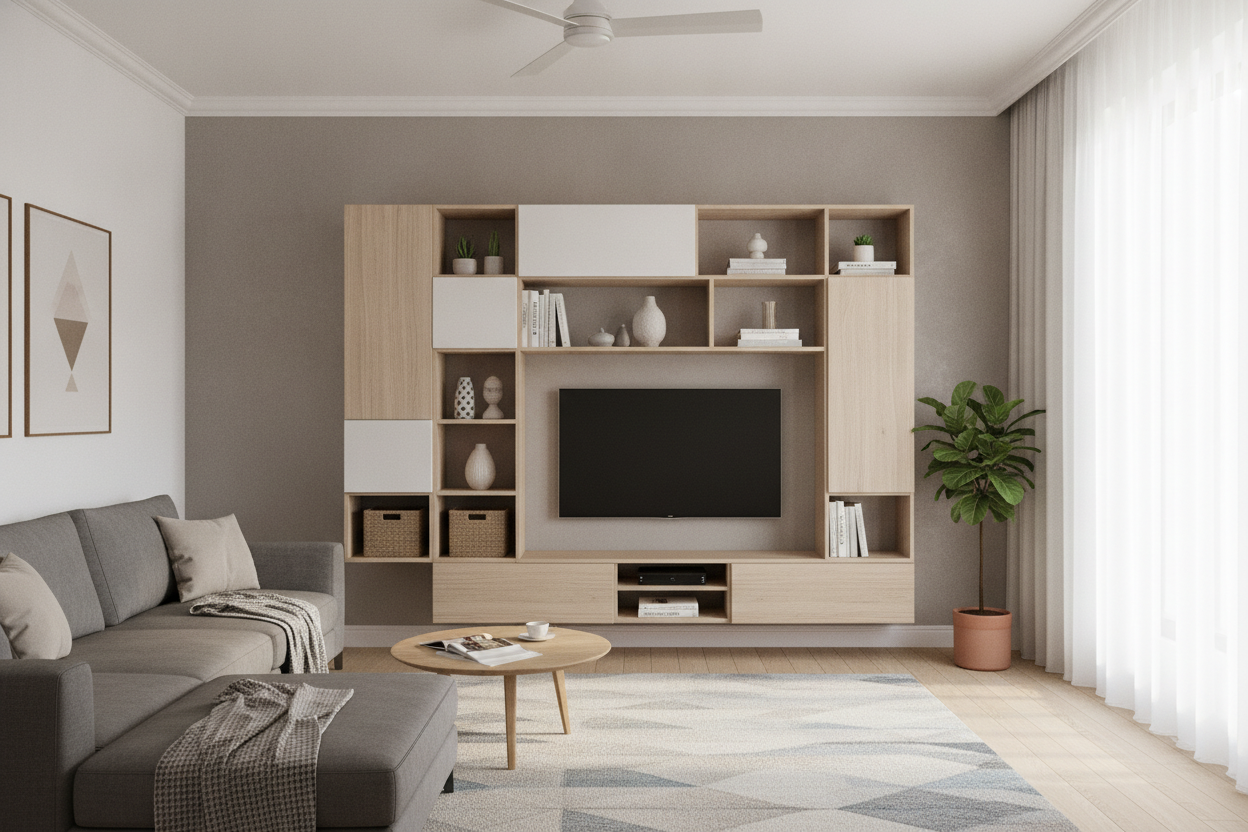
If you want that heavy, substantial look without the thrift store hunt, look for pieces like a wood grain color entertainment center that uses thicker boards and reinforced joints. You want something that mimics the scale of those old wall units but fits modern technology. Just promise me you'll check the weight rating before you hit 'buy.' Your TV deserves better than a wobbly shelf.
FAQ
Is it hard to refinish a used entertainment center?
Not if it is real wood. A quick sanding and a fresh coat of gel stain can make a 90s honey-oak unit look like a modern walnut piece in a weekend. If it is laminate, just use a high-quality primer like BIN before painting.
How do I transport a heavy used unit?
Rent a cargo van for an hour. Most people try to cram these into SUVs and end up scratching their car or the furniture. Spend the $20 on the rental; your back will thank you.
Will my remote work through solid wood doors?
No. If you buy a vintage unit with solid doors, you will need an IR repeater (they are cheap on Amazon) or you will have to leave the doors open while watching TV. It is a small price to pay for a beautiful piece of furniture.

Dejar un comentario
Este sitio está protegido por hCaptcha y se aplican la Política de privacidad de hCaptcha y los Términos del servicio.