










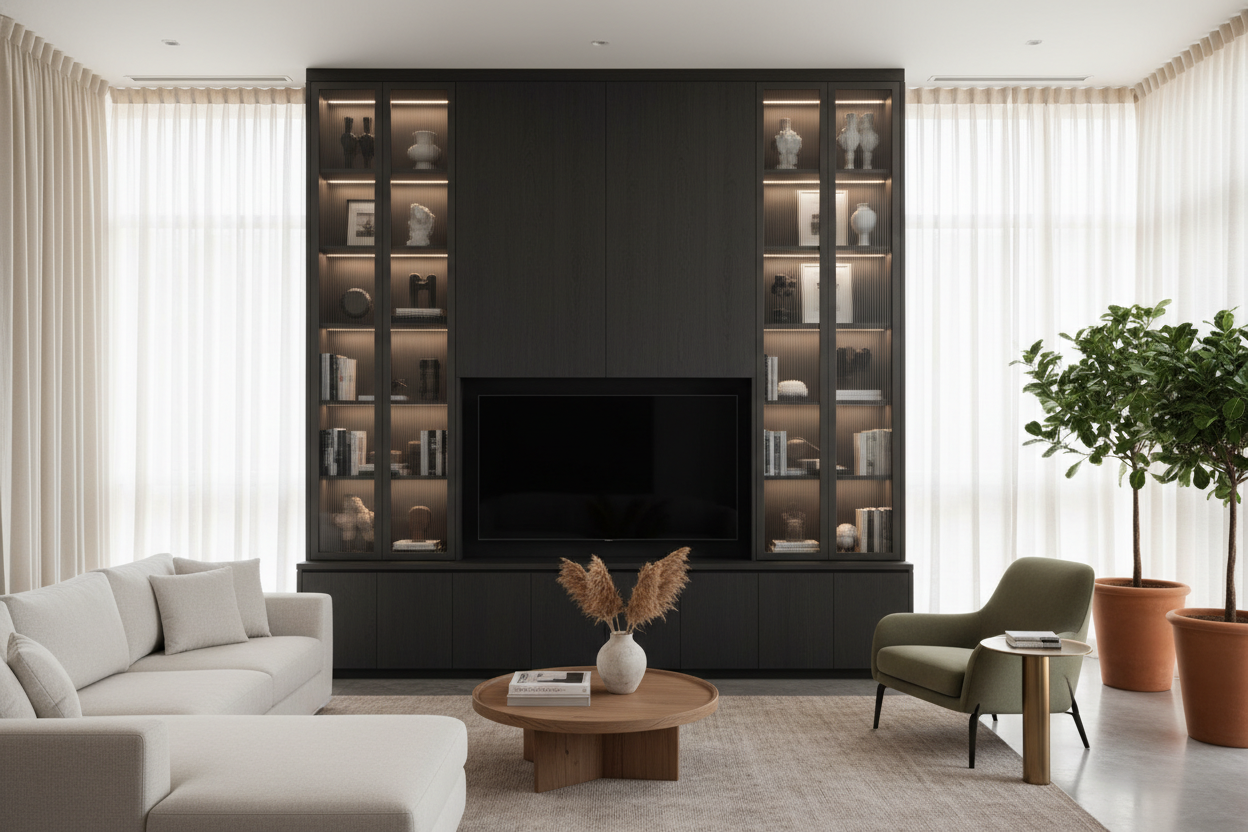
I remember staring at my living room wall after buying a sleek, 18-inch high media console I saw on a design blog. It looked great in the professional photos, but in my actual house with standard nine-foot ceilings, the TV looked like it was sitting on the floor. I had about six feet of depressing, empty drywall staring back at me. I spent months trying to 'fix' it with gallery walls and floating shelves that never quite aligned, eventually realizing that tall entertainment centers are the only real solution for scale.
Quick Takeaways
- Tall units fill the 'dead zone' of empty wall space that low consoles leave behind.
- Vertical lines draw the eye upward, making standard ceilings feel much loftier.
- Closed storage is the only way to truly hide the cable-spaghetti nightmare of modern tech.
- Modern designs have ditched the bulky 90s look for slim profiles and mixed materials.
The Problem With the 'Low and Long' Media Console Trend
We've been told for a decade that 'low and long' is the only way to do modern design. But unless you live in a glass-walled loft with floor-to-ceiling windows, a tiny console often looks like a scale error. You end up with a massive gap between the top of the TV and the ceiling that makes the room feel squat and unfinished.
I’ve seen people try to fill that void with oversized clocks or weirdly placed art, but it always feels like an afterthought. When your furniture is too short for the wall it sits against, the whole room feels off-balance. It’s like wearing a pair of pants that are four inches too short—it just looks like you outgrew your space.
Why Tall Entertainment Centers Actually Make Rooms Feel Larger
It sounds counterintuitive to put a massive piece of furniture in a small room, but verticality is a powerful visual trick. By drawing the eye upward, a tall tv entertainment stand forces you to acknowledge the full height of the room. It makes the ceiling feel higher and the footprint feel more intentional.
If you're currently upgrading your entertainment center, don't be afraid of something that hits 72 or even 80 inches. It anchors the wall rather than just floating against it. I once swapped a low dresser for a towering hutch-style unit in a 12x12 room, and the space immediately felt grander. It’s about using the volume of the room, not just the floor tiles.
Hiding the Clutter (Hello, Tall Entertainment Center With Doors)
My biggest gripe with open shelving is the dust and the wires. A tall entertainment center with doors lets you shove the router, the PlayStation, and that tangled mess of HDMI cables behind a solid panel. It is the difference between a room that looks 'lived in' and a room that looks like a electronics clearance aisle.
I personally look for units with soft-close hinges and ventilated back panels. You want your gear hidden, but you don't want your gaming console to melt because it can't breathe. A solid set of doors provides a clean visual break that calms the entire room down.
Styling a Tall Entertainment Shelf Without the Clutter
You don't have to fill every inch of a tall entertainment shelf. In fact, please don't. Use the upper shelves for three things: height, texture, and air. I like to put a trailing Pothos on the top shelf to let the vines break up the hard lines of the wood or metal.
Mix in some heavy coffee table books—the kind that are too big for a standard bookshelf—and a few pieces of sculptural ceramic. If it looks like a curated library rather than a storage bin for old DVDs, you've won. Keep the 'heavy' items at eye level and the lighter, airier pieces toward the top.
How to Avoid the '90s Oak Behemoth Look
We all have trauma from those honey-oak wall units that took four people and a U-Haul to move. A tall modern entertainment center today uses much lighter visual language. Look for thin metal frames, matte finishes, or tapered legs that lift the unit off the floor to keep it from looking like a giant box.
Even a mid-century modern entertainment center can go vertical without looking like a relic. The key is finding pieces with 'negative space'—maybe some open shelving mixed with closed cabinets. It gives you the height you need without the visual weight of a solid wooden block.
The Storage MVP: Finding a Tall Entertainment Center With Drawers
If you have kids or a partner who refuses to organize the remote situation, you need a tall entertainment center with drawers. The bottom section of a unit should do the heavy lifting for items you need frequently but don't want to see. I use mine for extra throw blankets and the endless supply of batteries that seem to disappear into the couch cushions.
A stylish black TV stand with integrated drawers provides that weighted base that keeps the whole unit from feeling top-heavy. It’s the ultimate hack for keeping a living room functional but looking like a showroom. My own unit has three deep drawers at the base, and it's the only reason my coffee table isn't covered in coasters and charging cables.
FAQ
How tall should my entertainment center be?
Ideally, leave at least 12 to 18 inches of space between the top of the unit and your ceiling. This prevents the room from feeling cramped while still filling the vertical void.
Will a tall unit make my TV look small?
Actually, it does the opposite. By framing the TV within a larger structure, it makes the screen feel like a deliberate part of the architecture rather than a black mirror stuck to a wall.
Do I need to anchor these to the wall?
Yes. If it is over 50 inches tall, bolt it to a stud. I don't care if you don't have kids or pets; an unanchored tall unit is a safety hazard you don't want to mess with.

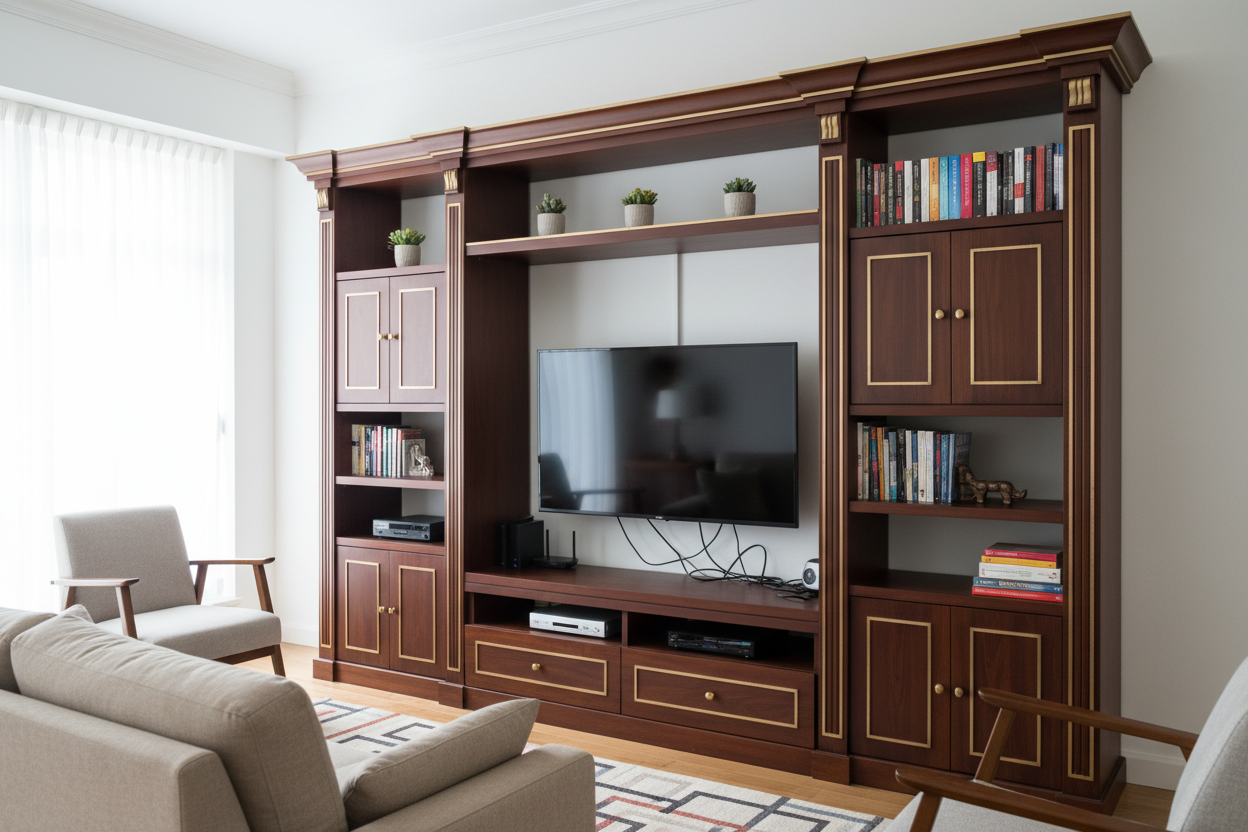

Dejar un comentario
Este sitio está protegido por hCaptcha y se aplican la Política de privacidad de hCaptcha y los Términos del servicio.