










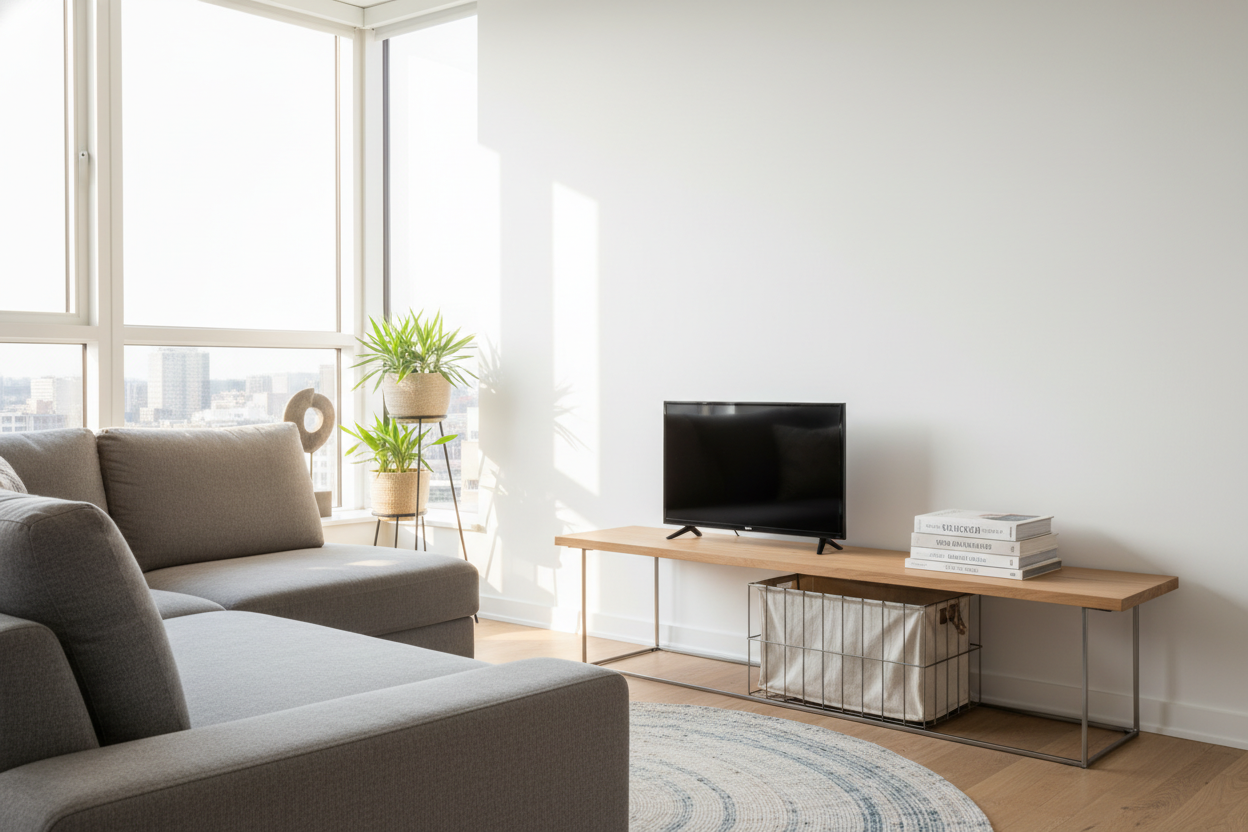
I once lived in a 400-square-foot studio where every inch of floor space felt like a premium tax I couldn't afford. I spent three weeks hunting for the perfect small television stands, eventually settling on a spindly, mid-century inspired piece that looked gorgeous in the professional studio photos. Two days after it arrived, I realized I’d made a massive mistake. My router was dangling off the side, the surge protector was a tangled mess of plastic 'octopus legs' on the rug, and the whole thing felt cluttered despite being 'small.'
Quick Takeaways
- Avoid open shelving if you have more than one cord to hide.
- Prioritize height over width to reclaim unused 'airspace' in tight rooms.
- Depth matters—ensure your stand is deep enough for your TV's base, not just the screen.
- Always check the weight capacity for solid wood vs. particle board.
The 'Shrinking Console' Trap
The biggest mistake people make when shopping for an entertainment center small enough for a studio is thinking that 'less furniture' equals 'more space.' It’s a trap. When you buy a tiny tv table stand that barely fits the footprint of the TV itself, you’re ignoring the reality of modern tech. You probably have a streaming box, a soundbar, or at least a mess of HDMI cables. A very small tv stand with no bulk just pushes that clutter out into the open, making your room look more chaotic than a larger, smarter piece would.
I’ve seen too many people buy a small table tv unit that lacks a back panel. Without that panel, you're staring at a nest of black wires against your white walls. It’s visual noise that shrinks a room faster than a bulky sofa ever could. If you're looking at tv stands for small tvs, don't just look at the width. Look at the volume. A small tv cabinet with actual doors might take up two more inches of floor space, but it hides the 'tech-vomit' that makes small apartments feel cramped.
Why You Keep Tripping Over Wires
We’ve all been there—trying to tuck a thick power strip behind a narrow leg of a compact tv stand. It doesn't work. Most tv stands for small spaces are designed for aesthetics first and cable management second. If you choose a small tv stand shelf style with open glass or wire racks, you are committing to a life of dusting and cable-tying every single weekend. It’s a nightmare.
In my experience, a media stand small enough for a tight corner needs to have dedicated cord cutouts. If it doesn't have a pre-drilled hole in the back, you’ll end up drilling one yourself or running wires around the side, which looks cheap. Even a small cheap tv stands setup can look high-end if the cables are invisible. The goal is to make the small tv on stand look like it's floating, not like it's being held hostage by its own power supply.
The 3 Features Your Next Stand Actually Needs
If you want a tv stand small space with storage that actually functions, you have to be picky. I’ve assembled enough flat-pack furniture to know that 'modern tv stand for small spaces' is often code for 'we skipped the structural integrity.' You need a small tv console that can handle the weight of a modern screen without bowing in the middle after six months. Look for kiln-dried wood or heavy-duty metal frames over that 1.5 lb density fiberboard that sags if you sneeze on it.
Closed Storage Is Non-Negotiable
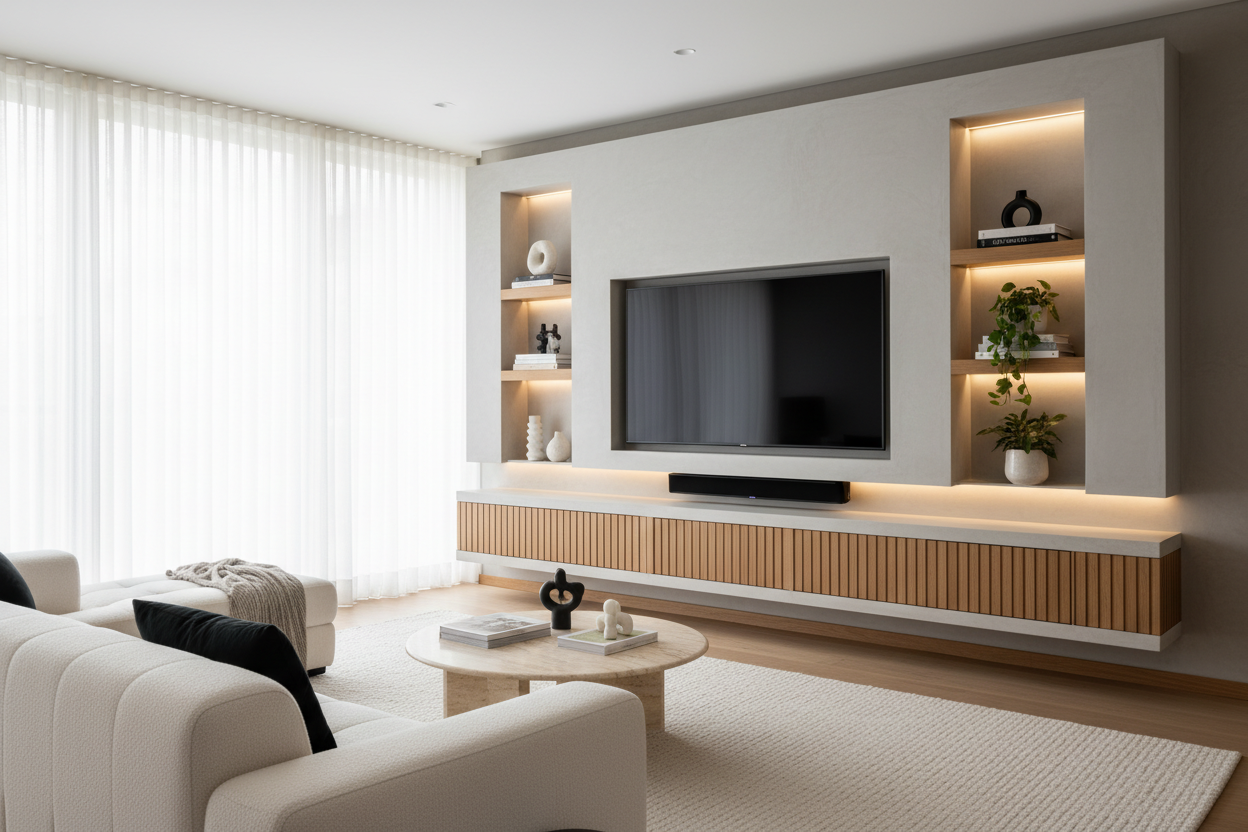
I cannot stress this enough: get a small cabinet for tv gear that has doors. Whether it’s a small tv stand with storage drawers or a sliding barn door, you need a place to shove the remotes, the controllers, and the spare batteries. In a small room, every object on display is a 'job' for your eyes to process. By choosing a small tv unit with closed doors, you’re giving your eyes a break. This is especially true for an entertainment center for small living room setups where the TV is the focal point.
Go Vertical, Not Just Narrow
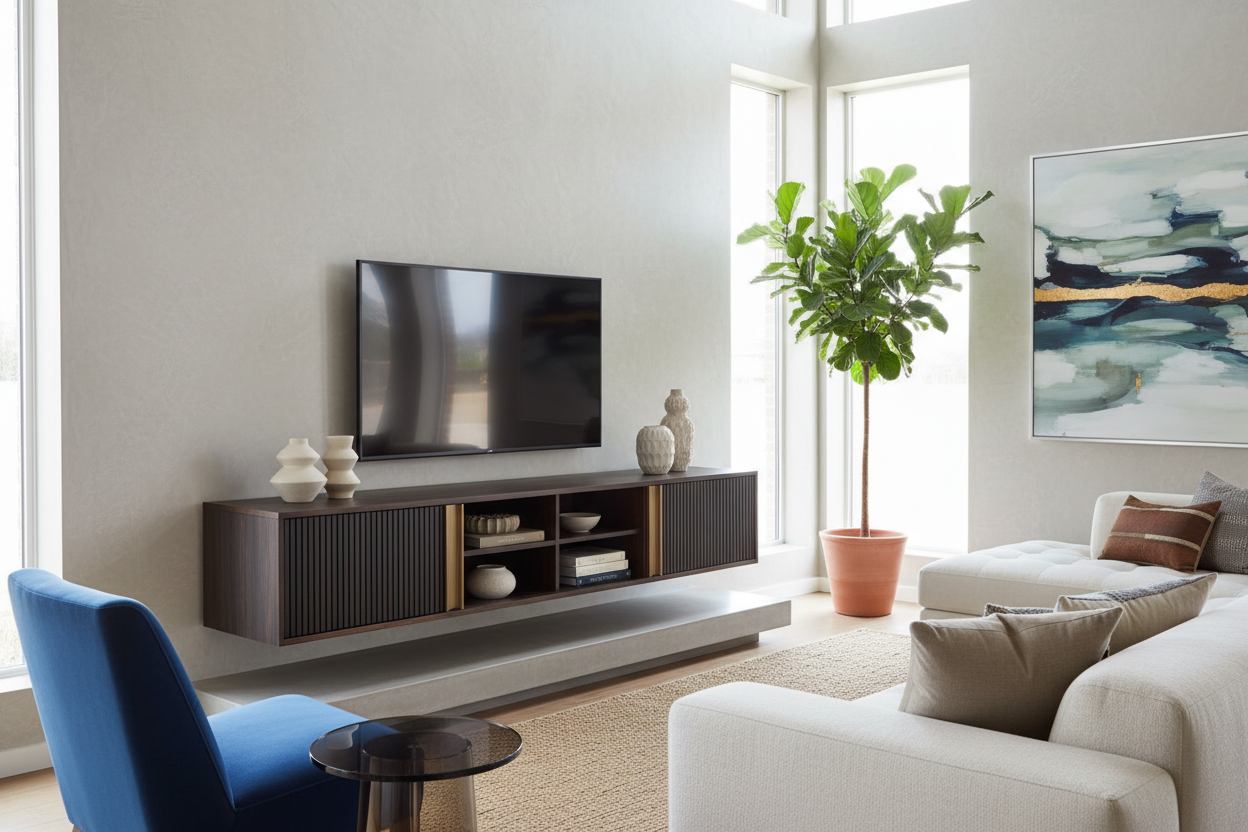
When floor space is gone, look up. A small bedroom entertainment center should often be taller than a standard living room console. Why? Because you’re usually viewing it from a bed, and you need that height to clear your feet. A small tv dresser or a tall entertainment cabinet small enough for a corner reclaims that vertical airspace. I’ve found that a 30-inch high small tv base is much more functional than a low-profile 18-inch version when you’re trying to squeeze in extra shelving for books or gaming consoles.
Taking It to the Bedroom
Furnishing a sleeping space is a different beast. You aren't just worried about style; you're worried about traffic flow. I once put a rectangular small tv stand bedroom unit in a walkway and bruised my shin every night for a month. That is when I learned the magic of the corner unit. A small TV stand for bedroom corners is a literal lifesaver because it softens the edges of the room and keeps the walkway clear.
If you are looking for a small table for bedroom tv setups, consider the viewing angle. You don't want to be staring down at your lap. A small tv stand for bedrooms should ideally put the center of the screen at eye level while you're propped up on pillows. If your 'mini entertainment stand' is too low, you'll end up with neck strain that no amount of fancy pillows can fix. I always recommend a small tv table for bedroom use that hits at least the 28-to-32-inch height mark.
Rethinking Your Entire Floor Plan
Ultimately, a small space tv stand isn't just a place to put your tech—it's a piece of a larger puzzle. If you choose a media console small space dwellers actually swear by, it will likely be multi-functional. Maybe it doubles as a bookshelf, or maybe it has enough clearance underneath for a couple of storage baskets. Don't just buy a 'tv stand small living room' model and call it a day; think about how it interacts with your coffee table and seating.
When you start looking for small space solutions, remember that the best furniture works twice as hard as its footprint suggests. A small tv stand for living room use should feel like a deliberate choice, not a compromise. Whether you’re in a studio apartment or just trying to declutter a guest room, the right small television stands cabinets will make the room feel finished, organized, and—most importantly—larger than it actually is.
FAQ
Can I put a large TV on a small stand?
Technically, yes, if the weight capacity allows it, but check the legs. Many modern 55-inch+ TVs have 'v-shaped' legs at the very edges of the screen. If your stand is narrower than the distance between those legs, the TV will literally fall off. Look for a small tv stand for large tv use that features a center-pedestal mount instead.
What is the best height for a small TV stand?
For a living room, 18 to 22 inches is standard for eye-level viewing from a sofa. For a bedroom, you want to go higher—usually 28 to 34 inches—so you can see over your feet and blankets without straining.
How do I hide wires on a small stand with no back?
If you're stuck with an open-shelf small table for tv, use adhesive cable clips along the back of the legs to channel the cords down out of sight. You can also use a 'cable management box' that sits on the bottom shelf to house the power strip and all the excess cord slack.

Dejar un comentario
Este sitio está protegido por hCaptcha y se aplican la Política de privacidad de hCaptcha y los Términos del servicio.