










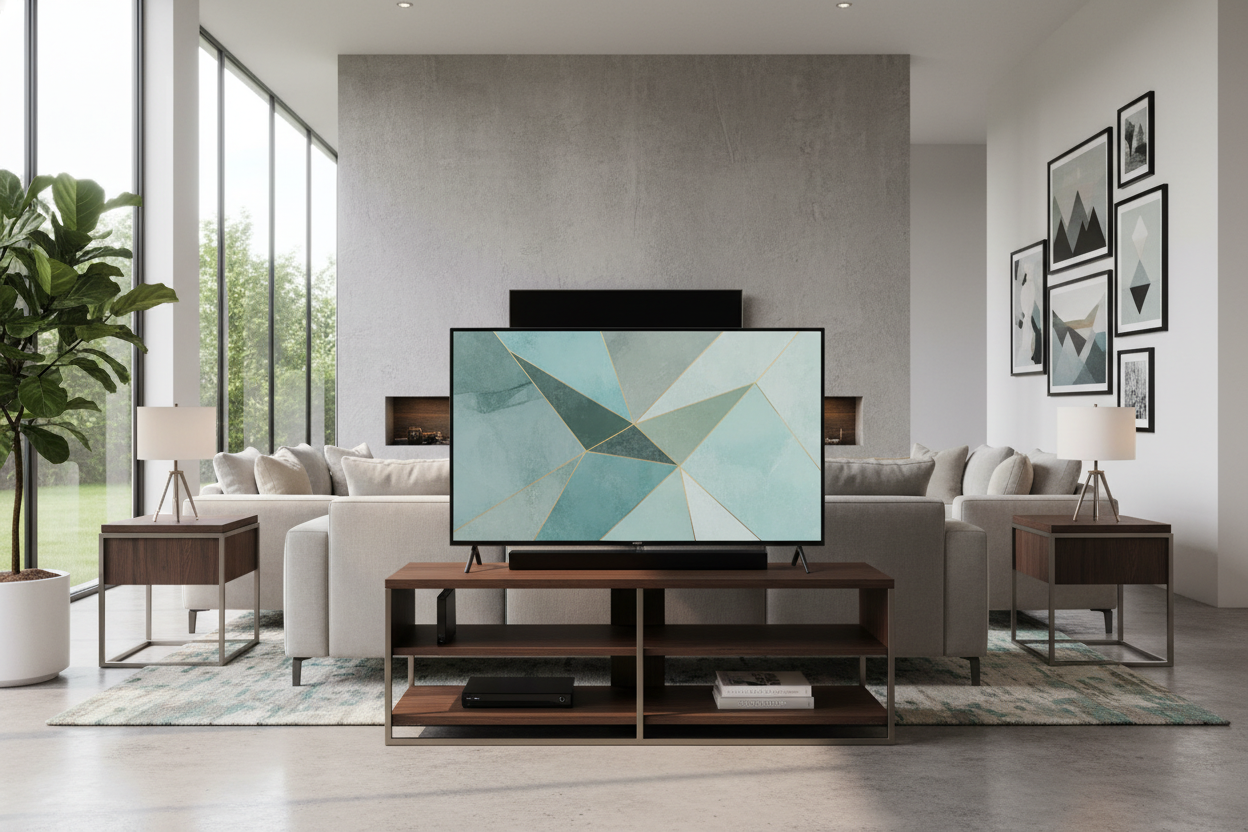
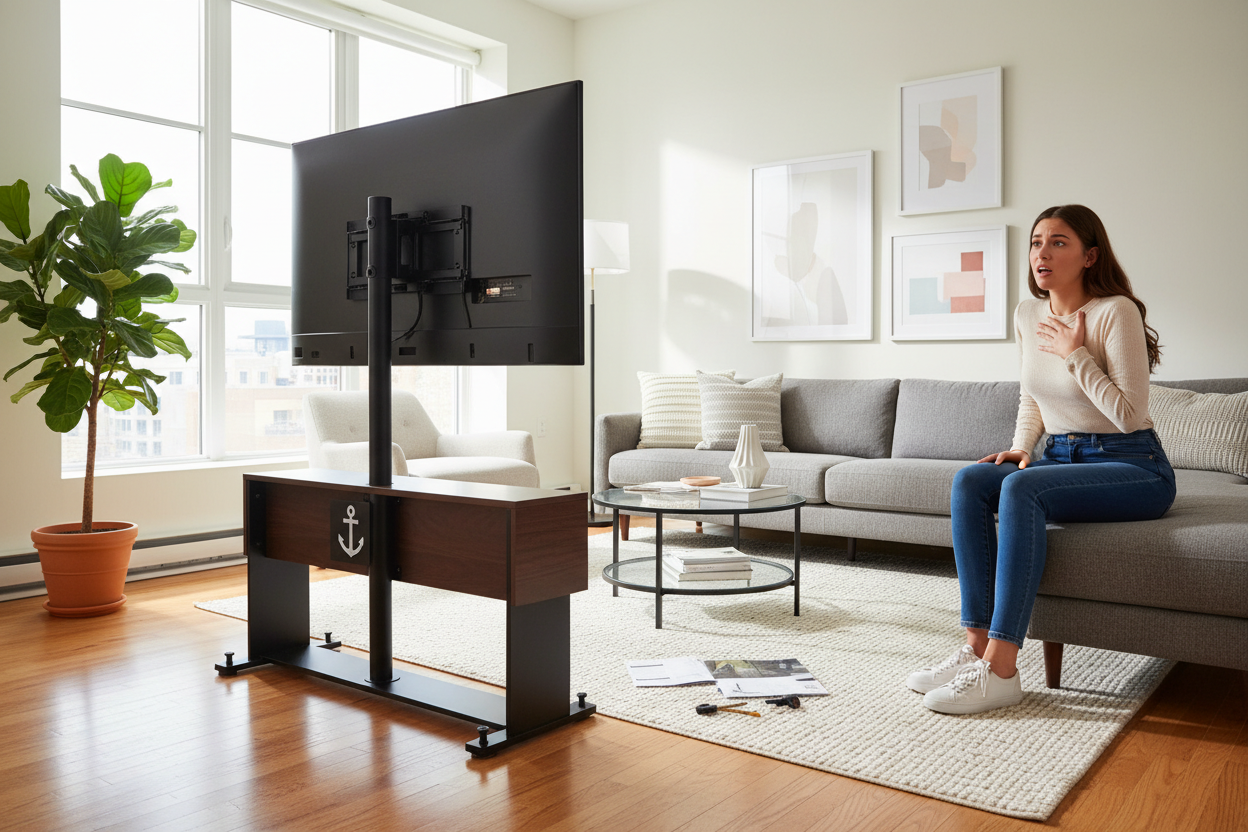
I remember the first time I bought a 'matching' stand for my screen. I measured the TV, measured the stand, and thought, 'Perfect, they are both basically the same width.' I set it up, stepped back, and realized my living room looked like a total accident. The TV looked massive, the stand looked like it was gasping for air, and the whole vibe was precarious.
Finding the right television stands for 50 inch tv setups isn't about matching numbers; it is about visual weight. I have spent years testing consoles that sagged under the weight of a soundbar or looked like they belonged in a dorm room. If your living room feels unbalanced, the culprit is probably a stand that is too small for its britches.
- Your TV stand should be at least 10-20% wider than the actual screen.
- A 50-inch TV is actually about 44 inches wide, not 50.
- Aim for a console width of 55 to 65 inches for a mid-sized screen.
- Avoid shallow depth; 16-18 inches is the sweet spot for stability.
The 'Pyramid Effect' (And Why It Looks So Awkward)
The biggest mistake I see people make is buying a console that is the exact same width as the television. In design, we call this the 'Pyramid Effect,' but in reverse. It creates a top-heavy look where the TV appears to be crushing the furniture beneath it. It is visually stressful.
When the edges of your TV line up perfectly with the edges of the stand, your eyes create a triangle pointing upward. It makes the room feel unstable and the ceiling feel lower. I once helped a friend swap a 45-inch stand for a 60-inch one, and the entire room suddenly felt twice as big. You want the furniture to anchor the screen, not just hold it up.
The Golden Ratio for a 50" TV Cabinet
Let's talk real numbers because marketing departments love to confuse you. A 50-inch screen is measured diagonally. In reality, the actual horizontal width of the frame is usually around 44 inches. If you buy a 50 tv cabinet that is exactly 50 inches wide, you only have 3 inches of clearance on either side. That is not enough.
The ideal stand should be at least 55 to 65 inches wide to give the TV room to breathe. I personally love using a black cabinet with glass doors for this. The dark color and the glass panels provide a heavy, sophisticated base that makes a 44-inch screen look like it belongs in a high-end theater rather than a bargain bin. It provides that essential visual 'anchor' that keeps the screen from looking like it is floating away.
Why Depth Will Make or Break Your Setup
Depth is the unsung hero of media furniture. Most cheap, flat-pack stands are barely 12 or 14 inches deep. This is a nightmare for cable management. Your HDMI cables and power bricks need space, and if the stand is too shallow, you will end up with a mess of wires peeking out from the sides.
I have learned the hard way that shallow stands also tend to be made of flimsy materials that bow over time. Investing in the best design for tv cabinet wooden stands ensures you get a piece with a depth of at least 16 inches. Solid wood handles the weight of the TV and your peripherals without that depressing mid-shelf sag that plagues painted MDF units.
How I Style the 'Extra' Surface Area
Once you have upgraded to a wider 50" tv cabinet, you are going to have about 8 to 10 inches of empty space on either side of your screen. Do not panic and fill it with tiny knick-knacks. I usually go for one tall element, like a sleek table lamp, and one low element, like a stack of two or three oversized art books.
If you hate the look of a black screen sitting in your room entirely, there are clever workarounds. I have recommended an electric vertical lift tv cabinet to clients who want the surface area for decor but want the TV to disappear when it is not movie night. It is the ultimate way to keep the room looking like a lounge instead of a showroom.
What If I Want to Mount the Screen Instead?
I get asked this all the time: 'If I mount the TV on the wall, do I still need a stand?' The answer is a resounding yes. A wall-mounted TV without a console underneath looks like a lonely billboard in a parking lot. You need something to ground the floating rectangle.
A cabinet for tv on wall setups provides a place for your speakers, consoles, and those annoying wires that hang down. Even if the TV is floating, the stand beneath it should still follow the width rules. It should be wider than the TV to maintain that sense of balance and proportion.
How wide is a 50-inch TV really?
Most 50-inch TVs are approximately 44 inches wide. Always measure the physical width of your specific model before buying a stand, as bezel sizes can vary.
Can a TV stand be too wide?
Rarely. As long as the stand doesn't physically block a doorway or look ridiculous in a tiny room, a wider stand almost always looks more 'designer' than a narrow one.
What is the best height for a TV stand?
Your eyes should be level with the middle of the screen when you are seated. For most sofas, this means a stand that is between 18 and 24 inches tall.


Dejar un comentario
Este sitio está protegido por hCaptcha y se aplican la Política de privacidad de hCaptcha y los Términos del servicio.