










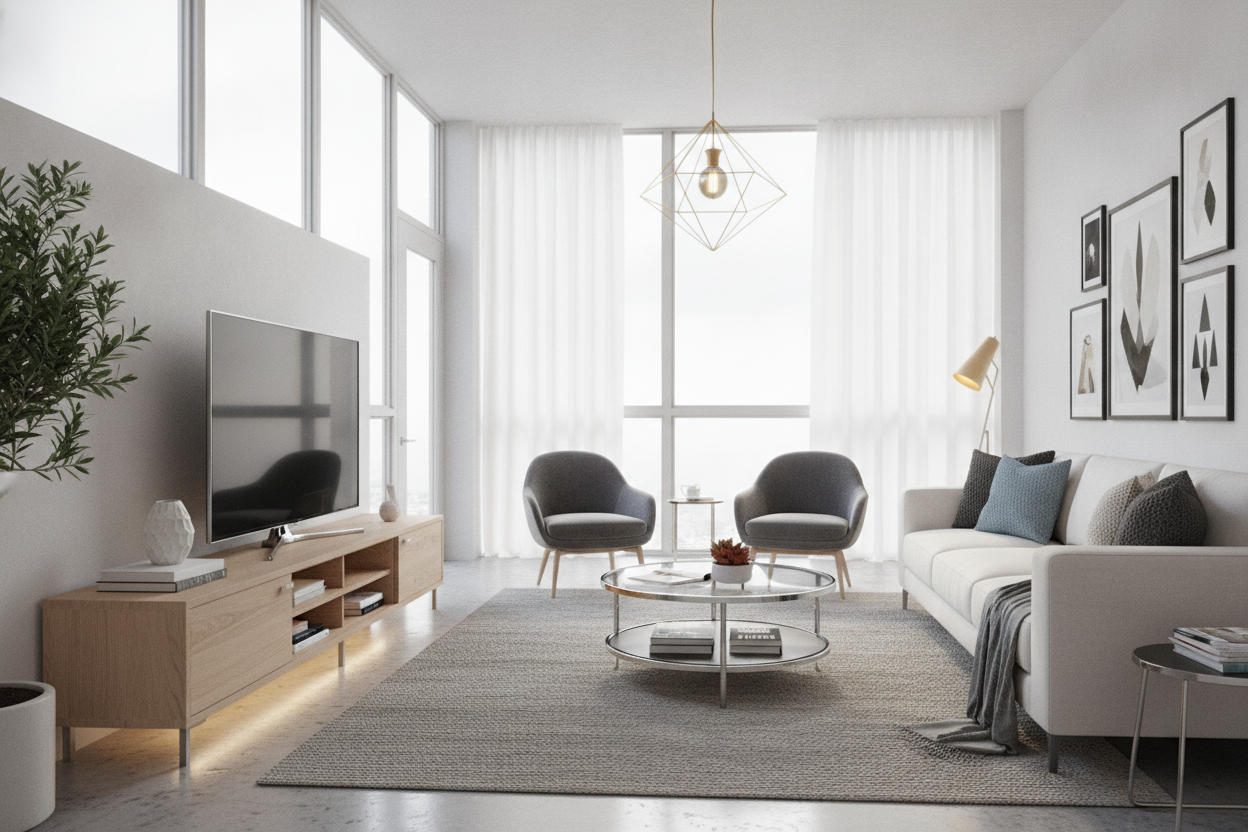
I spent three years staring at a black rectangle on a charcoal-grey wall in an apartment that gets about twenty minutes of direct sunlight a day. It was a cave. I tried floor lamps, but they just created a massive glare on the screen, and those cheap stick-on LED strips always peeled off after a month, leaving a sticky residue and a flickering mess.
I finally caved and bought a led television stand, and I’ll be the first to admit I was wrong. I thought it would look like a teenager’s gaming setup, but it actually solved my lighting problem by adding a soft, indirect glow that makes the room feel intentional rather than just under-lit.
- Warm white light prevents eye strain during late-night Netflix sessions.
- Always size the stand at least 5 to 10 inches wider than your screen.
- Cable management is non-negotiable when you have lights highlighting the back of the unit.
- Floating units make small rooms feel significantly larger by showing off floor space.
I Used to Think Glowing Furniture Was Tacky
I’m a minimalist at heart. My Pinterest boards are full of mid-century walnut and neutral linens. For years, I associated any furniture with built-in lights with dorm rooms and neon energy drinks. I was terrified that adding a stand for led tv would make my living room look like a Twitch stream.
But here is the reality of living in a modern apartment: we don’t have enough outlets for layered lighting. A tv led stand provides that missing middle layer of light. It’s not about the RGB rainbow; it’s about a soft wash of light that separates the black screen from the dark wall behind it.
The Trick to Making Built-In Lighting Look Expensive
The biggest mistake people make is using the default 'Cool Blue' or 'Neon Green' settings. If you want your home to feel like a grown-up lived there, stick to the warm end of the spectrum. I keep mine on a soft amber or a 2700K warm white.
This creates a halo effect that mimics high-end architectural lighting. If your stand has a remote, use the dimming function. You want a subtle glow, not a spotlight that competes with the brightness of your actual TV. Cheap LEDs often flicker at low voltages, so I look for units with decent controllers that offer smooth dimming.
Matching the Glow to Your Screen Size
Proportions will make or break the look. I’ve seen people try to balance a massive 65-inch screen on a tiny base, and it looks like a mushroom. If you have a standard mid-sized screen, a 55 inch tv stand with led lights is the sweet spot. It gives you enough 'runway' on either side for the light to actually cast a shadow.
If you’ve gone full cinema mode, you absolutely need a led light tv stand 65 inch or larger. The goal is for the light to frame the TV, not get swallowed by it. If you’re still using that wobbly IKEA unit from college, it might be time to upgrade your media console to something that can actually support the weight and the visual scale of a modern flat screen.
Floating vs. Freestanding: Which Casts a Better Light?
This is where the debate gets heated. A traditional stand led tv setup is great for renters because there are no holes in the wall. You get a nice glow that hits the floor and the immediate wall behind it. It feels grounded and substantial.
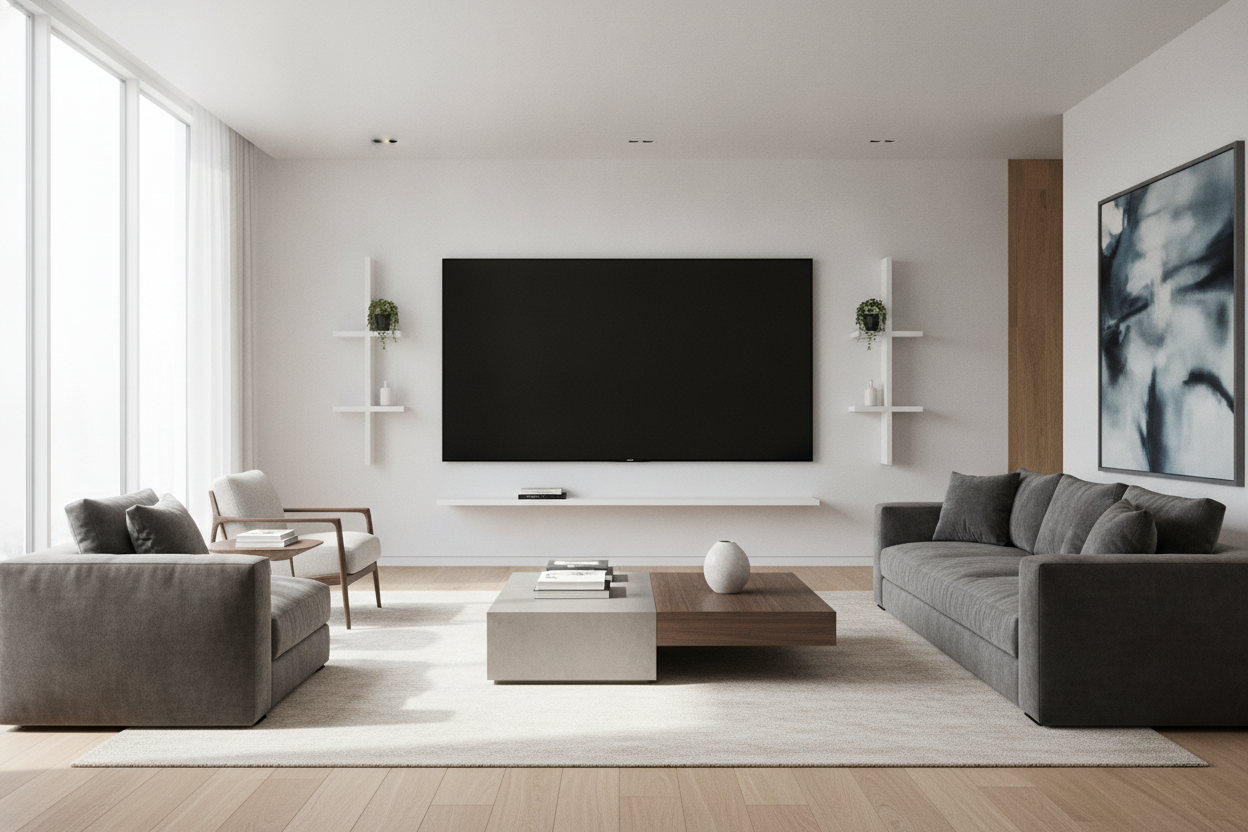
However, if you can swing the installation, a floating high gloss TV stand is a total cheat code for small rooms. Because the light reflects off the floor underneath the unit, it creates the illusion that the furniture is weightless. It makes the whole room feel airier, which is a lifesaver in a 600-square-foot floor plan.
Hiding the Cords (Because Glowing Spaghetti Is Bad)
Here is the catch: putting an led tv on stand setups means you are literally shining a light on your cable management. If you have a mess of HDMI cords and power bricks hanging down, the LEDs will highlight every single dust bunny and tangled wire. It looks terrible.
I recommend choosing wall mounted and freely arranged units that have built-in grommets or hollow back panels. I spent two hours with zip ties and velcro wraps when I set mine up, and it was the best time I ever spent. If you can see the cords, the 'expensive' vibe is dead on arrival.
Is an LED stand hard to assemble?
Not really, but the wiring adds an extra 15 minutes. Most use simple plug-and-play USB headers or 12V adapters. Just make sure you test the lights before you tighten all the screws on the back panel.
Do the lights stay on all night?
Only if you want them to. Most come with a remote or a physical switch. I have mine plugged into a smart outlet so they turn off automatically at midnight.
Can I change the colors?
Yes, most units come with an RGB controller. While I advocate for warm white, having the option for a deep red during a horror movie marathon is actually pretty fun.

Dejar un comentario
Este sitio está protegido por hCaptcha y se aplican la Política de privacidad de hCaptcha y los Términos del servicio.