










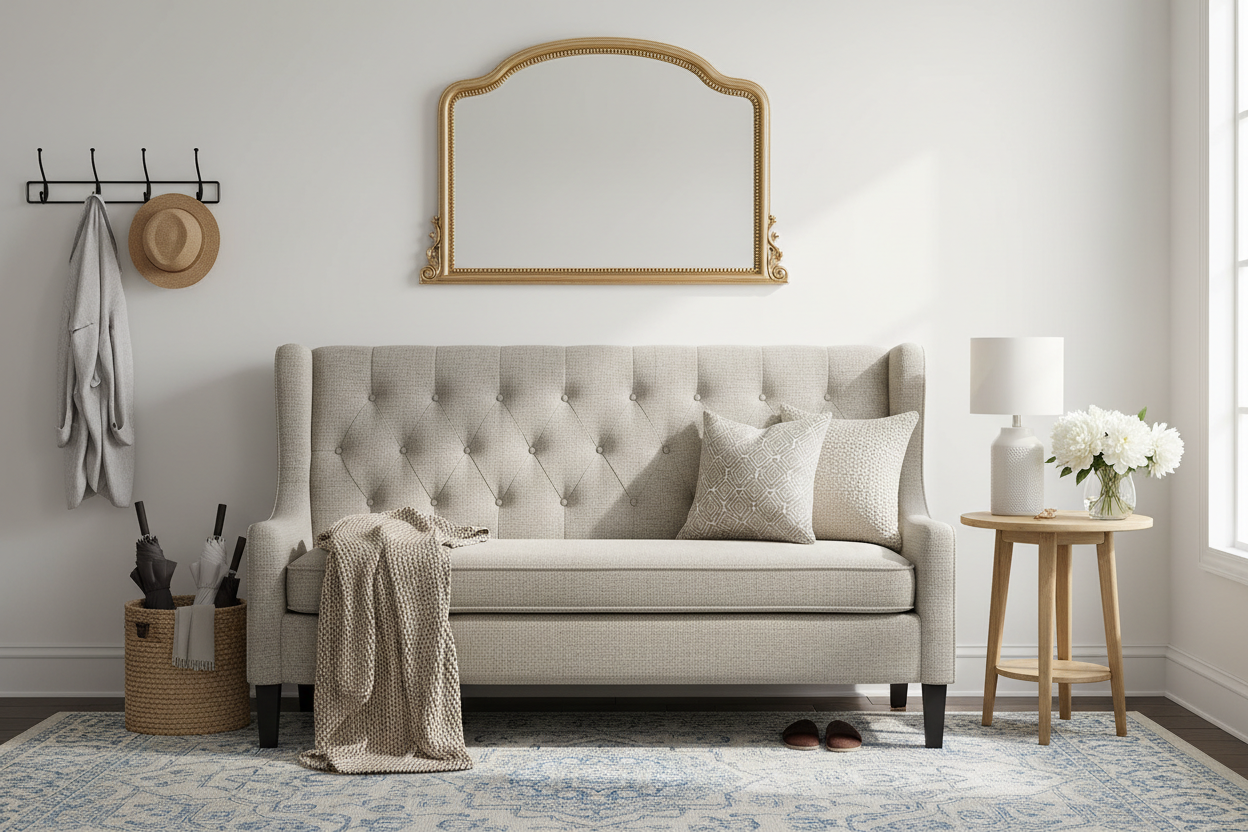
A tufted entryway bench serves as the primary anchor for your home's entrance, providing a sophisticated transition between the outdoors and your living space while offering essential seating for removing shoes. Unlike standard wooden benches or simple shoe racks, the tufted design introduces an element of texture and luxury immediately upon walking through the door. It bridges the gap between high-end interior design and necessary mudroom functionality, acting as both a visual focal point and a practical landing strip for daily life.
Many homeowners overlook the hallway when furnishing a house, viewing it merely as a passage rather than a room. However, the foyer sets the tone for the rest of the home. Adding upholstered seating with deep button tufting or channel stitching instantly softens the acoustics of an often echo-heavy space and provides a dedicated spot to pause. Whether you opt for a piece with hidden storage or open shelving, this specific type of furniture transforms a chaotic drop zone into a curated vignette.
The Day I Stopped Tripping Over Shoes
My appreciation for this piece of furniture comes from a place of genuine frustration. For years, my front door opened directly into a narrow hallway that perpetually looked like a shoe store had exploded. There was no designated place to sit, so guests would awkwardly lean against the wall to remove their boots, and my own family would kick shoes off wherever they landed. The visual clutter was the first thing I saw when coming home after a long day, and it immediately spiked my stress levels.
I eventually invested in a long, emerald green velvet bench with diamond tufting and a flip-top storage compartment. The change was immediate. Suddenly, the pile of scarves and dog leashes vanished into the hidden compartment. The "shoe mountain" was replaced by a sophisticated piece of furniture that invited you to sit down and take a breath. It wasn't just about cleaning up; it was about changing the psychology of entering the home. That bench became the most hardworking piece of furniture in the house, proving that you do not have to sacrifice aesthetics for utility.
Understanding the "Tufted" Appeal
The term "tufted" refers to the technique of threading through layers of fabric and padding, then securing them with a button or a knot. This creates those characteristic depressions or dimples. In an entryway setting, this detail is crucial because it adds depth and visual weight. A flat, plain cushion can look cheap or temporary, but tufting implies craftsmanship and durability. It helps the fabric hold its shape over time, preventing the sagging that often occurs with frequent sitting.
You will generally encounter two main styles: button tufting and blind tufting. Button tufting offers a classic, Chesterfield-inspired look that leans traditional or transitional. Blind tufting, where the stitch pulls the fabric back without a visible button, offers a cleaner, more modern aesthetic. Both styles serve to break up large expanses of fabric, making the bench feel more like a deliberate design choice and less like a utilitarian necessity.
Choosing the Right Fabric for High-Traffic Areas
Since this furniture lives near the front door, it faces threats that your living room sofa might not: muddy paws, wet raincoats, and the friction of denim jeans. Material selection is paramount. Velvet is incredibly popular for tufted benches because the sheen highlights the depth of the tufts, creating a dramatic interplay of light and shadow. However, if you choose velvet, look for performance varieties that resist staining and crushing.
Linen and cotton blends offer a relaxed, farmhouse, or coastal vibe but can be harder to clean if mud gets tracked in. For households with young children or active pets, faux leather or high-quality bonded leather is often the smartest route. These materials can be wiped down with a damp cloth and don't trap dust or allergens. The leather look also pairs exceptionally well with metal legs for an industrial touch or wood finishes for a mid-century modern feel.
Storage Configurations: Flip-Top vs. Open Shelf
The utility of your bench depends largely on what lies beneath the seat. A flip-top storage bench is a hollow chest disguised as seating. This is the ultimate solution for hiding unsightly items like winter gloves, emergency umbrellas, or reusable grocery bags. The downside is that you cannot store shoes inside easily without making the interior dirty, and you have to stand up to access the contents.
Alternatively, a bench with an open lower shelf or cubbies offers immediate access to footwear. This encourages family members to tuck their shoes away rather than leaving them on the rug. The trade-off is visual clutter; you can still see the shoes. Some designs offer a hybrid approach, featuring a tufted seat with drawers underneath. This keeps small items organized while maintaining a solid, furniture-like appearance that hides everything away.
Sizing and Scale in the Foyer
Nothing ruins a hallway faster than furniture that obstructs the flow of traffic. Before falling in love with a specific design, measure your available width. You need at least 30 to 36 inches of clearance for a comfortable walking path past the bench. If your entryway is tight, look for a shallow depth bench (around 14 to 16 inches deep) rather than a standard 18 to 20-inch depth.
Length is equally important. A tiny bench on a long wall looks lost and out of proportion. A good rule of thumb is to scale the bench to the wall or the rug it sits on. If you are placing the bench under a piece of art or a mirror, the bench should be slightly wider than the object hanging above it to create a balanced, grounded look. This creates a cohesive vertical line that draws the eye up, making the ceiling appear higher.
Styling Your Entryway Vignette
Once the bench is in place, styling it prevents it from becoming a dumping ground for mail. Start with a large mirror centered on the wall above the bench. This allows for a last-minute outfit check before leaving and reflects light to make the foyer feel larger. Flank the mirror with sconces or place a tall floor lamp next to the bench to add warmth.
Textiles play a huge role here. A throw pillow or two in contrasting colors can highlight the tufting detail. If the bench has legs, a runner rug placed in front of it anchors the space. For a finishing touch, place a woven basket next to the bench for items that don't fit inside, such as long umbrellas or oversized bags. This setup turns a simple piece of furniture into a complete, welcoming environment.
Maintenance and Longevity
To keep the tufting looking crisp, you need to vacuum the crevices regularly. Dust and crumbs inevitably settle into the button depressions. Use the upholstery attachment on your vacuum cleaner to gently suction out debris. If a button becomes loose, repair it immediately; a loose button can lead to uneven tension in the fabric, causing it to tear or ripple.
Periodically tighten the legs, especially if the bench is used daily for putting on shoes. The shifting weight can cause bolts to loosen over time. With basic care, a quality upholstered bench can withstand the rigors of the entryway for a decade or more, remaining a staple of your home's first impression.
Frequently Asked Questions
What is the best height for an entryway bench?
The standard height for a comfortable entryway bench is between 18 and 20 inches. This height is similar to a dining chair, making it easy for most adults to sit down and stand up while putting on or taking off shoes. If the bench is too low, it becomes difficult to use; if it is too high, it may feel awkward to bend down to reach footwear.
Can I use a bedroom bench in the entryway?
Yes, bedroom benches, often called "end-of-bed" benches, work perfectly in foyers as they are typically designed with similar dimensions and tufted aesthetics. Just ensure the fabric is durable enough for an entryway, as bedroom furniture often utilizes delicate fabrics like silk or light linen that may not withstand muddy shoes or heavy traffic.
How do I clean the tufted crevices if I spill something?
For liquid spills in tufted areas, blot the liquid immediately with a clean, dry cloth—do not rub, as this pushes the liquid deeper into the padding. Use a Q-tip or a soft toothbrush dipped in a mild upholstery cleaner to gently work on the specific crevice, then blot dry again. Ensure the area dries completely to prevent mildew from forming inside the foam padding.


Dejar un comentario
Este sitio está protegido por hCaptcha y se aplican la Política de privacidad de hCaptcha y los Términos del servicio.