










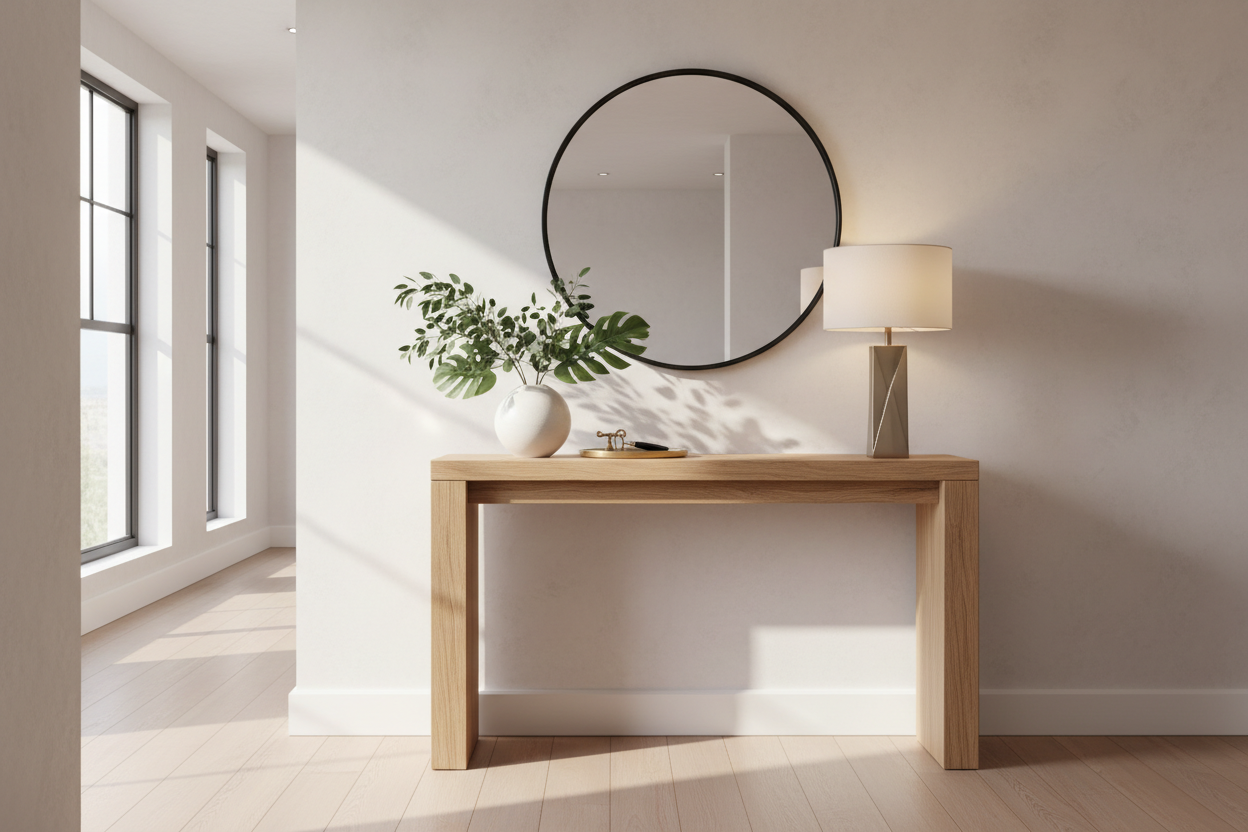
Standard furniture dimensions often fail to account for the specific architectural quirks of modern homes or the practical needs of a busy entryway. Most console tables sit at a polite 30 inches, which works fine for a low-slung mid-century living room but can look surprisingly diminutive in a foyer with soaring ceilings or next to a substantial staircase. This is where the high entry table steps in as a game-changer. By raising the surface level to 34 or even 36 inches, you change the visual center of gravity in the room, making the space feel more deliberate and less like a holding area for furniture that didn't fit elsewhere.
Choosing a taller table isn't just an aesthetic choice; it is often an ergonomic one. Dropping keys, mail, and phones onto a surface that meets your hand naturally is far more comfortable than stooping down. This height difference might seem negligible on paper, but in daily practice, those few extra inches transform a decorative piece into a functional command center for the home.
Balancing Proportions in Vertical Spaces
Tall ceilings and two-story foyers are notoriously difficult to furnish. Low-profile furniture tends to get swallowed up by the empty vertical space, making the room feel cold or unfinished. A high entry table acts as a bridge between the floor and the upper reaches of the wall. It allows you to hang a mirror or artwork slightly higher, drawing the eye upward and creating a cohesive look that fills the void without cluttering the floor plan.
I learned this lesson the hard way in my first apartment, which had unusually high wainscoting in the hallway. I bought a standard-height console, and the top of the table sat awkwardly below the chair rail molding. It looked like a mistake—as if the table had shrunk in the wash. I eventually swapped it for a taller, leggy antique piece that cleared the molding by two inches. Suddenly, the hallway looked intentional and architecturally sound. That small adjustment in height anchored the entire entryway.
The Sofa Table Dilemma
Open-concept living spaces present a unique challenge: floating furniture. When a sofa sits in the middle of a room, the back of it can feel like a harsh wall. Placing a table behind it softens this line, but getting the height right is critical. If you have a plush, overstuffed couch or a sectional with substantial back cushions, a standard console will disappear behind it.
You need a piece that is sofa table high—meaning it sits level with or just slightly below the top of the sofa frame. This creates a unified visual plane. If the table is too low, you lose the ability to place lamps on it effectively, as the light will be blocked by the couch cushions. If it is too high, it looks like a barricade. The goal is integration. A taller table behind the sofa also offers a convenient perch for drinks or a charging station, effectively adding a functional layer to your seating arrangement without taking up extra square footage.
Measuring for the Perfect Fit
Before purchasing, break out the tape measure. For an entryway, there is no strict rule, but ensure the table doesn't interfere with light switches or cover architectural details you want to show off. For placement behind a sofa, measure from the floor to the top of the hard frame of the sofa back (exclude fluffy, removable cushions from this measurement). Your table should ideally match this height.
Depth is just as important as height. In a hallway, you generally want to keep the depth under 15 inches to maintain a comfortable walking path. Behind a sofa, you can afford to go a bit deeper, perhaps up to 18 inches, depending on the surrounding traffic flow.
Maximizing Functionality in Small Footprints
Height offers another distinct advantage: volume. A taller frame allows for more vertical storage options underneath or within the unit itself. In tight foyers where floor space is premium real estate, a high console table with storage becomes essential. These units often feature a row of drawers right at hip height, perfect for hiding unsightly clutter like dog leashes, sunglasses, and unread mail.
The space beneath a taller table is also more usable. With a 36-inch clearance, you can easily slide large woven baskets or even a pair of ottomans underneath. This turns dead air into active storage. In a mudroom setup, this lower space is ideal for tucking away boots or shoes, keeping the walkway clear while ensuring daily essentials remain accessible. The extra vertical clearance ensures that whatever you store underneath doesn't look cramped or jammed in.
Styling Your Vertical Surface
Once you have the right piece, styling requires a slightly different approach than you might use for a coffee table. Because the surface is higher, you don't need to build as much height with your decor objects. A massive vase on a tall table might feel precarious. Instead, focus on layering.
Start with a focal point on the wall, such as a round mirror or a piece of art. This anchors the table. Then, use the surface for objects that invite interaction. A shallow bowl for keys, a stack of art books, or a sculptural lamp works well. Since the table is closer to eye level, the details of these objects are more visible, so choose pieces with interesting textures or finishes.
Lighting is particularly effective on higher tables. A lamp elevates the light source, casting a wider glow that can make a narrow hallway feel larger. Just ensure the lamp base isn't so wide that it dominates the narrow surface depth. Slender buffet lamps are often the best choice here, providing elegance without bulk.
Material Selection and Visual Weight
Because these tables are taller, they can feel imposing if the material is too heavy. A solid block of dark oak at 36 inches high might look like a barricade in a small hall. Consider materials that offer visual lightness. Glass tops, slender metal legs, or open shelving structures allow light to pass through, keeping the space feeling airy despite the furniture's larger dimensions.
Conversely, if you are placing the table against a large, blank white wall, you might want that visual weight to break up the expanse. In that case, a reclaimed wood piece or a painted cabinet style works beautifully. The key is to assess the surrounding elements. If the area is dark and narrow, go light and open. If the area is vast and echoes, go solid and grounded.
FAQ
How tall should a console table be for a hallway with 9-foot ceilings?
For ceilings 9 feet or higher, a table height of 34 to 36 inches is ideal. Standard 30-inch tables can look disproportionately small in rooms with significant vertical space, while a taller table helps bridge the gap between the floor and the decor on the walls.
Can I use a high entry table as a desk in a pinch?
Yes, but it depends on the specific height and your seating. A 30-inch table works with a standard chair, but a 36-inch table requires a counter-height stool. Ensure the table has enough knee clearance (no low shelves) if you plan to sit at it comfortably.
What is the difference between a sofa table and a console table?
Historically, sofa tables are long and low to match the back of a couch, while console tables are taller and meant for walls. However, in modern design, the terms are often used interchangeably. The main distinction today is simply placement and height relative to the surrounding furniture.

Dejar un comentario
Este sitio está protegido por hCaptcha y se aplican la Política de privacidad de hCaptcha y los Términos del servicio.