










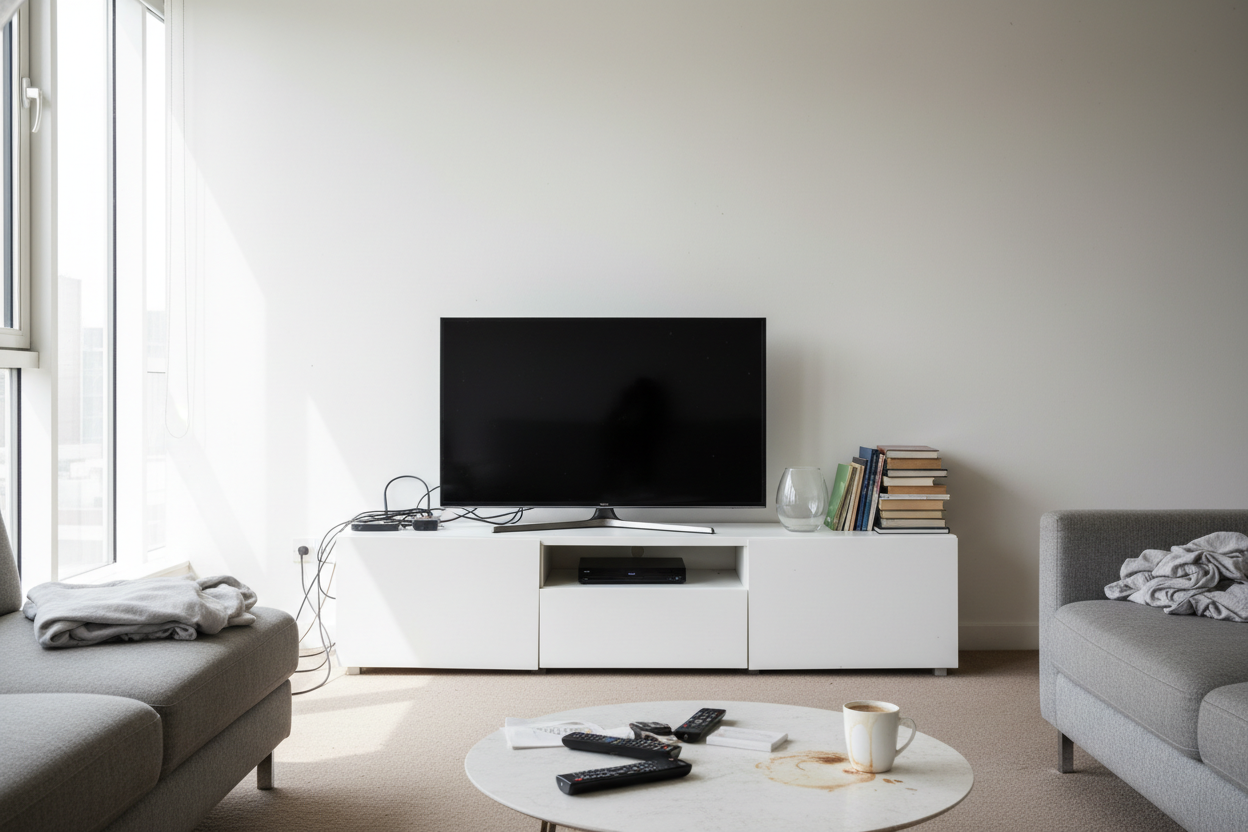
I’ve spent way too many nights at 1 AM scrolling through 50 tabs of media consoles, trying to find one that doesn't look like it belongs in a freshman dorm. You see a simple tv unit online, it looks clean and Scandinavian, but then it arrives and it’s basically three pieces of cardboard held together by hope and cam-bolts.
I’ve been there. I once bought a $40 minimalist stand that swayed every time the cat walked past it. Simplicity is actually the hardest thing to get right in furniture because there’s nothing to hide the flaws. If the proportions are off or the material is flimsy, 'simple' just looks 'cheap.'
- Go wider than you think: Your stand should be at least 10 inches wider than the TV.
- Check the panel thickness: Anything under an inch thick usually looks like flat-pack junk.
- Texture over gloss: Matte finishes and real wood grain feel more permanent than shiny laminate.
- Cable control: If the stand is open, you need a plan for those black wires.
The Fine Line Between Minimalist and Unfinished
We’ve all fallen for the simple cheap tv stand that looks great in a studio-lit product photo. But in a real living room, that thin-walled particleboard box often feels like a placeholder. When you go minimalist, the design has to be intentional, not just 'the bare minimum.'
Real minimalism is about the quality of the line and the weight of the material. If the unit looks like it might buckle under the weight of a soundbar, it’s not minimalist; it’s just under-engineered. I always look for pieces with a bit of 'heft'—even if the silhouette is clean, the components should feel substantial. Thin legs and hollow-core tops are the fastest way to make your home feel like a temporary stopover.
Proportions Are Everything for a Very Simple TV Stand
The biggest mistake I see is people buying a very simple tv stand that is the exact same width as their television. This creates a top-heavy, awkward look that makes the room feel cramped. It’s the furniture equivalent of wearing a suit two sizes too small.
To make the room feel anchored, you want breathing room on either side of the screen. I usually recommend browsing a collection of modern TV stands that offer at least 6 to 10 inches of clearance on both sides. This extra width gives you space for a lamp or a small plant, which stops the TV from looking like it’s just floating in a void. If your stand is too narrow, it doesn't look minimal; it looks like you couldn't afford the rest of the wood.
The Materials That Save a Simple TV Console Design
Texture is the secret sauce that separates a 'dorm room' simple tv console design from a 'grown-up apartment' one. A flat, white-lacquer box with no grain or detail reflects light in a way that highlights every fingerprint and scratch. It feels cold and temporary.
Adding a wood element is the easiest way to fix this. Even if it’s a high-quality veneer, the variation in grain adds depth that flat paint can’t touch. If you’re worried about it looking too traditional, look for pieces that mix materials—like a wood body with matte black metal legs. If you want to go deeper on this, learning how to style a simple wood TV stand can help you layer in accessories that make the wood really pop without cluttering the surface.
Cable Management is Make-or-Break
A simple media stand usually means open shelving or very thin legs. That’s a nightmare for tech. There is nothing that ruins a clean aesthetic faster than a 'spaghetti monster' of black HDMI cables and power strips trailing out from behind a sleek unit.
If you’re going for a tv cabinet simple in its silhouette, you have to be aggressive about cable management. I use adhesive clips on the back of the legs to run wires down where they can’t be seen. If the unit is open-back, I’ve even gone as far as mounting a power strip to the underside of the top shelf. If you can’t hide the wires, the 'simple' look is a failure. You want people to see the furniture, not the infrastructure.
When You Should Just Choose a Floating Console
Sometimes, the floor is the problem. If your living room is small, adding more legs to the floor just makes it look cluttered. This is where a simple entertainment stand that mounts directly to the studs becomes the better choice. It creates an unbroken line of flooring that makes the whole room feel larger.
A floating wall-mounted media console is the ultimate move for a truly clean look. It forces you to be organized because you can’t just shove things under it. It’s a bit more work to install—you’ll need a stud finder and a level—but the result looks custom rather than 'off the shelf.' I remember my first apartment where I finally swapped a wobbly floor unit for a wall-mount; it was the first time my living room actually felt like a designed space instead of a collection of boxes.
How wide should my TV stand be?
Aim for at least 6-10 inches of extra space on each side of your TV. If your TV is 55 inches wide, look for a stand that is at least 65-70 inches wide to maintain visual balance.
Can I use a 'simple' stand for a heavy older TV?
Always check the weight capacity. Many 'simple' modern units are designed for lightweight LEDs and might sag if you put a heavy 80-pound plasma or older display on them. Look for solid wood or reinforced steel frames.
How do I make a cheap stand look more expensive?
Swap out the hardware. If it comes with cheap plastic or silver knobs, replace them with solid brass or matte black pulls. It’s a $10 fix that makes a massive difference in how the piece feels to the touch.

Dejar un comentario
Este sitio está protegido por hCaptcha y se aplican la Política de privacidad de hCaptcha y los Términos del servicio.