










I spent three years staring at a 42-inch TV perched on a $30 particle-board stand from a big-box store. It looked like a temporary solution that just... stayed. Every time I walked into my studio, my eyes went straight to the tangle of HDMI cables and the dusty stack of PlayStation games crammed into an open shelf. It was a mess, and it made the whole room feel smaller than it actually was.
We’ve been told that small rooms need small furniture. It sounds logical, right? But in reality, filling a tight space with apartment-sized miniatures just creates visual noise. Investing in a substantial entertainment storage unit was the counterintuitive move that finally made my living room feel like it belonged to an adult rather than a college student.
- One large unit creates a focal point, reducing visual clutter.
- Wall-to-wall pieces can actually make ceilings look higher.
- Closed storage is the only way to truly hide the life stuff like routers and remotes.
- Depth matters more than width when it comes to maintaining floor space.
The 'Tiny Furniture in Small Rooms' Trap
Most of us default to the smallest possible TV stand because we’re terrified of crowding the room. I’ve been there. You buy the 40-inch console for your 55-inch TV, and suddenly the screen looks like it’s about to tip over. Worse, you end up with a chopped-up wall. There’s the stand, then a floor lamp, then a stack of books, then a basket for blankets. It looks like a tetris game gone wrong.
This creates a jagged horizon line that makes your eyes jump all over the place. It’s chaotic. Plus, those open-back stands are a nightmare for cable management. If you want to hide all your messy cords, you need a piece with actual mass and a solid back panel. A tiny stand just highlights the mess it is supposed to hold.
Why One Massive Piece Actually Tricks the Eye
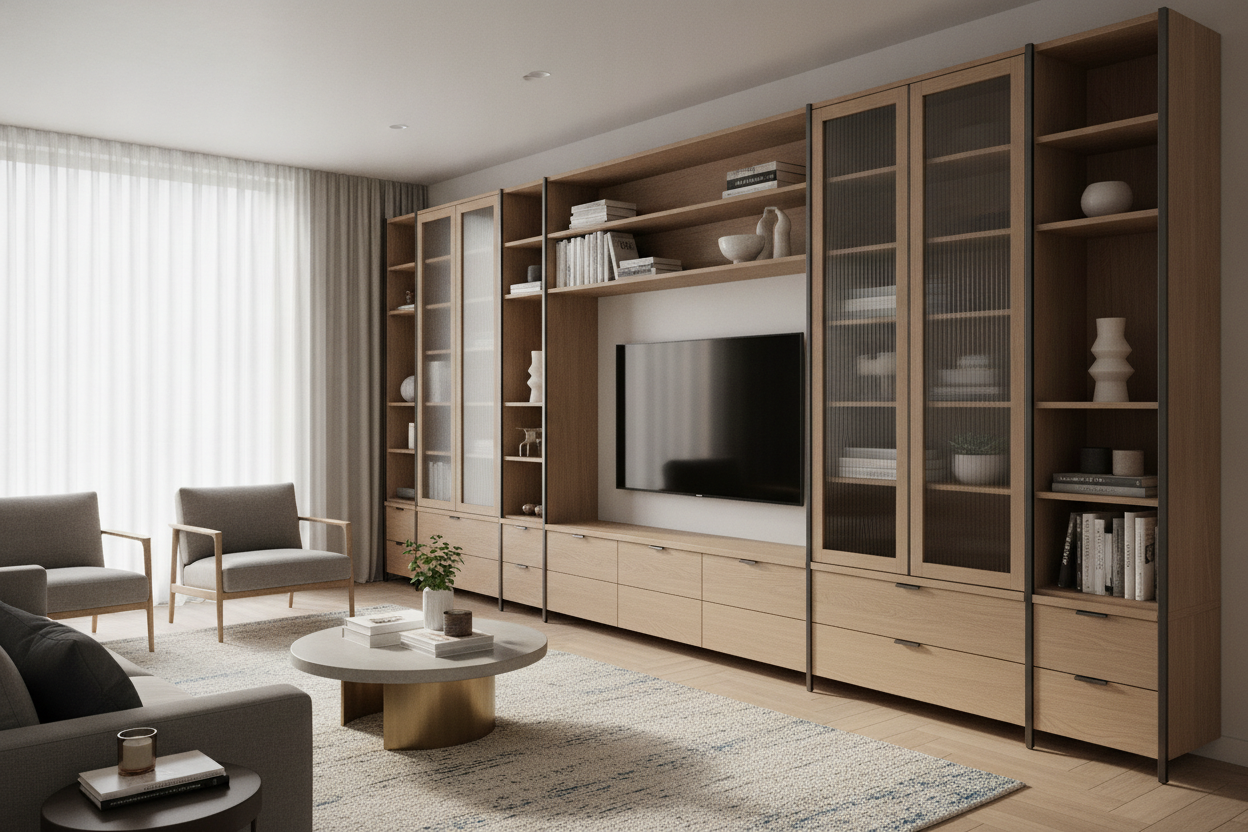
Here is the secret: one large, well-proportioned tv media unit with storage acts as an architectural anchor. Instead of looking like a piece of furniture floating in the middle of a wall, it becomes the wall. It’s a trick that designers use to simplify the lines of a room. When the eye sees one continuous surface, it perceives the space as larger and more intentional.
I used to worry a 72-inch unit would eat my 12-foot wall. It didn't. It actually grounded the entire room. If you're curious about what designers actually think, they’ll tell you that scale is everything. A piece that spans most of a wall creates a sense of luxury and permanence that three small cabinets could never achieve. It moves the focus from the floor to the entire vertical plane.
Hiding the 'Life Clutter' (Not Just the Screen)
The real magic happens behind the cabinet doors. My old setup had zero room for anything that wasn't a remote. My new tv and media storage unit is basically a stealth closet. I’ve got board games, yoga blocks, and a literal printer hidden behind those doors. It’s the ultimate book and media storage solution because it keeps the stuff out of sight and off your coffee table.
Getting the Proportions Right Without Blocking Traffic
The fear of a monolith usually comes from depth, not width. A unit that sticks out 24 inches into the room will feel like a bulky intruder. Look for something shallow—around 15 to 18 inches. This gives you plenty of room for a modern TV and internal shelving without eating into your walking path. I measured my clearance zone three times before buying, and those extra few inches of floor space made all the difference in how the room flows.
Visual Weight: Why Color and Hardware Matter
Not all large units are created equal. A chunky, dark oak piece with heavy molding can feel oppressive in a room with low light. If you’re worried about the unit feeling heavy, go for something with clean lines and tapered legs. I’m a huge fan of this minimalist dark walnut unit because the slim profile and lack of bulky hardware keep it looking sophisticated rather than clunky, even at a larger scale.
My Verdict After Living With a Living Room Monolith
I’ll be honest: assembling a 150-pound tv and media storage unit by myself was a Saturday afternoon I’ll never get back. I definitely stripped a screw and had a minor meltdown when the doors didn't align perfectly at first. But once it was up? The room transformed. It stopped looking like a collection of random objects and started looking like a designed home. It’s the best big purchase I’ve ever made for a small space.
FAQ
Will a large unit make my low ceilings look lower?
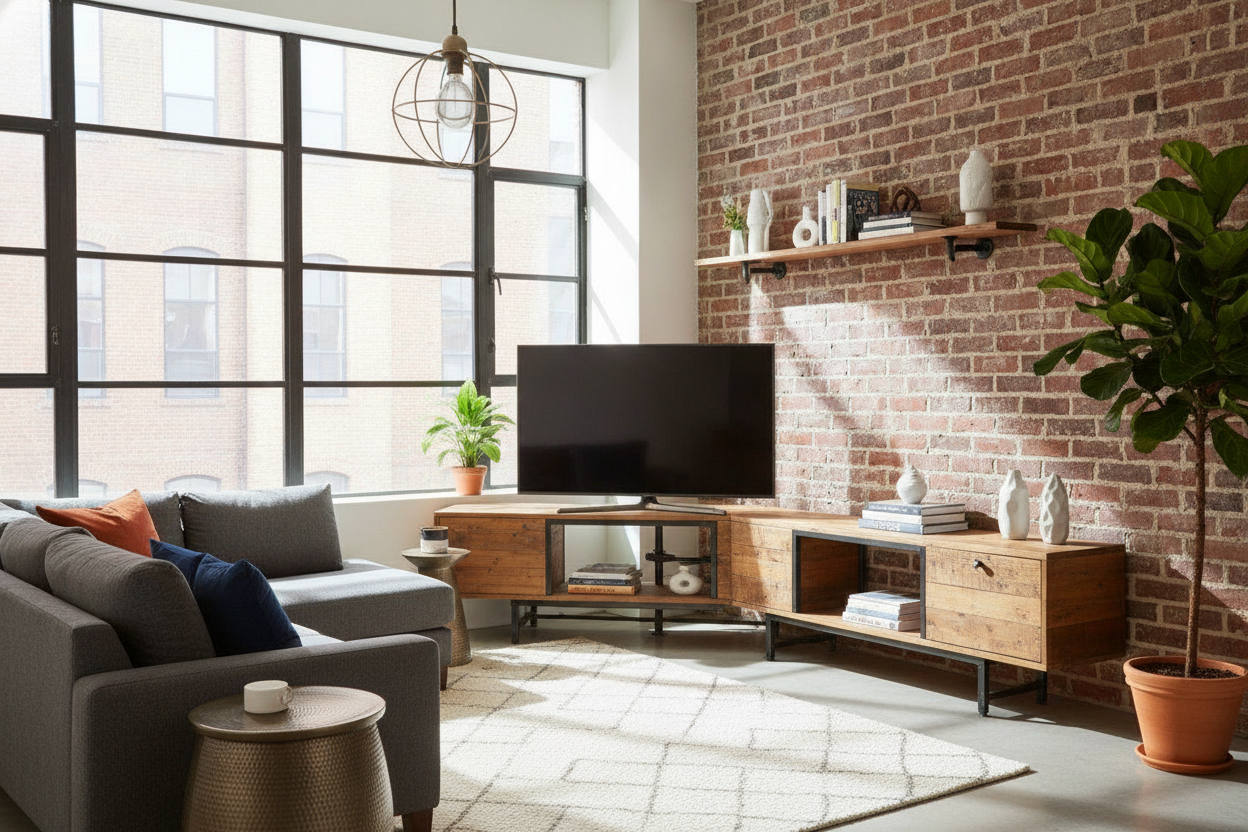
Actually, no. If you choose a unit that is long and low, it draws the eye horizontally, making the room feel wider. If you go for a tall hutch-style unit, it can actually emphasize the vertical height of the room by drawing the eye upward.
How do I stop it from looking like a giant box?
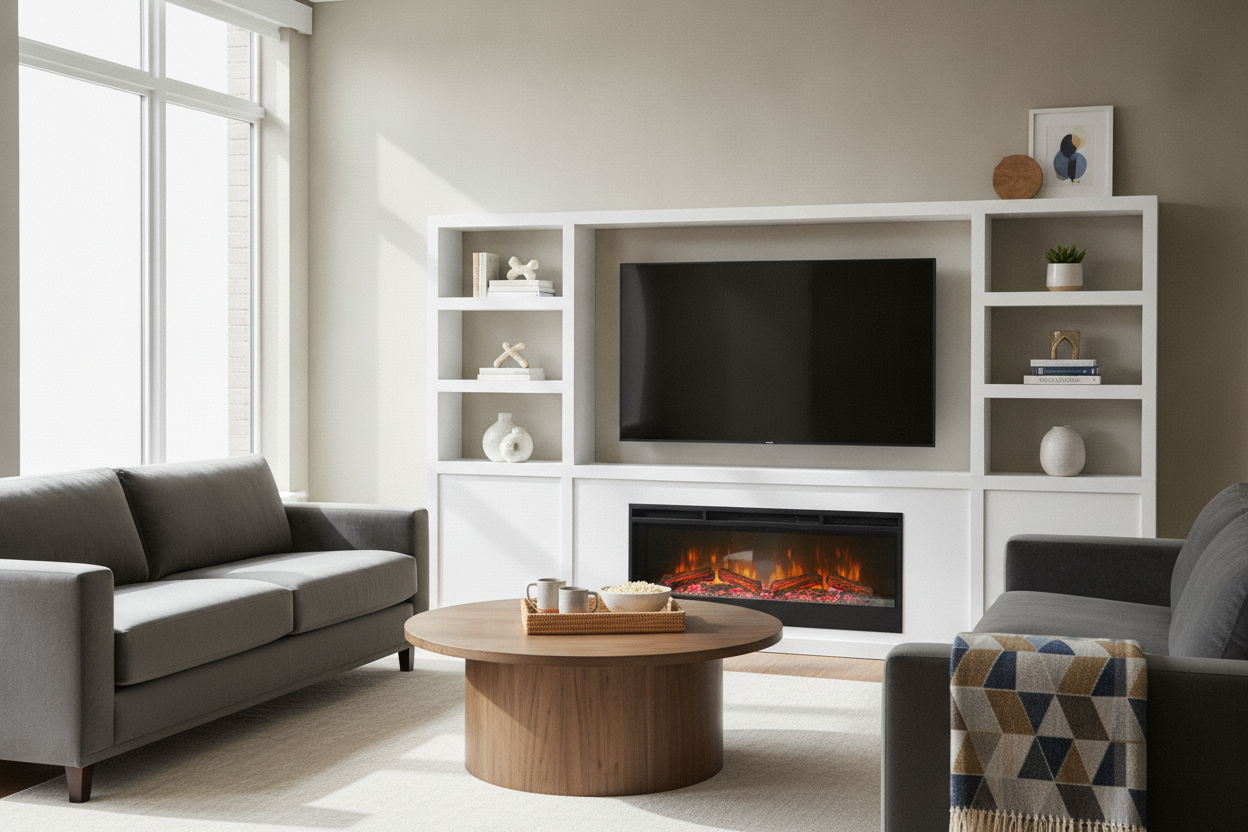
Break up the surface. Use a mix of closed cabinets and maybe one or two open cubbies for the pretty stuff like a ceramic vase or a few curated books. This prevents it from feeling like a solid, impenetrable wall of wood.
Is it worth the extra cost over a simple stand?
If you have zero closet space, yes. You're not just buying a TV stand; you're buying a dresser, a bookshelf, and a tech hub all in one. The price-per-square-foot of storage is usually better with one large unit than multiple small pieces.

Dejar un comentario
Este sitio está protegido por hCaptcha y se aplican la Política de privacidad de hCaptcha y los Términos del servicio.