










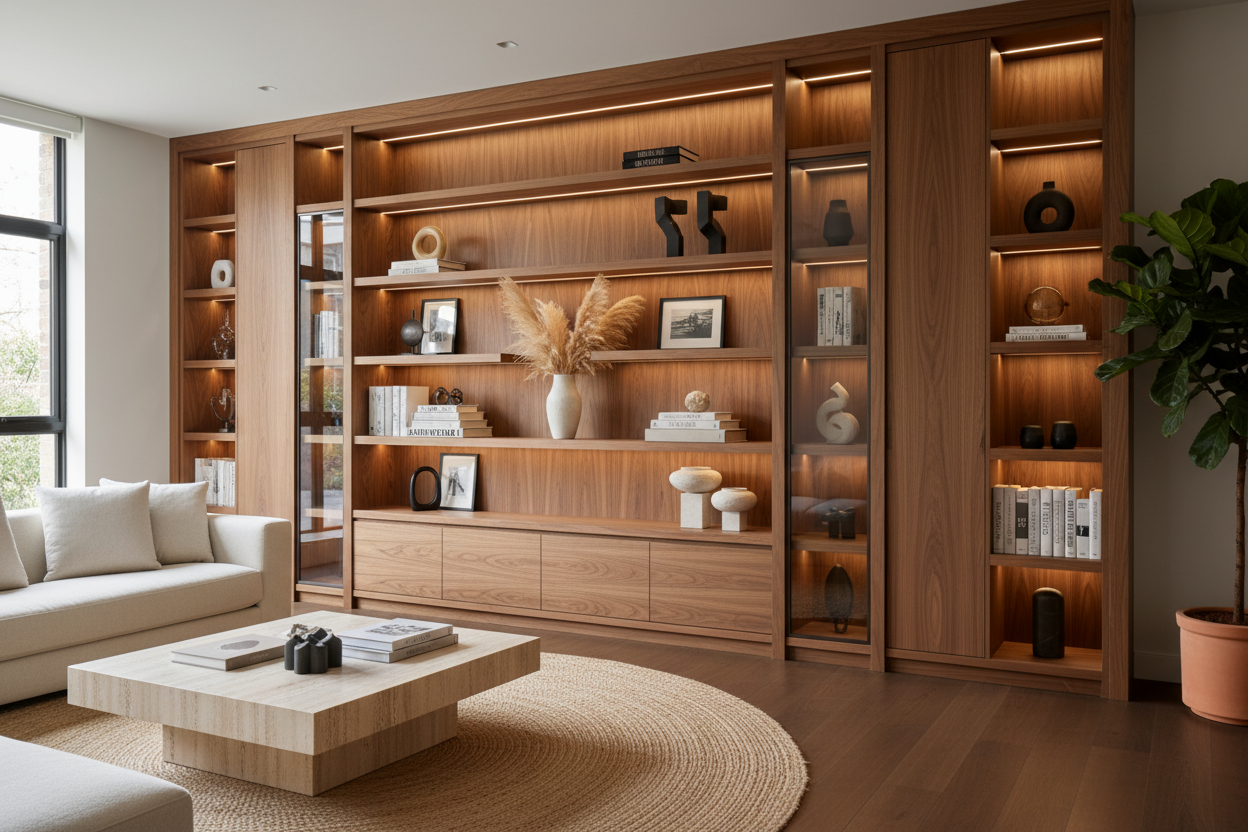
We have all stared at that one awkward, empty wall. It is too small for a full credenza, but hanging another framed print feels uninspired. When floor space is at a premium and you have meaningful objects to showcase, a wood wall display cabinet is often the missing piece in a room's composition.
Unlike bulky floor units that dominate a room's footprint, drawing the eye upward with wall-mounted storage preserves crucial walkway clearance and adds architectural interest. In this guide, I will walk you through how to select, secure, and style these pieces so they look intentional and custom-built for your home.
Quick Decision Guide
- Weight limits are non-negotiable: Always calculate the weight of the cabinet plus the items inside before choosing your mounting hardware.
- Mind the eye level: The center of your cabinet should generally sit 57 to 60 inches from the floor, mimicking gallery hanging standards.
- Check the depth: Keep the cabinet depth under 10 inches if hanging in a hallway or above seating to avoid a heavy visual weight.
- Glass vs. Open: Glass doors protect delicate items from dust but require regular cleaning, while open shelving offers easier access but demands rigorous curation.
Maximizing Space and Planning Your Layout
Nailing the Placement and Proportion
In typical North American homes, open-concept spaces can sometimes feel cavernous. A wooden display cabinet wall mounted in a dining area or living room helps define specific zones without interrupting traffic flow. When planning your layout, leave at least 36 inches of clearance between the face of the cabinet and any opposing furniture. If you are hanging it above a console or a sofa, ensure there is a minimum of 18 to 24 inches of negative space between the top of the furniture and the bottom of the cabinet so the area does not feel cramped.
Material Quality: What to Look For
Solid Wood vs. Engineered Alternatives
When shopping for wood wall display cabinets, the material dictates both the lifespan and the mounting requirements. Solid woods like oak, walnut, and maple offer beautiful, organic grain patterns and incredible longevity. However, they are heavy. If you are working with older drywall or metal studs, a high-quality wood veneer over an MDF core might be a safer, lighter alternative that still provides a premium aesthetic. Pay close attention to the joinery; dovetail or mortise-and-tenon joints indicate a piece that will withstand decades of use.
The Hardware Matters
The hinges and latches on your cabinet do more than just keep the doors shut. Soft-close hinges are a must for glass-front cabinets to prevent rattling and potential cracking. Additionally, look for cabinets that utilize a French cleat mounting system rather than simple keyhole slots. A French cleat distributes the weight evenly across the wall, which is vital for heavy wooden furniture.
Style and Coordination
Balancing Visual Weight
A dark walnut or mahogany cabinet carries a lot of visual weight. To balance this, style the interior with lighter objects like cream ceramics, clear glassware, or books with light spines. Conversely, a pale white-oak cabinet can easily handle darker, moodier accents. Do not feel pressured to match the wood tone exactly to your existing floors or dining table. Layering complementary wood tones—like pairing a warm teak cabinet with cool ash flooring—adds depth and a collected-over-time feel to the space.
Lessons from My Own Projects
A few years ago, I sourced a stunning vintage solid oak cabinet for a client's transitional dining room. It looked beautiful empty, but I drastically underestimated the weight of the ironstone dinnerware the client planned to display inside.
I learned the hard way that a heavy cabinet filled with ceramics is a recipe for disaster if you rely on heavy-duty drywall anchors instead of finding the studs. After two weeks, the sheer weight caused the top anchors to pull a quarter-inch out of the drywall. We had to empty the entire piece, take it down, patch the wall, and reinstall a custom-cut French cleat that spanned three wall studs. The honest truth? Wall cabinets are incredibly stylish, but the installation is not the place to cut corners. If you cannot hit at least two studs, you need to hire a professional or choose a much lighter piece.
Frequently Asked Questions
How high should I hang a wall cabinet?
For standalone placement, hang the cabinet so its vertical center is about 57 to 60 inches from the floor. If hanging above a piece of furniture, leave 18 to 24 inches of clearance between the furniture top and the cabinet bottom.
How much weight can a wooden wall cabinet hold?
This depends entirely on the mounting system and wall structure. A cabinet secured directly into wooden wall studs with lag screws or a solid French cleat can hold 50 to 100+ pounds. Drywall anchors alone should never be trusted for heavy wood furniture.
What should I display inside?
Treat the interior like a curated gallery. Mix textures and heights—stack a few vintage books horizontally to act as a pedestal for a small sculptural object, lean framed photos against the back panel, and leave at least 30 percent of the shelf space empty to allow the eye to rest.

Dejar un comentario
Este sitio está protegido por hCaptcha y se aplican la Política de privacidad de hCaptcha y los Términos del servicio.