










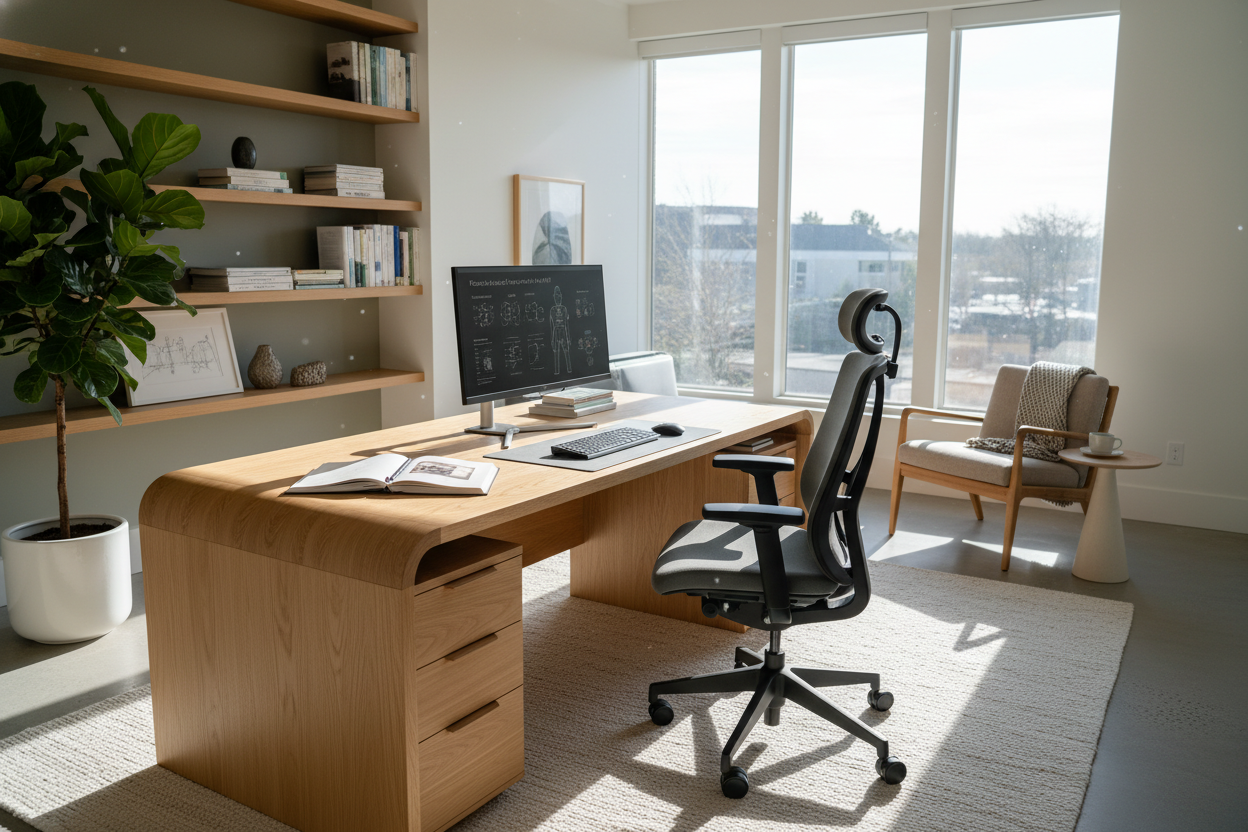
We have all been there—trying to balance a heavy laptop on a living room sofa or hunching over a dining table that was never meant for an eight-hour shift. The novelty of working from anywhere in the house wears off quickly when lower back pain sets in and your living space feels cluttered with tangled charging cables. If you are struggling to create a functional workspace that does not ruin your home's carefully curated aesthetic, you are not alone.
In this guide, we will break down exactly how to select home office furniture that supports your posture, maximizes your square footage, and looks like a deliberate design choice rather than a temporary afterthought. Relying on current work from home research, we will explore the intersection of residential style and commercial ergonomics.
Quick Decision Guide
- Prioritize adjustability over aesthetics: A rigid wooden chair might fit your mid-century modern vibe perfectly, but a recent work from home productivity study highlights that ergonomic seating is non-negotiable for long-term focus and physical health.
- Mind your clearances: Always leave at least 36 inches of negative space behind your desk to comfortably roll your chair back and stand up without hitting a wall.
- Control visual clutter: Choose desks with integrated cable management to maintain clean lines in multi-use rooms.
- Layer your lighting: Relying solely on overhead fixtures causes harsh shadows and eye strain; add a dedicated task lamp with a warm color temperature to balance the room.
Space Planning: Finding Room in Typical Floor Plans
Not everyone has a dedicated spare bedroom ready to be converted into an executive suite. In most North American homes, a workspace needs to integrate seamlessly into a living room, guest room, or even a wide hallway alcove.
Mastering Visual Weight
When placing a desk in a shared space, consider its visual weight. A heavy, solid-wood pedestal desk will dominate a small apartment living room and make the space feel cramped. Instead, opt for a desk with a slender metal frame or a glass top. These lighter silhouettes allow the eye to travel through the piece, making the room feel larger while still providing ample surface area. If you study and work from home in the same room you sleep in, creating physical separation with an open bookshelf or a textured folding screen can help maintain psychological boundaries between rest and productivity.
Comfort & Ergonomics: The Science of Seating
There is a massive disconnect between furniture that looks stunning in architectural photos and furniture that actually supports the human body. Ongoing wfh research consistently points to poor seating as the leading cause of at-home fatigue and diminished output.
Ditching the Dining Chair
Dining chairs are engineered for a 45-minute meal, not an eight-hour workday. They lack the necessary seat depth adjustability, tilt tension, and lumbar support. When selecting an office chair, look for high-density foam cushions or breathable mesh that will not degrade and flatten after six months of daily use. A comprehensive work from home productivity research report recently noted that workers equipped with adjustable armrests and proper seat heights experienced significantly fewer musculoskeletal issues. Do not compromise your spine for a trendy boucle accent chair.
Value & Longevity: Where to Spend vs. Save
Furnishing a proper workspace can get expensive quickly. Knowing exactly where to allocate your budget ensures you get pieces that will survive daily wear and tear without overspending on items that do not impact your daily comfort.
Investing in the Core Setup
Spend your money on the chair first. It is the single most important piece of furniture in your house right now. For desks, solid wood or high-quality plywood with a durable veneer will outlast cheap particleboard, which notoriously sags in the middle under the weight of dual monitors. You can easily save your budget on secondary storage—metal filing cabinets or simple engineered-wood bookshelves are perfectly fine for holding lightweight paperwork and office supplies.
Designer's Honest Take: Lessons from My Own Office
Early in my career, I designed my own home office around a stunning, matte walnut writing desk. It had a gorgeous, tapered mid-century silhouette and absolutely zero practical features. I quickly learned that a standard 30-inch desk height without a keyboard tray meant my shoulders were constantly elevated while typing. Within two months, I was miserable.
Furthermore, studies on work from home setups often warn about surface durability, a lesson I learned the hard way when that beautiful walnut finish developed permanent water rings from my daily coffee cups. I ended up swapping it out for a commercial-grade sit-stand desk with a high-pressure laminate top. It isn't a precious family heirloom, but it is bulletproof, scratch-resistant, and actually lets me get my job done without pain.
Frequently Asked Questions
How does furniture impact work from home studies?
Every major work from home study emphasizes that physical comfort directly correlates with cognitive endurance. Ergonomic furniture reduces physical distractions, allowing you to maintain deep focus for longer periods without needing to constantly shift positions to relieve joint pain.
What size desk do I need for a study work from home hybrid setup?
For a standard laptop and a single monitor, a desk that is 48 inches wide and 24 inches deep is the absolute minimum. If you use dual monitors, or need space to spread out physical textbooks alongside your tech, look for a desk at least 60 inches wide to prevent feeling cramped and disorganized.
How can I make an office chair look good in my living room?
Look for chairs that bridge the gap between commercial ergonomics and residential style. Many reputable brands are increasingly offering fully adjustable ergonomic chairs upholstered in softer, textured fabrics rather than severe black mesh. Coordinating the chair's base metal, such as brushed brass or matte black, with your existing room hardware also helps it blend into the decor naturally.

Dejar un comentario
Este sitio está protegido por hCaptcha y se aplican la Política de privacidad de hCaptcha y los Términos del servicio.