










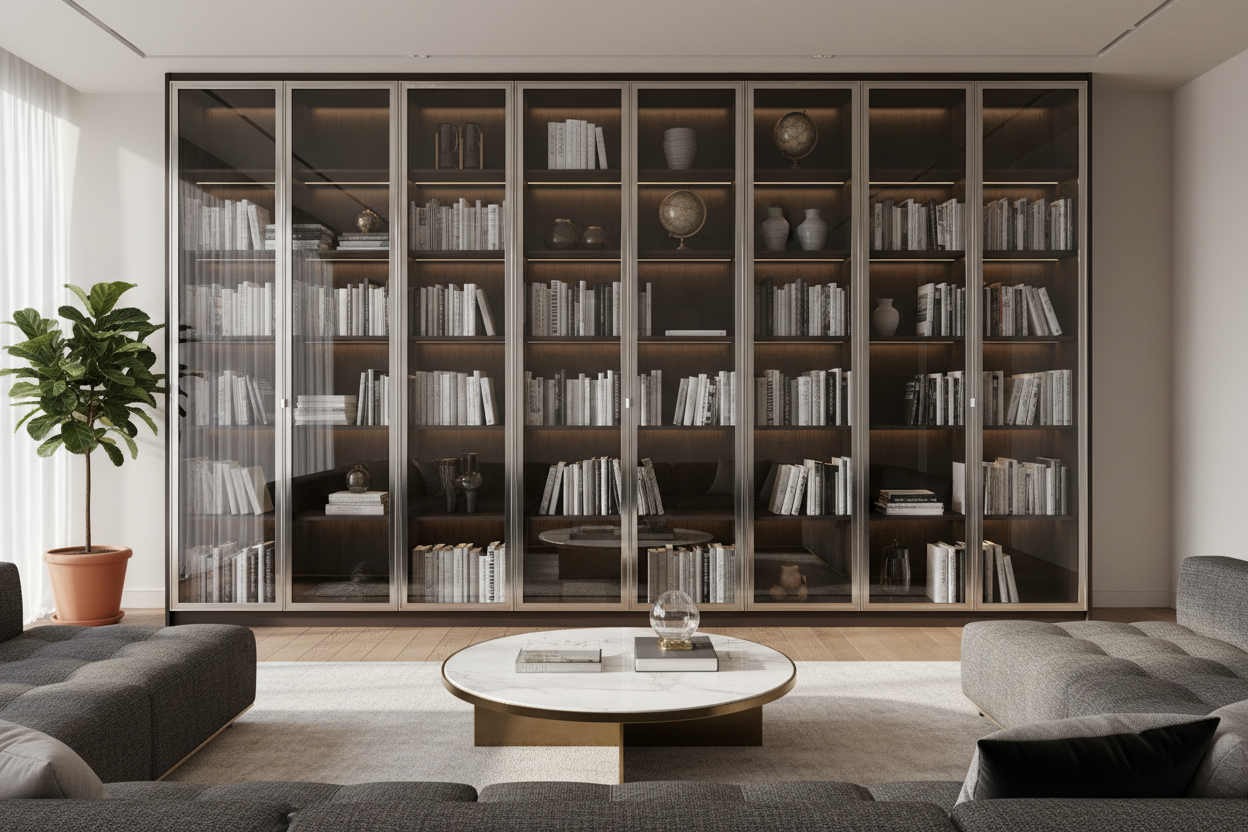
I spent three years living the open-shelving lie. I had these beautiful reclaimed wood planks held up by industrial pipe brackets, and for the first week, I felt like I lived in a high-end loft. By week three, my vintage Penguin paperbacks were covered in a fine layer of grey grit that felt personal. If you have a cat or live near a busy street, open shelving isn't a design choice—it's a part-time job.
I finally caved and bought a glass front shelf to save my sanity and my lung capacity. It turns out, protecting your stuff behind a door doesn't make you a shut-in; it makes you someone with free time on the weekends. You still get the visual payoff of a display, but without the Saturday morning ritual of wiping down every individual spine of your book collection.
Quick Takeaways
- Dust Protection: Keeps your rare books and fragile ceramics from becoming dust magnets.
- Visual Depth: Glass reflects light, making small rooms feel less crowded than solid wood doors.
- Styling Flexibility: You can display curated items while keeping them safe from pets and toddlers.
- Maintenance: Swapping a 30-minute dusting routine for a 30-second glass wipe.
The Brutal Reality of the Open Shelving Trend
We've all been seduced by the Instagram photos of perfectly curated open ledges. It looks easy until you realize those people probably don't have a golden retriever or a furnace that kicks up soot. In my house, the airy look lasted exactly forty-eight hours before the dust bunnies started colonizing my favorite ceramics. It’s not just the dust, either; it’s the kitchen grease if you’re in an open-concept layout, or the static electricity that seems to pull every stray hair in the zip code toward your display.
Every Saturday became a ritual of moving every single object, wiping the shelf, wiping the object, and putting it back. It’s exhausting. The reality of glass front shelves is that they offer the same visual payoff without the manual labor. You get to see your things, but you don't have to touch them with a Swiffer every other day. I realized I was spending more time cleaning my decor than actually enjoying it, which is the definition of a failed interior design strategy.
Enter the Glass Front Shelf (My Low-Maintenance Hero)
Making the switch felt like a defeat at first, but then I realized how much better my living room actually looked. A glass front shelf provides a frame for your life. It signals that the items inside are curated and cared for, rather than just shoved onto a wall because you ran out of floor space. There is a psychological difference when you put something behind glass—it suddenly looks like a collection rather than just stuff.
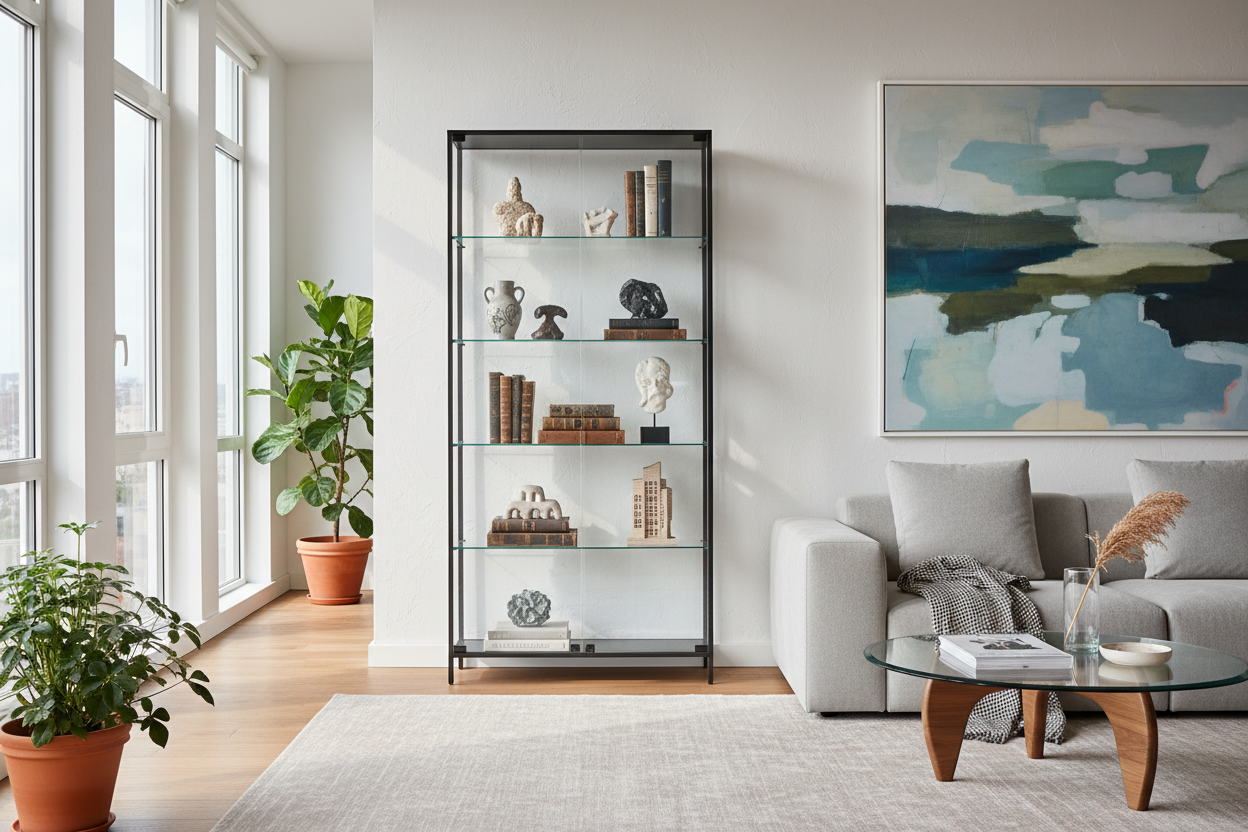
I started small by transforming your room with a 3 shelf glass cabinet in the corner. It was a revelation. Suddenly, my collection of mid-century glass didn't look like a cluttered garage sale; it looked like a gallery. The glass doors create a barrier that keeps the visual noise contained while still letting the light pass through. I noticed that the room felt bigger because the glass reflects the window light, whereas my old dark wood open shelves just seemed to soak up the shadows.
How to Style Them Without Looking Like a Grandma's Curio
The biggest fear people have is that glass-front furniture feels old. We’ve all seen those heavy oak curio cabinets filled with porcelain bells and dusty lace. The trick to keeping it modern is all about the hardware and the internal layout. Look for slim metal frames or matte black finishes that lean industrial or minimalist rather than ornate wood carvings. You want the frame to disappear so the focus stays on what is inside.
I’m a huge advocate for adjustable shelf storage systems because nothing kills a modern vibe faster than rigid, evenly spaced cubbies. You want a mix of heights. Put a stack of oversized art books on one level, then leave a big gap for a single, sculptural vase on the next. Negative space is your best friend here. If you pack it wall-to-wall, it’s going to look like a thrift store shelf. Think of each shelf as a separate little stage. I like to mix textures: something organic like a dried piece of driftwood next to something hard and shiny like a brass bowl.
Give Your Tallest Items Room to Breathe
One of my favorite tricks is to actually remove one of the glass shelves entirely. If you have a 4-tier unit, take one out. This creates a double-height hero section where you can stick a tall dried floral arrangement or a massive coffee table book standing upright. It breaks the grid and makes the piece look custom rather than out-of-the-box. Most people feel like they have to use every shelf that comes in the box—you don't. Give your taller pieces some literal head room and the whole unit will feel more expensive.
Where Enclosed Displays Actually Work Best
While the living room is the obvious choice, don't overlook the high-traffic zones. I’ve found that styling a front door shelf with glass doors is a lifesaver for entryways. You can keep your keys and sunglasses in a designated spot that doesn't get covered in outdoor grit every time the door opens. It keeps the first thing you see when you walk home looking organized rather than chaotic.
The dining room is another prime spot for glass. Instead of a bulky buffet, I prefer a coffee cabinet with wine shelf and glass top. It keeps your glassware sparkling and ready for guests without you having to pre-wash every wine glass because it's been sitting out for a month. It turns your booze and beans into a focal point rather than a chore. Plus, if you get one with built-in lighting, it acts as a secondary light source that makes the whole room feel warmer at night.
My Honest Mistake
When I bought my first glass unit, I didn't check the weight capacity of the glass itself. I tried to stack twenty heavy hardcover cookbooks on a single 5mm tempered glass pane. It didn't shatter, but it bowed significantly, and every time I walked past, it rattled. Now, I always look for at least 6mm or 8mm glass if I'm planning on storing anything heavier than a few ceramic bowls. Check those specs before you buy, because sagging glass is a heart attack waiting to happen.
FAQ
Is tempered glass worth the extra cost?
Yes, absolutely. If a standard glass shelf breaks, it shards into dangerous daggers. Tempered glass crumbles into small, relatively harmless pebbles. If you have kids, pets, or just a habit of bumping into things, don't skip this.
How do I stop the glass from rattling?
Buy those tiny clear silicone bumper dots. Stick one in each corner where the glass meets the shelf support. It stops the vibration and makes the whole unit feel much more high-end.
Does fluted glass hide dust better?
It hides the clutter better, but the ridges actually catch more dust on the outside. If you want the lowest maintenance possible, stick to flat, smooth glass that you can hit with one quick swipe of a cloth.

Dejar un comentario
Este sitio está protegido por hCaptcha y se aplican la Política de privacidad de hCaptcha y los Términos del servicio.