










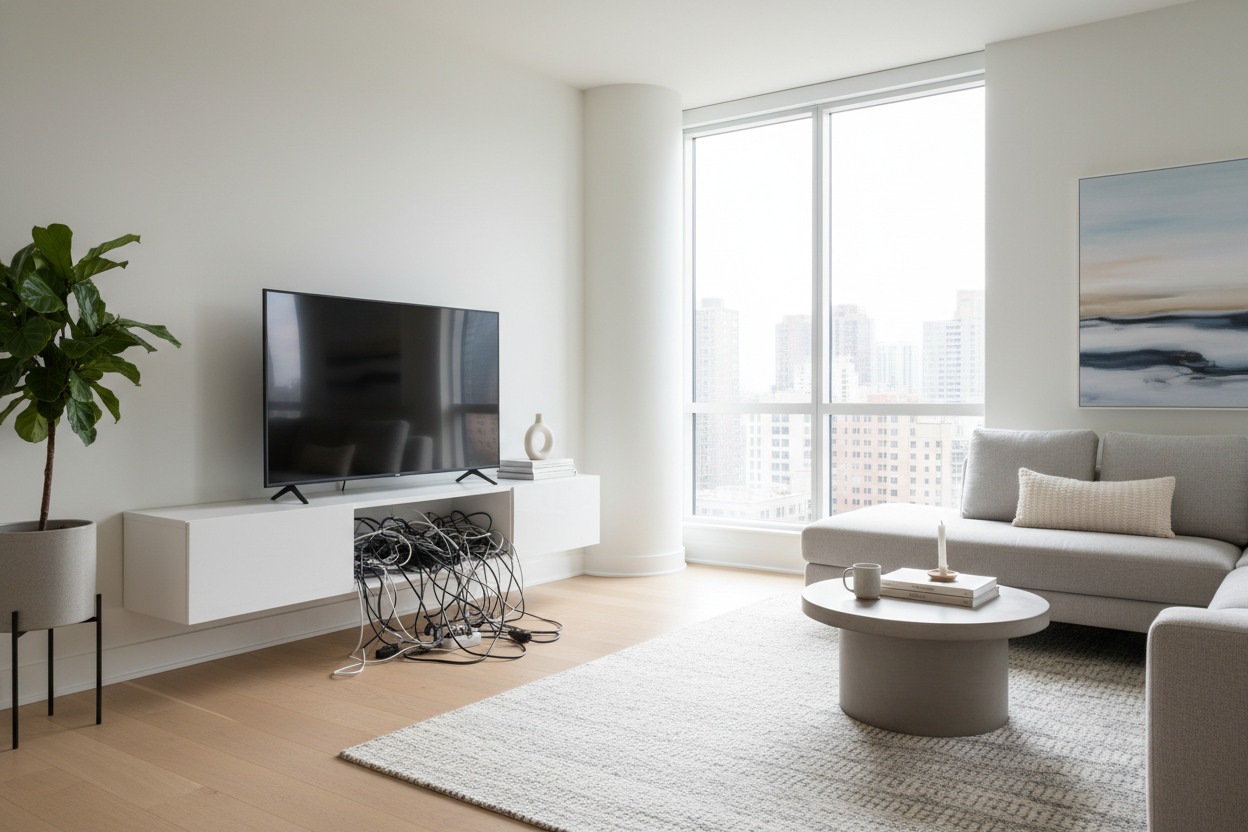
I spent three hours scrolling through Pinterest, convinced that a wall-mounted console was the only thing standing between me and a life of Scandinavian serenity. Then I actually bought a minimalist floating tv stand and realized the photos never show the reality: five HDMI cables, a chunky power brick, and a dusty router that suddenly had nowhere to hide.
When your furniture hovers off the floor, it loses its ability to act as a junk drawer for your electronics. You can't just shove the mess behind a heavy wooden base anymore. If you don't have a plan for those wires, your 'sleek' living room is going to look like a science experiment gone wrong. I learned this the hard way after staring at a black tangle of cords for three months before finally admitting that mounting the TV was only half the job.
- The 20% Rule: Always buy a stand at least 20% wider than your TV to avoid a 'top-heavy' look.
- Internal Power: Choose a unit deep enough to hold a power strip inside.
- Renter-Friendly Hacks: Paintable raceways are the only way to hide cords without drilling into the wall.
- Weight Ratings: Check your wall studs; a floating unit full of gear can easily weigh 50+ pounds.
The Minimalist Dream vs. The Cable Nightmare
We all start the process of shopping for tv stands with high hopes. You see those clean lines and that airy floor space in the catalog, and you think you've finally escaped the clutter. But the nightmare starts the second you plug in your TV and realize your wall now looks like the back of a server room.
A floating unit exposes everything. That gap between the bottom of the console and the floor is prime real estate for dust bunnies and tangled black cords. To keep a floating tv stand minimalist, you have to be more organized than you ever were with your old chunky floor unit. You aren't just buying a piece of furniture; you're committing to a lifestyle of cable management. If you're the type of person who just tosses cables into a heap, this aesthetic might break you.
How to Actually Hide Wires (Without Pissing Off Your Landlord)
If you own your home, the answer is simple: cut the hole. Get a recessed media box, fish the cables through the drywall, and call it a day. It’s a permanent fix that makes the TV look like it’s floating by magic. But for those of us living the renter life, we have to be a bit more tactical.
The paintable raceway is the unsung hero of the modern apartment. It’s a plastic channel that sticks to the wall and houses your cables. The trick is to buy a $20 kit, snap the wires inside, and paint it the exact color of your wall. From five feet away, it virtually disappears. I’ve lived in three apartments with this setup, and I’ve never lost a security deposit because of it. It’s a small price to pay to keep that clean, hovering look intact.
The Power Strip Secret Nobody Tells You
The biggest mistake I see is people trying to run six different cables down the wall to the outlet. That creates a massive, ugly bulge in your cord cover. You want exactly one visible cord—or none at all—traveling to the floor.
The trick is choosing a tv stand with hidden storage that has enough internal depth to house a full-sized surge protector. You plug the TV, the gaming console, and the router into that strip inside the cabinet. Then, you only have one single power cord to conceal. It’s the difference between a professional-looking setup and a DIY disaster.
Getting the Proportions Right So It Doesn't Look Accidental
Scale is where most people trip up. If your TV is 65 inches and your stand is 60 inches, it looks like a hat that's too small for someone's head. It feels precarious and cheap. To get the high-end look, you need to think about visual weight. A console should be about one-third wider than the TV above it.
This extra width gives you room to style the top without it feeling crowded. It also anchors the room. A tiny floating shelf looks like a mistake; a long, substantial console looks like an intentional architectural choice. Don't be afraid to go big—a 70-inch or 80-inch unit on a large wall creates a much more expensive vibe than a small unit centered under a massive screen.
Warming Up the Space (So You Don't Feel Like You Live in a Clinic)
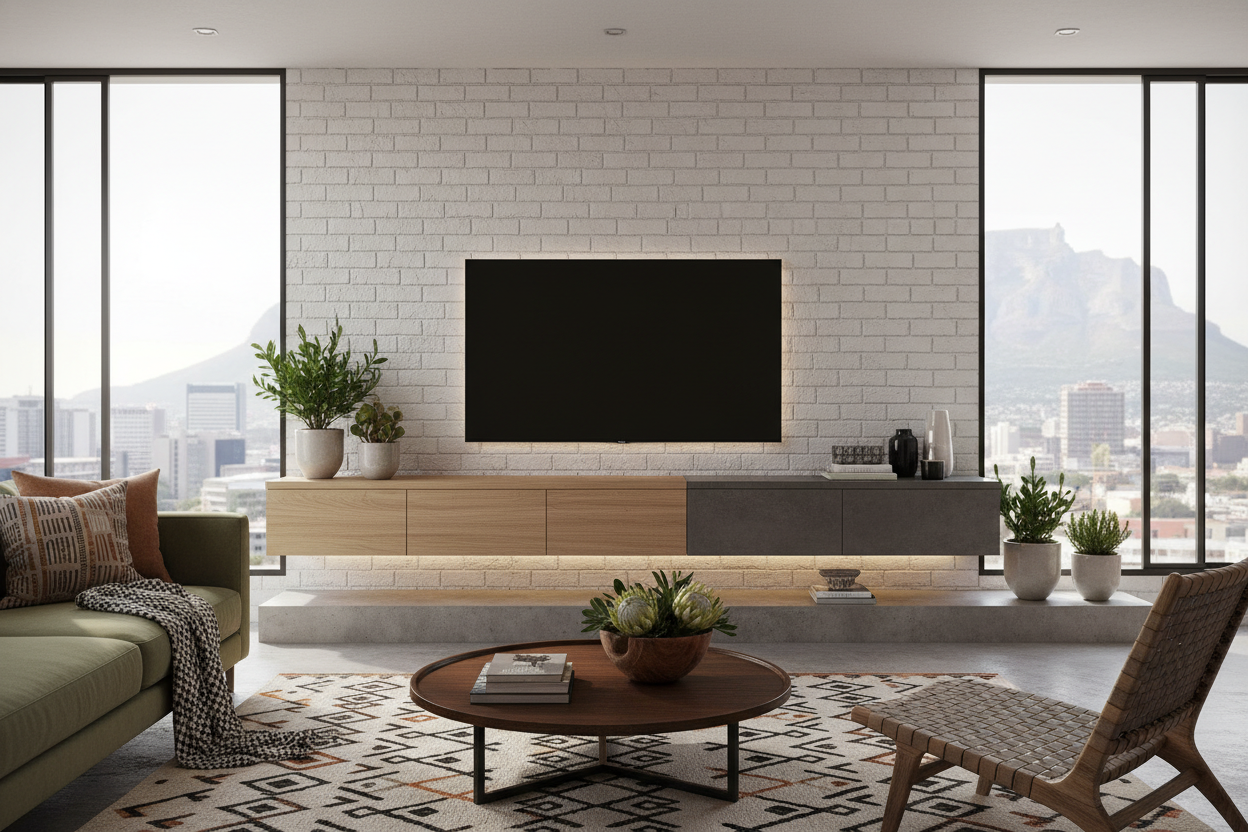
Minimalism can easily slide into 'hospital waiting room' territory if you aren't careful. If you go for high-gloss white on a white wall, the room loses its soul. I always lean toward a mid-century modern floating tv stand with some walnut or oak grain to break up the 'tech' feel of the TV screen.
The wood grain adds much-needed texture and warmth. You can also soften the sharp edges of a floating rectangle by leaning a piece of framed art on one side or adding a small, trailing plant like a Pothos. It breaks up the horizontal line and adds a bit of life to the setup. The goal is a space that looks curated, not just empty.
My Biggest Floating Stand Fail
I once mounted a beautiful walnut unit using the standard anchors that came in the box. Big mistake. Three weeks later, I heard a slow, terrifying creak at 2 AM. The unit was literally peeling away from the drywall because the weight of my vintage receiver was too much for the cheap plastic anchors. Now, I never mount anything without hitting at least two studs. If the studs don't line up with the mounting holes, I use heavy-duty toggle bolts rated for 100 lbs each. Do not trust the 'free' hardware that comes in the box.
FAQ
How high should I mount my floating TV stand?
Generally, you want the bottom of the stand to be 10 to 12 inches off the floor. However, the most important metric is eye level—when you're sitting on the couch, your eyes should hit the center of the TV screen.
Can a floating stand hold a heavy 75-inch TV?
Most floating stands are designed to hold the weight of the console and some accessories, while the TV itself is mounted separately to the wall. Always check the weight capacity of the stand if you plan on sitting the TV directly on top of it.
How do I hide my Wi-Fi router inside a minimalist stand?
Look for a unit with slatted doors or a mesh front. This allows the signal to pass through without interference while keeping the 'tech' hidden from view. If your stand is solid wood, you may need to mount the router to the back of the TV instead.


Dejar un comentario
Este sitio está protegido por hCaptcha y se aplican la Política de privacidad de hCaptcha y los Términos del servicio.