










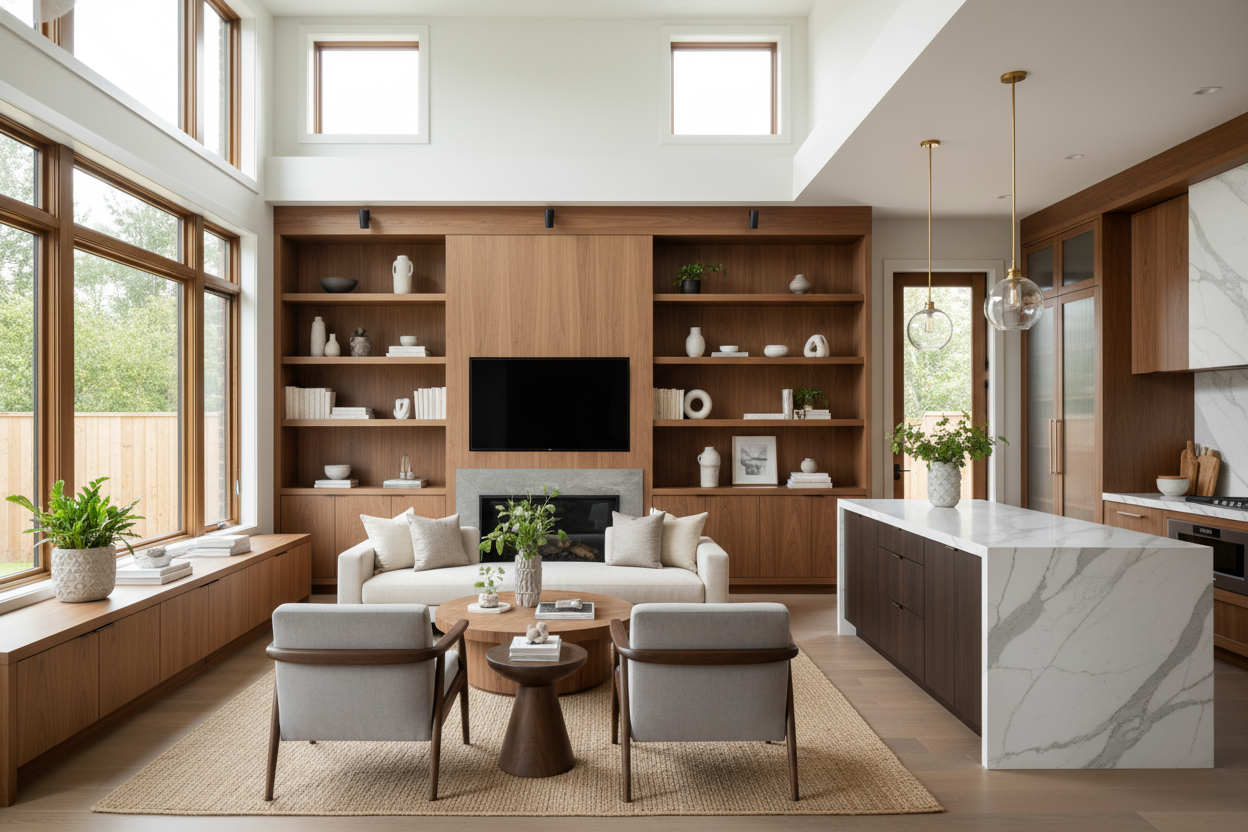
I remember standing in my last renovation—a 'luxury' condo with floor-to-ceiling windows—feeling totally cheated. I had spent fifteen grand on a velvet sectional and a solid walnut dining table, but the room still felt like a high-end dentist's waiting room. It lacked soul. It was a white box with zero personality.
The culprit wasn't my furniture; it was the bones. Most modern developers treat trim as an afterthought, slapping on the thinnest, cheapest MDF they can find. If you want a home that actually feels like a home, you have to talk about premier millwork. It is the difference between a house that looks finished and one that just looks occupied.
Quick Takeaways
- Standard 3-inch baseboards make ceilings look lower and rooms feel cheaper.
- Integrated premier millwork & cabinets create a custom, built-in look that modular furniture can't touch.
- High-end trim adds structural depth, catching shadows and creating visual interest in 'flat' rooms.
- You can save money by prioritizing public spaces (living, dining) over guest bedrooms.
The 'White Box' Epidemic in Modern Homes
We are currently living through an era of 'fast fashion' architecture. Builders are obsessed with 'clean lines,' which is usually just code for 'we didn't want to pay a finish carpenter.' When you strip away the crown molding, the substantial door casings, and the chair rails, you’re left with a sterile environment that absorbs light and kills atmosphere.
I’ve seen people try to fix this by buying more 'stuff.' They buy bigger rugs, louder art, and more floor lamps. But you can't decorate your way out of bad proportions. If your walls are just flat sheets of drywall meeting a skinny strip of plastic-looking wood at the floor, your expensive Italian sofa is going to look like it’s just floating in a void. Architectural character isn't a luxury; it’s the foundation that makes your furniture actually work.
What Actually Counts as 'Premier Millwork'?
In the industry, 'millwork' is a catch-all term for anything produced in a mill—doors, molding, trim, and wall paneling. But when we move into 'premier' territory, we’re talking about scale, material, and integration. This isn't the stuff you find in the bargain bin at a big-box hardware store. We’re talking about solid wood or high-density furniture-grade materials that have weight and crisp, sharp profiles.
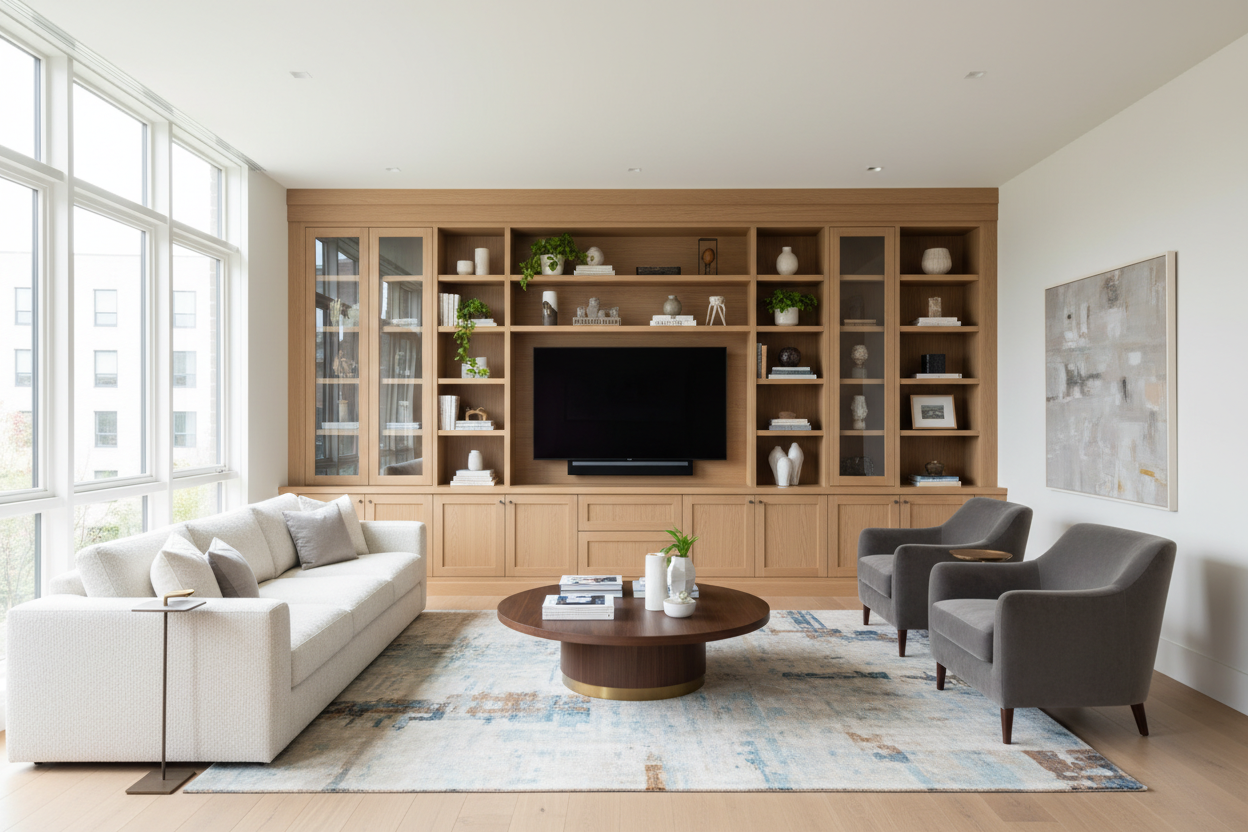
It’s about how the different elements talk to each other. It’s the way your crown molding meets the ceiling with a purposeful shadow line, or how your wainscoting aligns perfectly with your window casings. When you start integrating premier millwork & cabinets, you stop seeing furniture as 'objects' and start seeing the room as a cohesive unit. It’s about creating a 'fitted' look where every inch of the wall has a job to do.
Baseboards That Command Attention
Let’s have a moment of honesty: 3-inch builder-grade baseboards are ruining your life. Okay, maybe that’s dramatic, but they are definitely ruining your room's proportions. A tiny baseboard makes a standard 8-foot ceiling feel even lower. It looks like the wall is wearing high-water pants.
When I renovate, I never go smaller than 7 inches for a baseboard. If the room has 10-foot ceilings, I’m looking at 9 or 11 inches. A substantial baseboard anchors the room. It gives the floor a 'frame' and makes the wall feel intentional. It’s a small change in measurement that makes a massive difference in how expensive the space feels.
When Storage Becomes Architecture
The smartest thing you can do for a cluttered home is to turn your storage into part of the walls. Instead of having a random wardrobe or a standalone pantry, you wrap those functional zones in high-end trim. This is where you can get clever with integrating standard pantry cabinets by surrounding them with custom side panels and floor-to-ceiling molding.
I did this in my last entryway. Instead of a wobbly coat rack, I used the same logic to upgrade ordinary shoe cabinets. By adding a unified baseboard across the bottom and a thick wood top that connected to the door casing, those cheap cabinets suddenly looked like a custom-built mudroom. It makes the utility of the house feel like part of the design, not an eyesore you’re trying to hide.
Can You Fake High-End Architecture on a Budget?
Look, a full custom carpentry package can easily cost as much as a new car. If you don't have $30k sitting around for a master carpenter, you have to get strategic. You can absolutely fake the look of high-end millwork by using modular units as your base and spending your 'real' money on the finishing trim. The secret is the caulk and the paint—if the seams are invisible and the color is uniform, nobody knows what’s underneath.
I’ve even seen people transform a basic flat-pack desk into a library-style built-in just by adding a 'header' of crown molding and a 'footer' of thick baseboard. The rule of thumb: if you are DIYing, spend the extra $200 on a decent miter saw. You cannot fake a 45-degree angle with a hand saw and a prayer. If your joints have gaps, the whole 'high-end' illusion falls apart instantly.
Where to Spend vs. Where to Save on Woodwork
Don't try to trim out every single room in the house at once unless you've got an unlimited budget. Start with the 'public' spaces. Your living room, dining room, and entryway are where the architectural impact matters most. These are the high-traffic zones where people actually stop and look at the details.
The primary suite is your next priority, but even there, you can scale back. Skip the guest bedrooms and the laundry room. Nobody ever walked into a guest room and said, 'This stay was great, but the 3-inch baseboards really ruined the vibe.' Put that money into a deeper crown molding for your living room instead. It’s about creating a 'wow' moment in the places where you actually spend your life.
My Biggest Millwork Mistake
In my first house, I tried to save $400 by buying 'pre-primed' MDF molding that was slightly thinner than the wood version. I thought, 'Once it's painted, who will know?' I knew. Every time the vacuum hit the baseboard, it dented. Every time the humidity changed, the seams cracked. It looked like a DIY project within six months. Now, I only use solid wood or ultra-high-density fiberboard for anything at floor level. Lessons learned the hard way are the ones that stick.
FAQ
Is custom millwork worth the investment for resale?
Yes, but only if it's done well. High-end trim is one of those 'invisible' luxuries that buyers sense immediately. It makes a house feel solid and well-built, which justifies a higher price tag than a 'flipped' house with basic finishes.
What is the best wood for interior millwork?
If you're painting, Poplar is the gold standard. It's a hardwood, so it's durable, but it's affordable and takes paint beautifully without the grain showing through. If you're staining, White Oak or Walnut are the current favorites for that high-end architectural look.
Can I add crown molding to a room with low ceilings?
Absolutely, but keep the profile simple. Avoid 'heavy' traditional patterns that curve outward. Instead, go for a 'cove' or a simple flat fascia that draws the eye upward without making the ceiling feel like it's crashing down on you.

Dejar un comentario
Este sitio está protegido por hCaptcha y se aplican la Política de privacidad de hCaptcha y los Términos del servicio.