










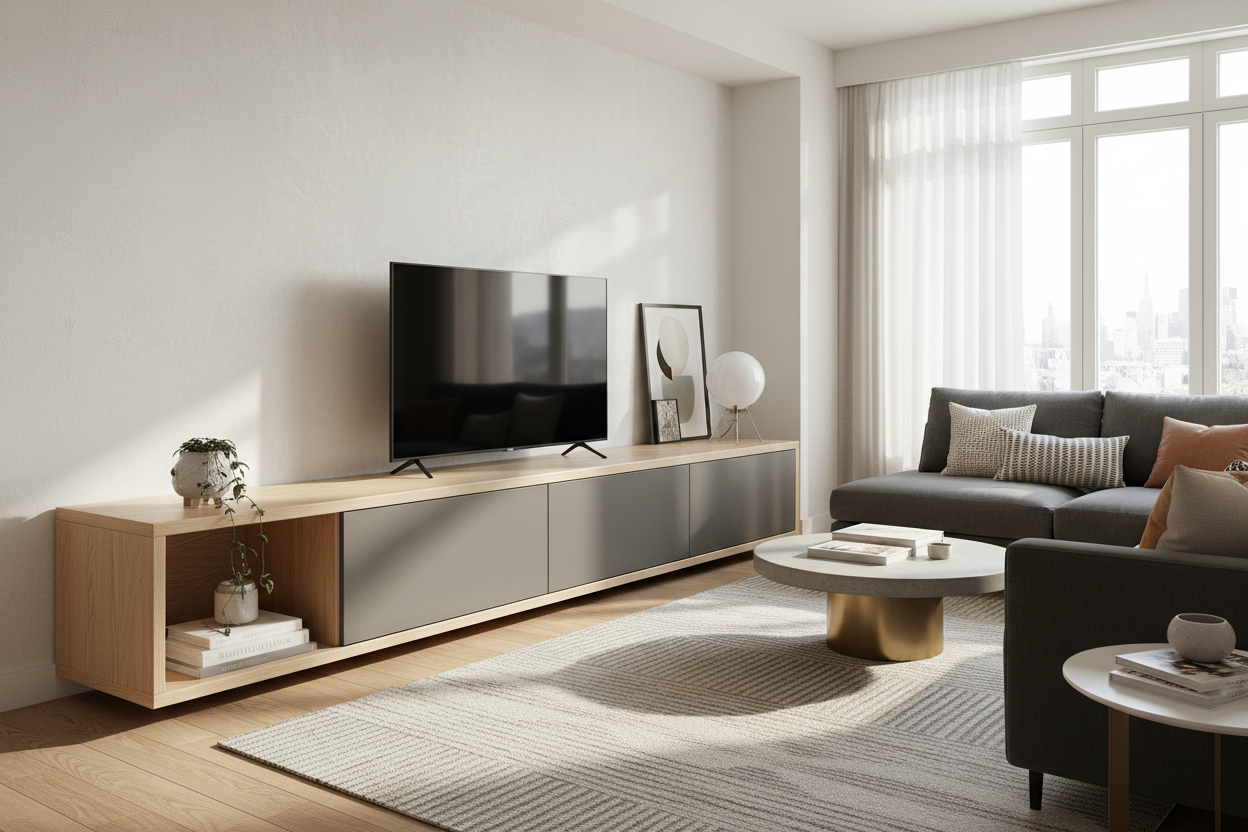
I finally found it. After six months of scouring Facebook Marketplace, I scored a 1964 walnut lowboy credenza for $200. It had the perfect grain, the original brass pulls, and that sleek, low-slung profile that makes every interior design enthusiast drool. I hauled it home, set my 65-inch OLED on top, and sat back on my sofa to enjoy the view. Within twenty minutes, my neck was screaming. My screen was so low I felt like I was looking at my own shoelaces.
The problem with the 'aesthetic' furniture movement is that it often ignores the reality of human anatomy. Most vintage or modern low-profile consoles sit about 18 to 22 inches off the ground. If you are sitting on a standard 18-inch sofa cushion, your eyes are naturally landing a good foot above the center of the screen. I spent a week propping my TV up on a stack of coffee table books before I discovered the platform for tv stand—a simple tabletop riser that bridges the gap between 'pretty' and 'functional.'
Quick Takeaways
- Standard eye level for a seated adult is roughly 42 inches from the floor; your riser should help you hit that mark.
- A tv stand platform creates a ventilated 'garage' for hot gaming consoles like the PS5 or Xbox Series X.
- Material choice is everything: Solid wood matches vintage pieces, while acrylic disappears in modern rooms.
- Always check the weight capacity—cheap MDF risers will bow under the weight of a large TV over time.
The 'Pinterest Lowboy' Epidemic (and My Neck Pain)
We are living through a plague of low-profile furniture. It looks incredible in a staged photo with 10-foot ceilings, but it is an ergonomic disaster for a Tuesday night Netflix binge. I learned the hard way that choosing the perfect TV stand involves more than just measuring the width of your wall. You have to account for the height of your chin. When you spend hours looking down, you are putting incredible strain on your cervical spine. It is the same 'tech neck' we get from staring at phones, but amplified by a 4K display.
I tried to convince myself I would get used to it. I didn't. I started stacking floor pillows just to sit lower, which ruined the comfort of my actual sofa. The reality is that style shouldn't sacrifice your physical comfort. If your media console is under 24 inches tall, you are likely dealing with a viewing angle that is objectively too low. I realized I didn't need to get rid of my vintage find; I just needed to give my TV a little boost.
Enter the TV Stand Platform: The 5-Minute Fix
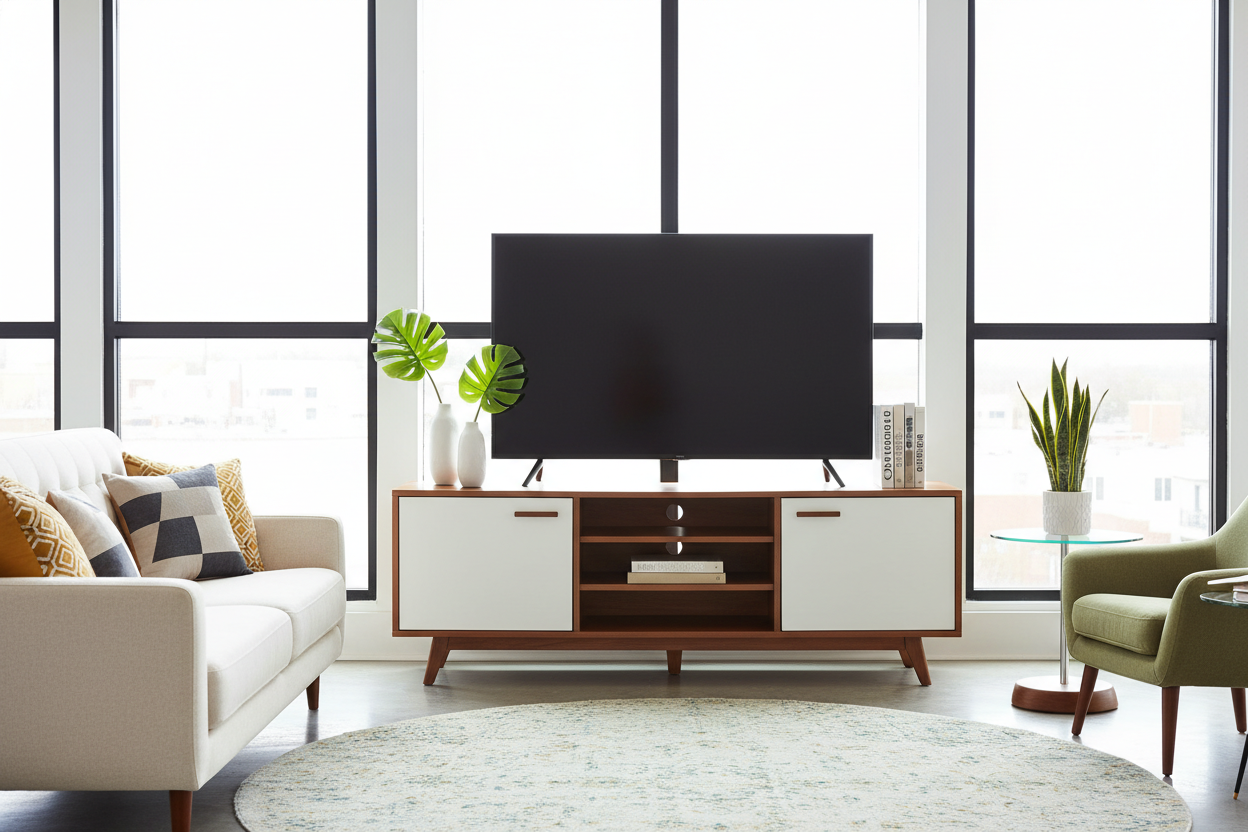
The solution was a platform for tv stand. Basically, this is a sturdy, miniature table that sits on top of your existing furniture. It sounds simple because it is, but the impact on your posture is immediate. Most risers come in heights of 4, 6, or 8 inches. Adding just 5 inches to my setup brought the top third of my screen to eye level—the golden rule for TV placement. It felt like I’d finally stopped slouching for the first time in months.
When you start shopping, you'll see three main camps: wood, metal, and acrylic. I’m a purist, so I looked for a solid walnut riser to match my credenza. If you have a modern, minimalist setup, a thick slab of clear acrylic is a fantastic choice because it 'floats' the TV and doesn't add visual clutter. Metal risers are great for industrial vibes or if you need maximum weight support for an older, heavier plasma screen. The assembly usually takes five minutes—just screw on the legs and you are back in business.
The Hidden Bonus: Secret Storage Real Estate
One thing I didn't expect when I added my tv stand platform was how much it would clean up my cable disaster. My PS5 is a massive, awkward white beast that didn't fit inside the cabinets of my vintage credenza. It sat on top, looking like a spaceship crashed into a 1960s office. By adding a riser, I created a 5-inch tall 'cubby' directly under the TV. This is the perfect spot for a soundbar, or in my case, a well-ventilated home for my console.
Consoles need air. Stuffing them into a closed cabinet is a death sentence for the hardware. The open-air gap created by a platform allows for 360-degree airflow while keeping the hardware tucked away and out of your direct line of sight. I even managed to hide my Apple TV and a messy power strip back there. It turned my cluttered tabletop into a clean, organized zone where only the screen and a few decorative items remain visible.
How to Fake a Custom Look With Your Riser
The biggest fear people have is that a riser will look like a 'hack'—something you’d see in a college dorm. To avoid this, you need to be intentional with your materials. If you have a wood console, don't try to 'almost' match the wood grain. You will fail, and the slight difference in stain will drive you crazy. Instead, go for a deliberate contrast. A matte black riser looks intentional and high-end on almost any wood surface. It frames the TV rather than competing with the furniture.
Another pro tip: Measure your TV base before you buy. If your TV has 'feet' on the ends rather than a center pedestal, you need a wide tv stand platform that spans the full distance. I personally love the look of a riser that is slightly narrower than the TV itself, as it makes the screen feel like it’s hovering. If you want it to look truly custom, find a local woodworker to cut a piece of butcher block to your exact specs and add some 4-inch hairpin legs. It costs maybe $50 and looks like a boutique furniture piece.
When a Riser Isn't Enough (And It's Time to Upgrade)
Sometimes, a riser is just a band-aid on a broken leg. If your current TV stand is already wobbly or made of thin particle board, adding a platform and a heavy TV on top is asking for a disaster. I’ve seen cheap consoles bow in the middle under the weight, and adding a riser only concentrates that pressure into a smaller footprint. If you can see even a slight dip in the top of your unit, do not add a riser. It is time to move on.
If your room layout is just fundamentally wrong for your furniture, you might need an adjustable TV stand for living room that offers built-in height flexibility. There is no shame in admitting that the vintage lowboy belongs in the entryway as a catch-all rather than in the media room. If you find yourself needing an 8-inch riser just to see over your coffee table, you’re better off browsing for new Tv Stands that actually meet your ergonomic needs. Life is too short for neck pain and wobbly furniture.
FAQ
How much weight can a TV riser hold?
Most tempered glass or solid wood risers can handle between 60 and 100 pounds. Always check the manufacturer's specs, especially if you have an older, larger TV. If you have a modern LED, they usually weigh under 50 pounds, so most platforms will handle them easily.
Will a platform scratch my furniture?
Only if you aren't careful. Look for risers that come with rubberized feet or felt pads. If they don't have them, buy a pack of adhesive felt pads for two dollars and stick them on yourself. It’ll protect your finish and prevent the TV from sliding if someone bumps into it.
Can I put a soundbar under the TV stand platform?
Yes, that is one of the best uses for it! Just make sure to measure the height and width of your soundbar first. You want at least an inch of clearance on the top and sides so you aren't wedging it in there, which can muffle the sound or vibrate the platform.

Dejar un comentario
Este sitio está protegido por hCaptcha y se aplican la Política de privacidad de hCaptcha y los Términos del servicio.