










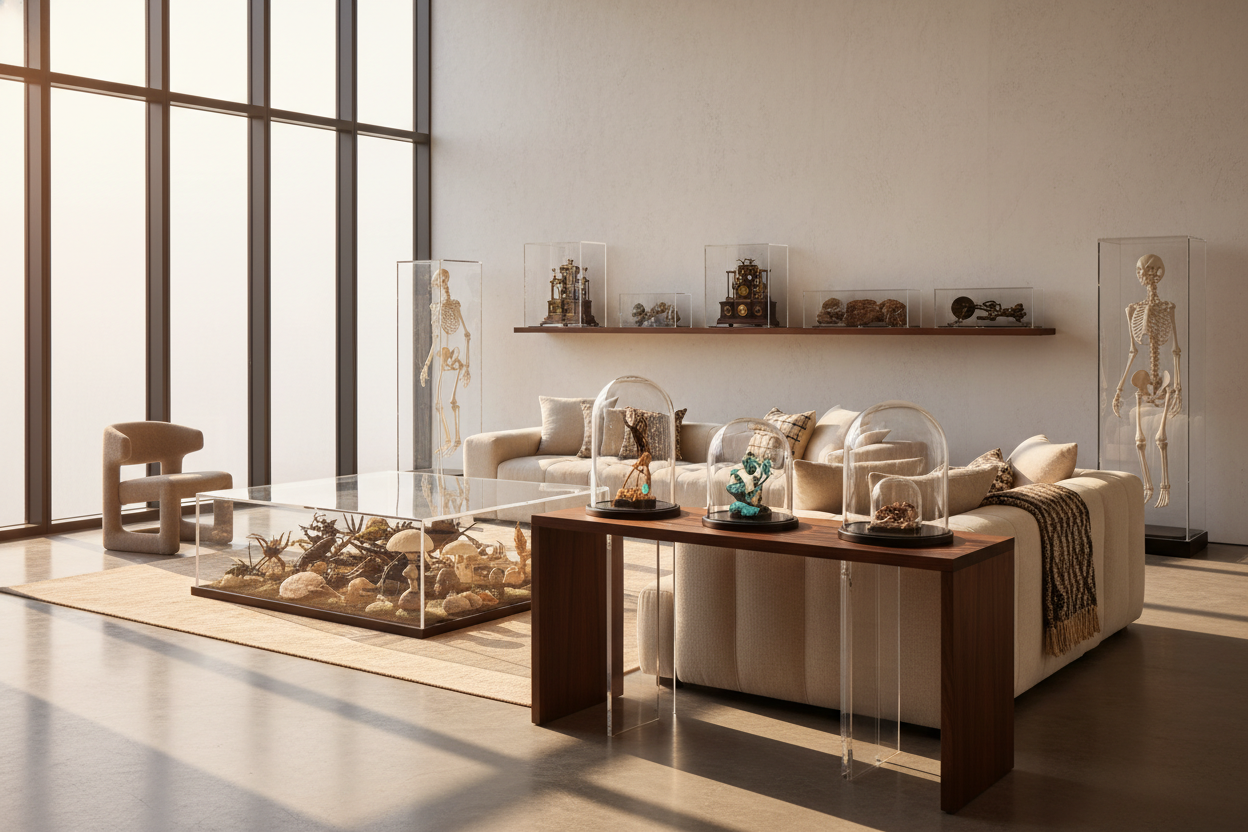
I recently acquired a 3D-printed architectural model of a brutalist library. It is tall, jagged, and has a cantilevered wing that sticks out at a precarious 45-degree angle. Putting it on a shelf was a recipe for disaster; putting it in a standard glass cube from a big-box store made it look like a goldfish in a bowl that was three sizes too big. That is the moment I realized that custom made perspex display cases are not just a luxury—they are a necessity for anyone whose collection doesn't fit into a standard rectangle.
Quick Takeaways
- Off-the-shelf boxes usually create 'dead space' that makes high-end items look cheap.
- Acrylic is 50% lighter than glass and offers better optical clarity for complex shapes.
- Always add a 10-15mm 'breathing room' buffer to your item's widest dimensions.
- A custom base (like black acrylic or routed wood) anchors the piece and hides dust.
The Awkward Gap Problem With Store-Bought Cubes
We have all been there. You buy a beautiful custom statue display case from a generic retailer, only to find that your figure has three inches of empty air above its head and barely a millimeter of clearance on the sides. It looks cramped and accidental. When you settle for a generic fit, your collection looks like an afterthought rather than a curated gallery.
Precision is everything. I remember when I finally stopped trying to make 'standard' work and squeezed a narrow display case into my hallway that I had spec-ed to the inch. The difference was night and day. A custom built display case eliminates that awkward dead space, making the object inside feel intentional and protected. It is the difference between a tailored suit and something you grabbed off a clearance rack.
Perspex vs. Glass: Why Acrylic Wins for Odd Shapes
I used to be a glass snob until I had to move a custom glass box display across the room. It was heavy, terrifyingly fragile, and had that distracting green tint on the edges. For custom collector cases, museum-grade acrylic (often called Perspex) is the superior choice. It is optically clearer than standard glass, meaning the colors of your custom model display cases actually pop instead of looking muddy.
Acrylic display cases made to measure are also much easier to fabricate into weird sizes. If you need a custom acrylic cube that is 19.5 inches tall but only 4 inches wide, acrylic manufacturers can bond those seams with a chemical solvent that basically welds the plastic into a single, seamless piece. You get a cleaner look without the bulky silicone joints you see in glass builds.
The 'Measure Twice, Order Once' Strategy
Measuring for a custom size display case is where most people mess up. They measure the base of the object and forget the widest point. If you are ordering a custom acrylic box with lid for a vintage toy, measure the widest point of the arms or the tip of the cape. I use a hard metal ruler—never a soft sewing tape—to get the exact height, width, and depth.
The golden rule is 'breathing room.' I always add at least 1/2 inch (about 12mm) to every dimension. This prevents the item from looking trapped. Once you have those numbers, you can confidently commission a custom acrylic display box from a fabricator. If you provide exact dimensions plus your desired clearance, you avoid the 'it almost fits' heartbreak that haunts every collector.
Don't Ignore the Base: Anchoring Your Display
The clear top is only half the battle. The base is what actually 'grounds' your item. A custom size acrylic display box with black base is my personal go-to because the high-gloss black creates a reflection that makes the item look like it is floating in a gallery. It hides the inevitable dust that settles at the bottom, too.
If you want something warmer, some custom acrylic display case manufacturers can route a groove into a piece of natural walnut or oak. This turns a handmade display case into a piece of furniture. Whether you go with a custom acrylic wall display case or a tabletop version, the base should be heavy enough to prevent the whole thing from sliding when someone walks past.
When to Go Custom vs. When to Buy Off-the-Shelf
Let's be real: custom work isn't cheap. If you are displaying a dozen identical Funko Pops, don't call a specialist. A standard corner display case or a mass-produced cabinet will do the job just fine. You save your budget for the 'hero' pieces—the handmade display cabinets for your one-of-a-kind prototypes or the custom figure display case for your rarest statue.
I personally reserve custom made display cabinets for items that are either irreplaceable or physically awkward. If the item costs more than $200, it deserves a custom built display cabinet. It’s an investment in preservation. A personalized display case with an engraved plaque is the final touch that tells everyone, 'Yes, this weird plastic thing is actually a piece of art.'
Personal Experience: The Typewriter Disaster
I once ordered a beautiful custom acrylic box for a 1930s Underwood typewriter. I measured the body of the machine perfectly but completely forgot about the carriage return lever that sticks out to the side. When the case arrived, it sat right on top of the lever, tilting the whole case at a 10-degree angle. It was a $150 mistake that I now use as a very expensive paperweight. Always, always check for protruding parts before you hit 'order.'
FAQ
How do I clean an acrylic display case?
Never use Windex or anything with ammonia; it will cloud the plastic forever. Use a clean microfiber cloth and a dedicated acrylic cleaner like Novus. If you're in a pinch, lukewarm water with a tiny drop of dish soap works fine.
Is Perspex the same as acrylic?
Yes. Perspex is just a brand name for high-quality acrylic, much like Kleenex is to tissues. When searching for custom made perspex display cases, you are looking for acrylic fabrication.
Can I get a custom case with UV protection?
Absolutely. Most custom acrylic display case manufacturers offer OP3 museum-grade acrylic which filters out 98% of harmful UV rays. This is a must if your display is near a window to prevent your collectibles from fading.

Dejar un comentario
Este sitio está protegido por hCaptcha y se aplican la Política de privacidad de hCaptcha y los Términos del servicio.