










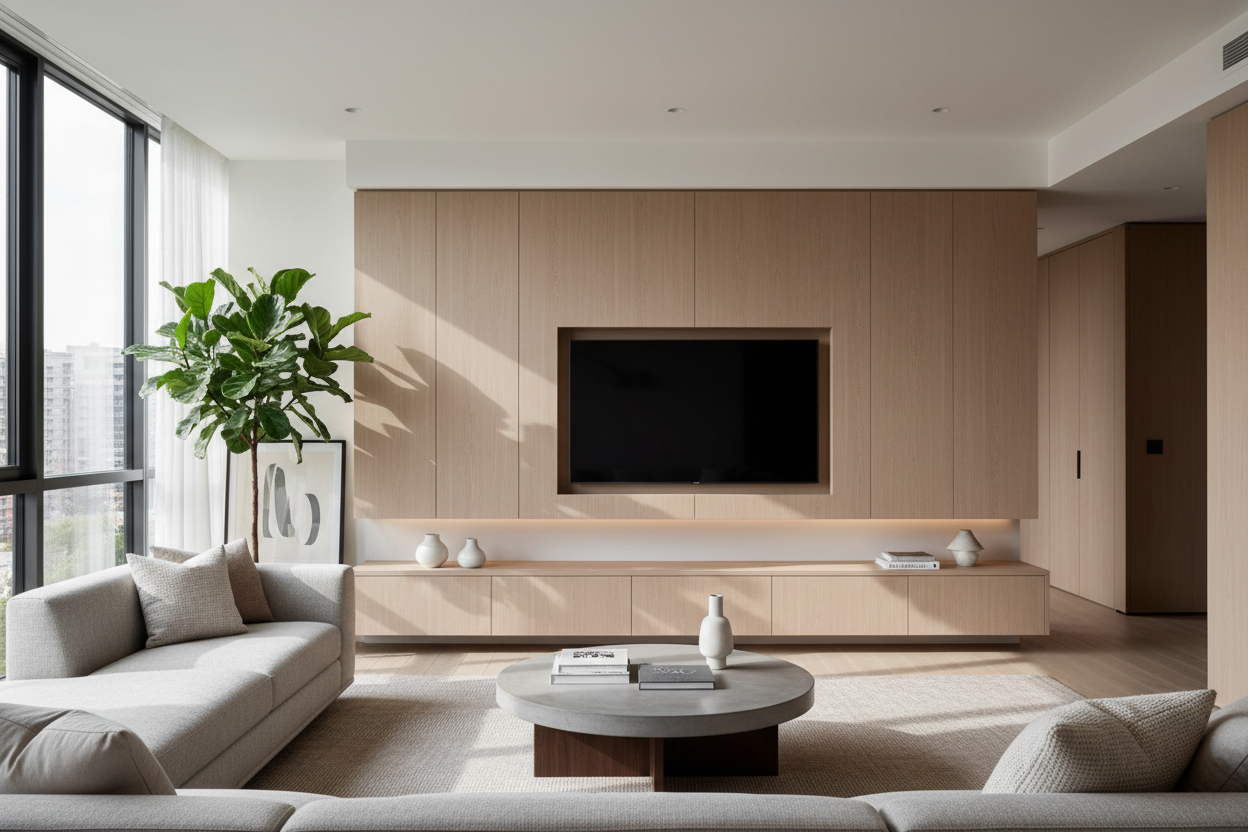
I recently spent an entire Tuesday evening staring at my living room wall, and not because I was watching a movie. I was staring at the giant, soul-sucking black rectangle that is my TV when it is turned off. It is a visual vacuum. It does not matter how many linen pillows or mid-century rugs you buy; if you have a 65-inch screen, your room is a home theater first and a living space second.
That is why I finally caved and started researching flat screen tv wall mount cabinets with doors. I wanted my living room back. I wanted a place where the focal point was a conversation or a piece of art, not a dormant piece of glass. But I had questions. Would it look like a bulky armoire from my parents' basement? Would my remote even work? I did the legwork so you do not have to.
Quick Takeaways
- Modern wall cabinets are only 5-8 inches deep, unlike the 24-inch behemoths of the 90s.
- Floating designs keep floor space clear, making small rooms feel significantly larger.
- You must check your mount's 'profile depth' before buying to ensure doors actually close.
- IR repeaters are a $20 fix if your solid doors block the remote signal.
The 'Black Mirror' Effect in Modern Living Rooms
Designers call it the 'Black Mirror' effect. It is that moment when you realize your carefully curated interior is being held hostage by a piece of tech. We spend thousands on paint colors and lighting, only to have a massive dark void dominate the main wall. It is aggressive, and frankly, it is a bit lazy. We have just accepted that TVs have to be the center of our universe.
When I finally installed a cabinet, it cured my sports bar living room instantly. Suddenly, the room felt soft again. When the doors are shut, the TV is not just 'off'—it is gone. It allows the architecture of the room to breathe. If you are someone who values a calm, tech-free vibe during dinner or when hosting friends, physically covering the screen is the only way to truly disconnect from the digital noise.
Wait, Aren't Enclosed Cabinets a 90s Thing?
I know what you are thinking. You are picturing those massive, honey-oak entertainment centers that took up half a ZIP code. Those things were built for CRT televisions that were as deep as they were wide. Modern wall tv cabinets for flat screens with doors are a completely different animal. They are built for the slim era. We are talking about units that protrude only a few inches from the wall, mimicking the look of a large piece of wall art or a sleek sideboard.
The magic is in the profile. A modern wall TV cabinet with doors that enclose the screen is designed to be as low-profile as possible. It is less about 'storage' and more about 'concealment.' I have seen units made from reclaimed wood that look like a rustic triptych when closed. There is no bulk, no heavy base, and no wasted space. It is the evolution of the armoire, stripped of its 1994 baggage.
The Floating Magic of Modern Designs
One of the biggest wins for these cabinets is the 'floating' aspect. By mounting the unit directly to the wall and leaving the floor clear, you trick the eye into seeing more square footage. I have a tiny 12x12 den, and putting a traditional console in there made it feel like a closet. Switching to a wall-mounted cabinet changed the entire energy. You get the concealment without the footprint.
Solid vs. Glass: Choosing Your Door Style
This is where the debate gets heated. Solid doors offer total concealment. If you want the TV to disappear completely, solid wood or painted MDF is the way to go. It is the ultimate minimalist move. However, you have to deal with the 'remote control problem.' Most remotes use Infrared (IR), which cannot see through solid wood. You will either need a Bluetooth remote or a tiny IR repeater kit.
On the other hand, a flat screen tv wall cabinet with doors featuring glass inserts offers a different vibe. I am a huge fan of a black cabinet with glass doors using fluted or smoked glass. It obscures the tech enough that it is not an eyesore, but it still feels high-end and sophisticated. Plus, smoked glass often allows IR signals to pass through, meaning you do not have to mess with extra wiring for your remote. It is a 'best of both worlds' situation for people who want style without the technical hurdles.
3 Things to Check Before You Mount Anything
Do not just buy the first pretty box you see on Pinterest. First, you need to find your studs. A 55-inch TV weighs about 35-45 pounds. A solid wood cabinet can weigh another 40-60 pounds. You are looking at a 100-pound load on your drywall. If you are not hitting at least two studs with heavy-duty lag bolts, you are asking for a disaster. I have seen a cabinet rip a chunk of drywall out in a rental, and it is not a fun phone call to the landlord.
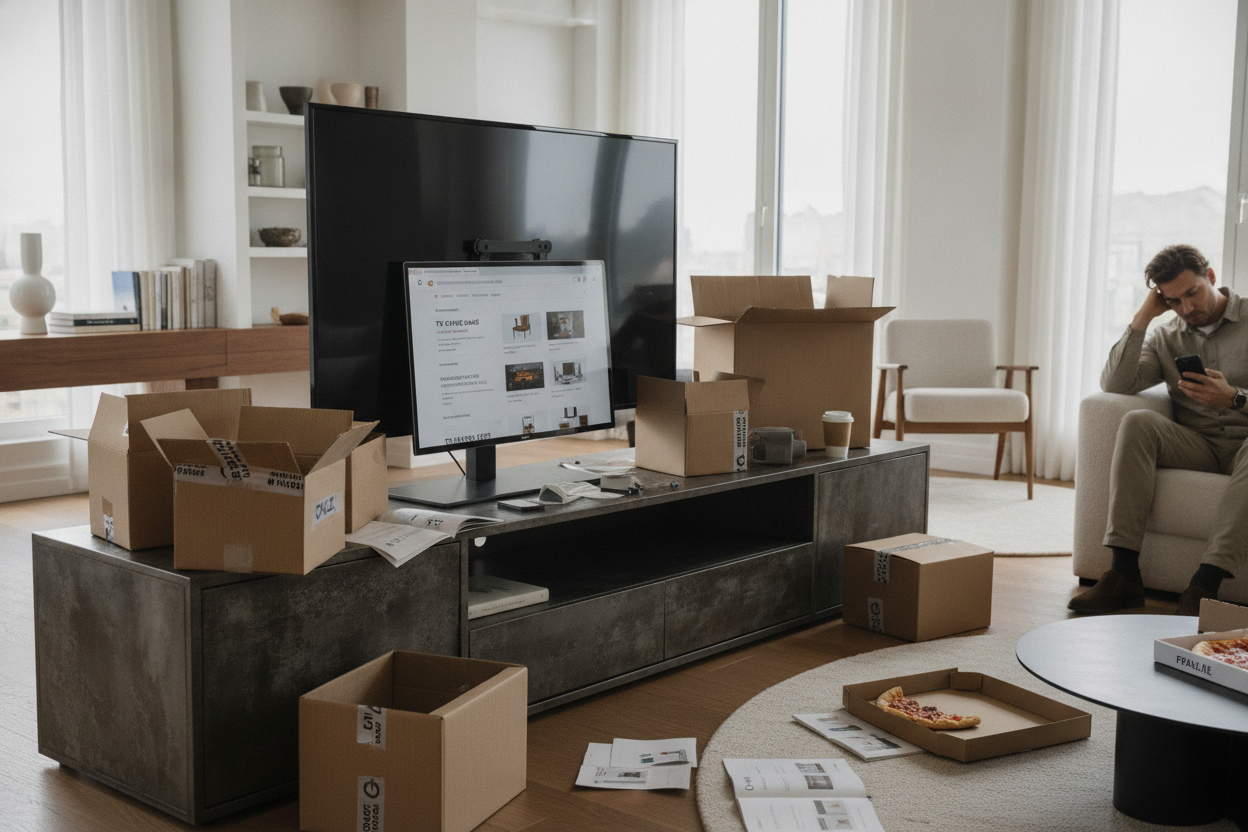
Second, measure your 'total depth.' This is the mistake I made. My TV mount was a 'tilt and swivel' model that sat 4 inches off the wall. The cabinet I bought only had an internal depth of 4.5 inches. Once the TV was mounted, the doors hit the screen and would not shut. You need a large TV cabinet with spacious storage that specifically accounts for the depth of the mount, not just the thickness of the TV itself.
Third, think about heat. TVs generate heat, even LED ones. If you plan on leaving the TV on with the doors closed (maybe for music), you need ventilation. Look for units with 'breather' holes at the top and bottom or an open-back design. Without airflow, you are essentially slow-cooking your processor, which is a fast way to kill a $1,000 screen.
The Final Verdict: Is It Worth the Effort?
If you are a chronic channel surfer who has the TV on from 5 PM to midnight, these cabinets might annoy you. Opening and closing doors every time you want to check the weather is a chore you will eventually stop doing. But for the design-conscious homeowner—the person who hates that their living room looks like a Best Buy showroom—it is a total win. It forces you to be intentional about your screen time and restores the aesthetic balance of your home. For me, the five minutes of mounting stress was worth the years of visual peace.
Personal Experience: My Mounting Disaster
I once bought a gorgeous mango wood unit for my 55-inch OLED. I spent two hours finding the studs, only to realize my ultra-slim mount actually sat three inches off the wall because of the bulky cable adapters I used. The doors wouldn't close. I had to buy 90-degree HDMI adapters just to save the project. My advice? Buy the shallowest mount possible and use right-angle cables, or you'll be returning a 60-pound box to the post office.
FAQ
Will my remote work through the doors?
If the doors are solid wood or metal, no. You will need an IR repeater (a tiny sensor that sits outside the cabinet) or a Bluetooth/RF remote like the ones that come with newer Roku or Apple TV units.
How do I hide the wires?
Most quality cabinets have a 'cord drop' or a hollow back. The cleanest way is to run the wires behind the drywall using an in-wall power kit, then out through the back of the cabinet.
Can I mount this on a brick wall?
Yes, but you will need a hammer drill and masonry anchors. Do not try to use standard wood screws; they will just slip and drop your expensive setup on the floor.


Leave a comment
This site is protected by hCaptcha and the hCaptcha Privacy Policy and Terms of Service apply.