











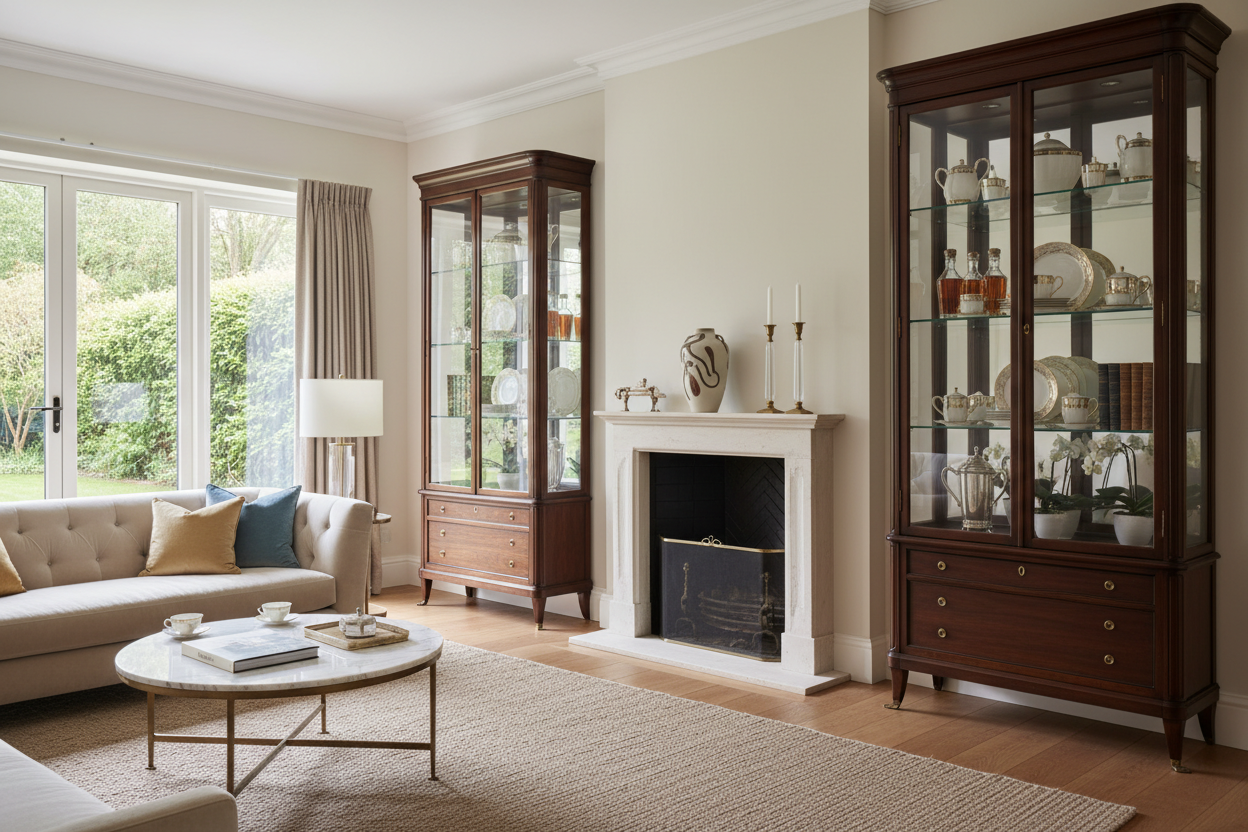
We have all been there. You inherit a gorgeous set of ceramics, or you finally curate a collection of travel finds, only to realize they are either gathering dust on a flimsy open shelf or buried in a dark sideboard. The solution is not just more storage; it is intentional framing. Beautiful display cabinets solve this exact problem by protecting your pieces while turning them into a distinct focal point.
Placing a large, glass-front piece of furniture in a room can be intimidating. If styled poorly, it looks like a cluttered retail shelf. In this guide, I will walk you through how to choose, place, and style these pieces so they look intentional, balanced, and perfectly suited to your home's proportions.
Quick Decision Guide
- Clearance matters: Leave at least 36 inches of walkway space in front of hinged doors to ensure comfortable traffic flow.
- Safety first: Always opt for tempered glass, especially in high-traffic family rooms, to improve longevity and safety.
- Rule of thirds: When styling shelves, aim for one-third objects, one-third books or framing items, and one-third negative space.
- Lighting is non-negotiable: Unlit cabinets can quickly turn into dark, heavy voids. Built-in or retrofitted lighting is essential.
Space Planning: Getting the Proportions Right
Managing Visual Weight
A tall, solid-wood cabinet carries immense visual weight. In a standard North American suburban living room with 8-foot ceilings, a massive, dark piece can easily make the space feel cramped. If your room is on the smaller side, look for designs with glass on three sides or raised metal legs. This allows light to pass through the silhouette, keeping the room feeling airy and preventing the furniture from anchoring the eye too heavily to the floor.
Material Matters: Building a Lasting Focal Point
The Modern Crockery Display Cabinet
When sourcing a crockery display cabinet for a dining area, the build quality of the shelving is paramount. Solid wood or thick tempered glass shelves are non-negotiable if you plan to stack heavy ceramic plates or cast-iron serving dishes. Pay close attention to the hardware. Soft-close, adjustable European hinges will prevent the doors from rattling your delicate items every time you close them. Flimsy backing boards are a major red flag—look for tongue-and-groove solid backs or high-quality veneers that will not warp over time.
Styling Your Collection
Curating Elegant Display Cabinets
The line between elegant display cabinets and cluttered storage units is drawn by negative space. Do not pack every square inch. Group items in odd numbers (threes and fives) and vary the heights to keep the eye moving across the shelf. Layering is a designer secret: place taller, flatter items like artwork or decorative platters at the back to add depth, and position smaller, highly textured objects in the front.
Designer's Honest Take
I learned a hard lesson about display cabinets a few years ago during a dining room remodel in Chicago. I sourced a stunning, vintage matte walnut cabinet. It looked incredible in the bright, sunlit showroom. But once we delivered it to a north-facing dining room with limited natural light, it absorbed all the energy in the room. It looked like a black hole. We had to retrofit the interior with warm LED channel lighting just to make the displayed items visible.
Another honest downside? Dust. Even with well-fitted doors, fine dust finds a way inside. If you hate dusting, avoid dark wood interiors or black metal base plates where every single speck becomes a permanent feature of the display.
Frequently Asked Questions
How do I clean the glass without leaving streaks?
Skip the harsh blue sprays. Use a simple mix of distilled water and a splash of white vinegar, applied with a clean microfiber cloth. Wipe in an S-pattern to avoid pushing dirt into the corners of the wood frame, which can degrade the finish over time.
What size cabinet do I need for my dining room?
Measure your available wall space and subtract at least 12 to 18 inches on either side to let the piece breathe visually. Ensure you have a minimum of 36 inches between the front of the cabinet and your dining chairs when they are pulled out so guests can navigate the room comfortably.
Are these cabinets practical for homes with young children?
Yes, provided you take basic precautions. Always anchor tall furniture to the wall studs to prevent tipping. Look for cabinets with tempered glass, which shatters into dull cubes rather than sharp shards if broken. You can also opt for a transitional design with solid wood doors on the bottom half to hide toys and keep fragile items out of reach on the top shelves.

Leave a comment
This site is protected by hCaptcha and the hCaptcha Privacy Policy and Terms of Service apply.