










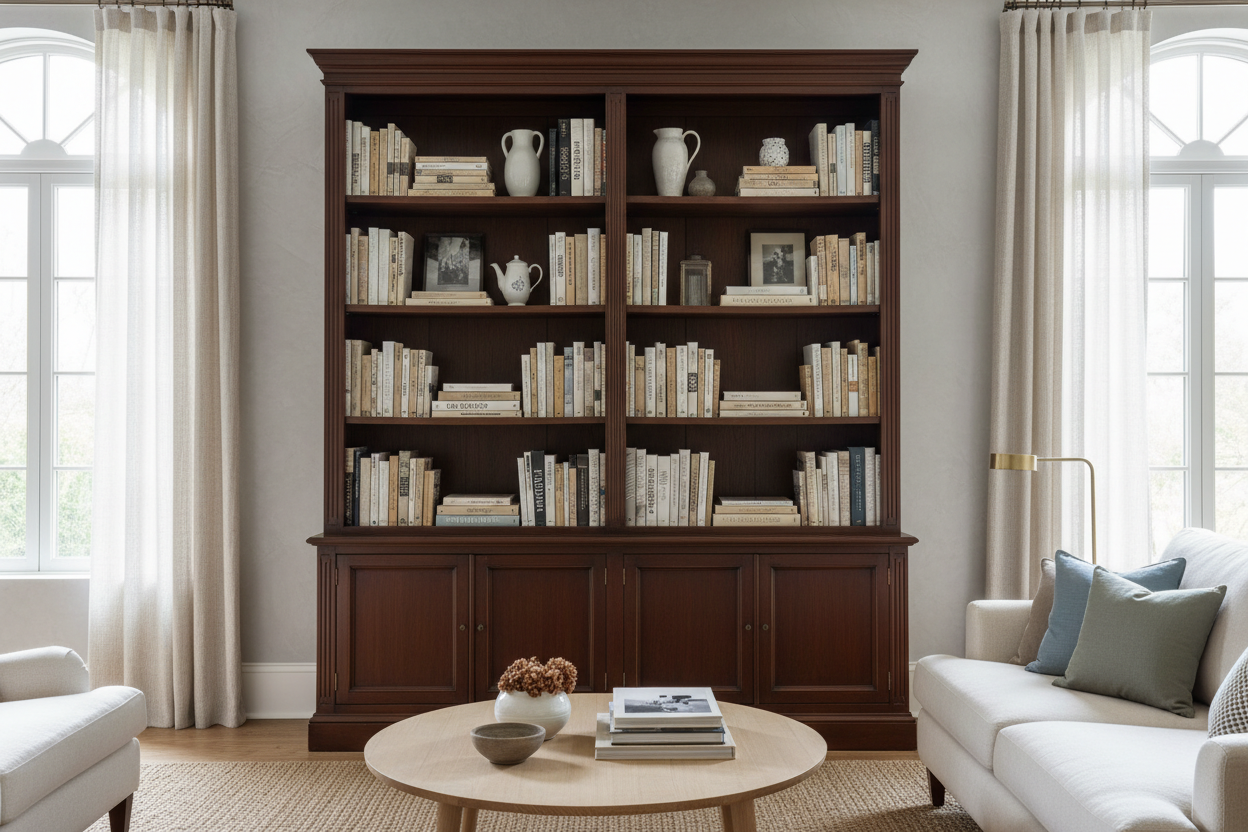
I remember walking into a client's dining room last year and seeing their beautiful antique bookcase china cabinet sitting empty except for a few mismatched plates. They loved the piece but didn't have fine china to fill it. 'What if we used it for your book collection instead?' I suggested. The transformation was stunning—and it's become one of my favorite design solutions for clients who want to maximize storage without sacrificing style.
Here's what I've learned from converting dozens of china cabinets into functional, beautiful bookcases:
Quick Takeaways
- China cabinets offer built-in protection with glass doors that keep books dust-free
- Most cabinets have adjustable shelves that can accommodate standard book heights
- The typical 16-18 inch depth of a china cabinet works perfectly for most books
- Built-in lighting creates a library-like atmosphere for your collection
- This repurposing approach saves floor space compared to separate bookcases
Why a China Cabinet Makes a Surprisingly Good Bookcase
When you think about it, china cabinets were designed to showcase precious items while keeping them protected. Those same features make them ideal for books. The glass doors—often with UV protection—shield your collection from dust, sunlight, and curious pets. I've worked with clients whose books were fading on open shelves, but once moved behind glass, their vibrant covers stayed that way.
The structure is another advantage. Most quality china cabinets are built with kiln-dried hardwood frames and reinforced shelves that can handle significant weight. A standard 72-inch cabinet with five shelves can easily hold 150-200 books without structural concerns. Compare that to many mass-produced bookcases made from particleboard that sag under much lighter loads.
Space efficiency is where this really shines. In a 12x14 living room, a traditional bookcase might eat up valuable floor space, but a china cabinet placed against a wall creates vertical storage without dominating the room. I recently helped a client in a 900-square-foot apartment use their grandmother's cabinet as both a bookcase and display area for family photos, creating a multi-functional focal point.
The Practical Guide to Converting Your China Cabinet
Let's walk through the conversion process step by step. First, empty the cabinet completely. This gives you a clean slate to assess the interior. Measure the shelf depth—most china cabinets range from 14-18 inches, which accommodates standard books perfectly. The key is ensuring there's enough clearance between shelves for your tallest volumes.
Adjustable shelves are your best friend here. Many cabinets come with pre-drilled holes every 1-2 inches, allowing you to customize the spacing. For a varied book collection, I recommend setting shelves 10-12 inches apart. This accommodates most hardcovers while leaving room for decorative objects. If your cabinet has fixed shelves, consider adding bookends or creating horizontal stacks to fill the vertical space.
Lighting makes all the difference. If your cabinet has built-in lights, replace any old bulbs with LED options that produce minimal heat—books are sensitive to temperature changes. For cabinets without lighting, battery-operated LED strips installed along the top interior edge create beautiful illumination without requiring electrical work. I particularly love how a tall white china curio cabinet looks with warm LED lighting, creating a gallery-like display for books.
Assessing Your Cabinet's Book-Friendly Features
Before loading up your shelves, do a quick assessment. Check the weight capacity—most solid wood cabinets can handle 25-30 pounds per shelf, but if you're unsure, test with a few books first. Look for any shelf sag by placing a level across it. Minor sagging can often be corrected by flipping the shelf over or adding a small support bracket underneath.
Door clearance is crucial. Measure the space between shelves and the glass doors when closed. You need at least 1/2 inch clearance to prevent books from pressing against the glass. If your cabinet has curved glass doors, pay extra attention to the center where the curve might reduce clearance.
Consider the backing material too. Some cabinets have mirrored backs that can make a small collection appear larger, while others have solid wood backs that provide a neutral background. If you have a mirrored back and find it distracting, a simple solution is to line it with fabric or removable wallpaper that complements your book covers.
Organizing Books in Glass-Door Cabinets
The beauty of glass doors is that everything becomes part of your decor. Instead of hiding books away, you're creating a curated display. Start by grouping books by color—it sounds simple, but arranging rainbow gradients or creating monochromatic sections makes even a mismatched collection look intentional.
Vary the heights and orientations. Place some books vertically, others horizontally in stacks of 2-3. Leave breathing room between groups—about 20% empty space prevents visual clutter. I often mix in small decorative objects between book groups: a vintage bookend, a small plant in a ceramic pot, or a framed photo. These elements break up the lines of book spines and add personality.
For deeper cabinets (18 inches or more), consider creating two rows: taller books in back, shorter in front. Just ensure the front row doesn't block visibility of the back completely. Elegant showcasing ideas often include this layered approach, which adds depth and makes the display more interesting from different angles.
Design Styles That Make This Combo Shine
This approach works across design aesthetics. In traditional spaces, an ornate wooden china cabinet filled with leather-bound books creates a library feel. I recently styled a mahogany cabinet with gold-trimmed glass doors this way—the client's collection of classic literature looked like it belonged in a private study rather than their living room.
For modern interiors, clean-lined cabinets work beautifully. A black glass-door cabinet with minimal hardware creates a sleek backdrop for colorful book covers. Arrange books with their white pages facing outward for a monochromatic look, or use the cabinet to display art books as you would in a gallery.
In eclectic spaces, mix books with other collections. One client uses their cabinet for cookbooks on the top shelves, with their actual china displayed below—truly a bookcase china cabinet hybrid. The key is maintaining balance: if books are colorful, keep other items neutral, and vice versa.
Common Pitfalls and How to Avoid Them
The most common issue I see is overloading shelves. Even sturdy cabinets have limits. Distribute weight evenly, placing heavier art books or encyclopedias on lower shelves. If you notice any shelf deflection (bowing), reduce the load immediately. For particularly heavy collections, consider a cabinet with reinforced shelves like the 74-inch china cabinet I often recommend for serious book collectors.
Awkward proportions can be another challenge. If your cabinet is much taller than your book collection, use the top shelves for display items or stack books horizontally to fill the space. Conversely, if shelves are too close together for your books, remove every other shelf to create taller compartments.
Visual clutter happens when there's no organization system. Without glass doors, you can get away with more randomness, but behind glass, every item is on display. Create intentional groupings, leave negative space, and edit regularly. If a section looks busy, remove a few items—sometimes less really is more.
Personal Experience: When This Approach Doesn't Work
I'll be honest—this isn't a one-size-fits-all solution. Early in my career, I tried converting a very shallow cabinet (only 12 inches deep) for a client with large art books. The books protruded awkwardly, and the doors wouldn't close properly. We ended up using that cabinet for paperback novels instead and found a deeper solution for the art books.
Another time, a client wanted to use a delicate antique cabinet with original glass that couldn't be replaced. The weight of the books caused the shelves to bow slightly, and we worried about long-term damage. In that case, we used the cabinet for lighter items and found a sturdier modern cabinet for their book collection.
The lesson? Assess your specific cabinet and collection before committing. Sometimes the best solution is using part of the cabinet for books and part for other items, or finding a different piece altogether.
Frequently Asked Questions
Can any china cabinet be used as a bookcase?
Most can, but check the shelf depth and weight capacity first. Cabinets shallower than 14 inches might not accommodate standard books, and very delicate antique pieces might not handle the weight of a full book collection.
How do I prevent books from fading behind glass?
Use UV-protective glass or apply UV film to existing glass. Also avoid placing the cabinet in direct sunlight. LED lighting produces minimal UV radiation compared to natural light or older bulb types.
What if my cabinet has mirrored shelves?
Mirrored shelves can create interesting visual effects with books, but they might show fingerprints and dust more easily. Consider covering them with removable shelf liner if the reflection is too distracting.
How many books can a typical china cabinet hold?
A standard 72-inch cabinet with 5 shelves can hold approximately 150-200 standard hardcovers, or 300+ paperbacks. Always distribute weight evenly and monitor for any shelf sagging over time.


Leave a comment
This site is protected by hCaptcha and the hCaptcha Privacy Policy and Terms of Service apply.