










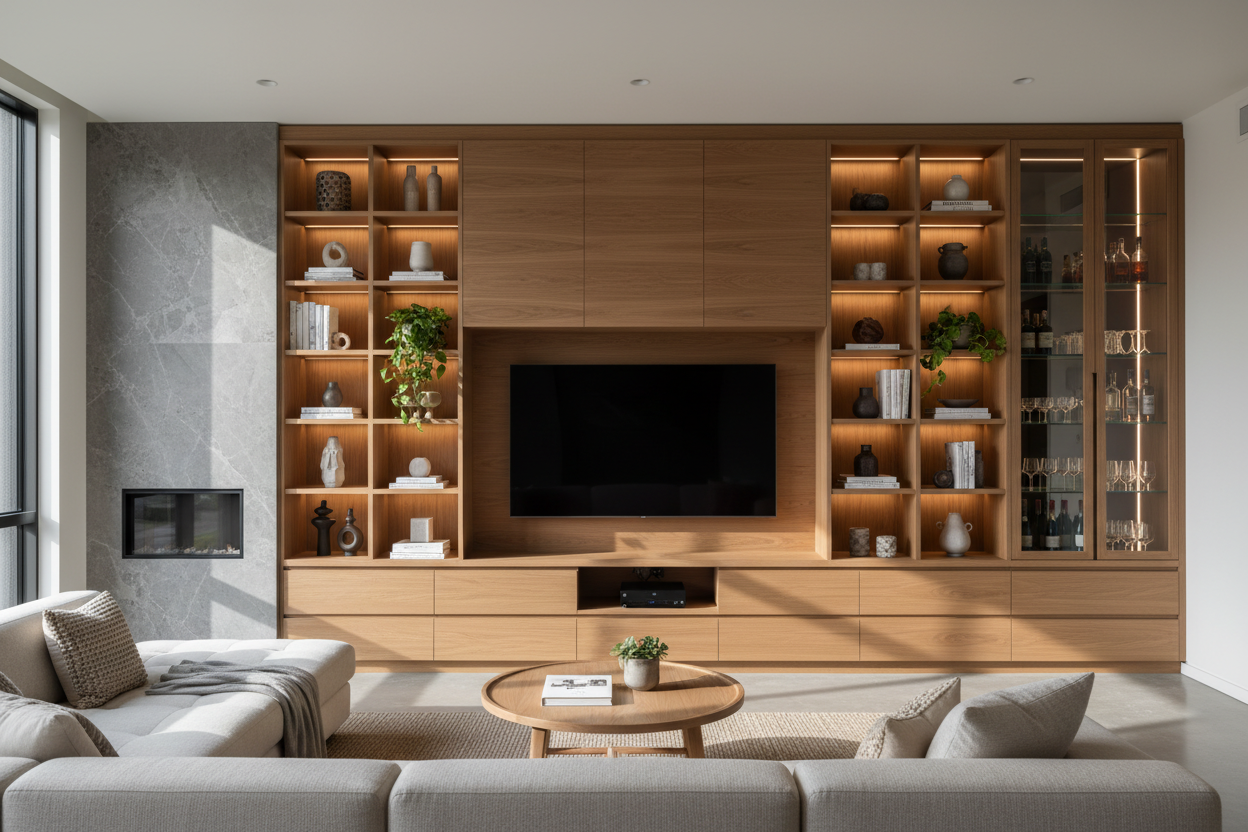
Most living rooms suffer from the same design affliction: a massive black rectangle floating awkwardly on a blank wall, surrounded by trailing wires and mismatched storage. It is arguably the hardest zone in a North American home to make look intentional. A well-designed built in entertainment cabinet anchors the room, hides the daily clutter, and gives your television a purposeful architectural frame.
After over a decade of designing residential interiors, I have seen how custom millwork can completely alter the flow of a home. In this guide, I will walk you through exactly how to plan, size, and style a custom media setup that looks high-end without dominating your floor plan.
Quick Decision Guide
- Depth matters: Standard base cabinets are 24 inches deep, but media equipment usually only needs 15 to 18 inches. Shallower is often better for room flow.
- Plan for ventilation: Closed cabinets housing gaming consoles or AV receivers need passive airflow or hidden fans to prevent hardware from overheating.
- Mix open and closed: Aim for a 60/40 ratio of closed storage to open shelving to avoid visual clutter while still offering display space.
- Future-proof the TV opening: Always leave an extra 4 to 6 inches of clearance around your current screen size to accommodate future upgrades.
Nailing the Proportions and Layout
Whether you are working with a sprawling suburban family room or a narrow city apartment, scale is everything. A built-in living room entertainment center needs to balance the visual weight of the television with the rest of the room's architecture.
Clearance and Walkways
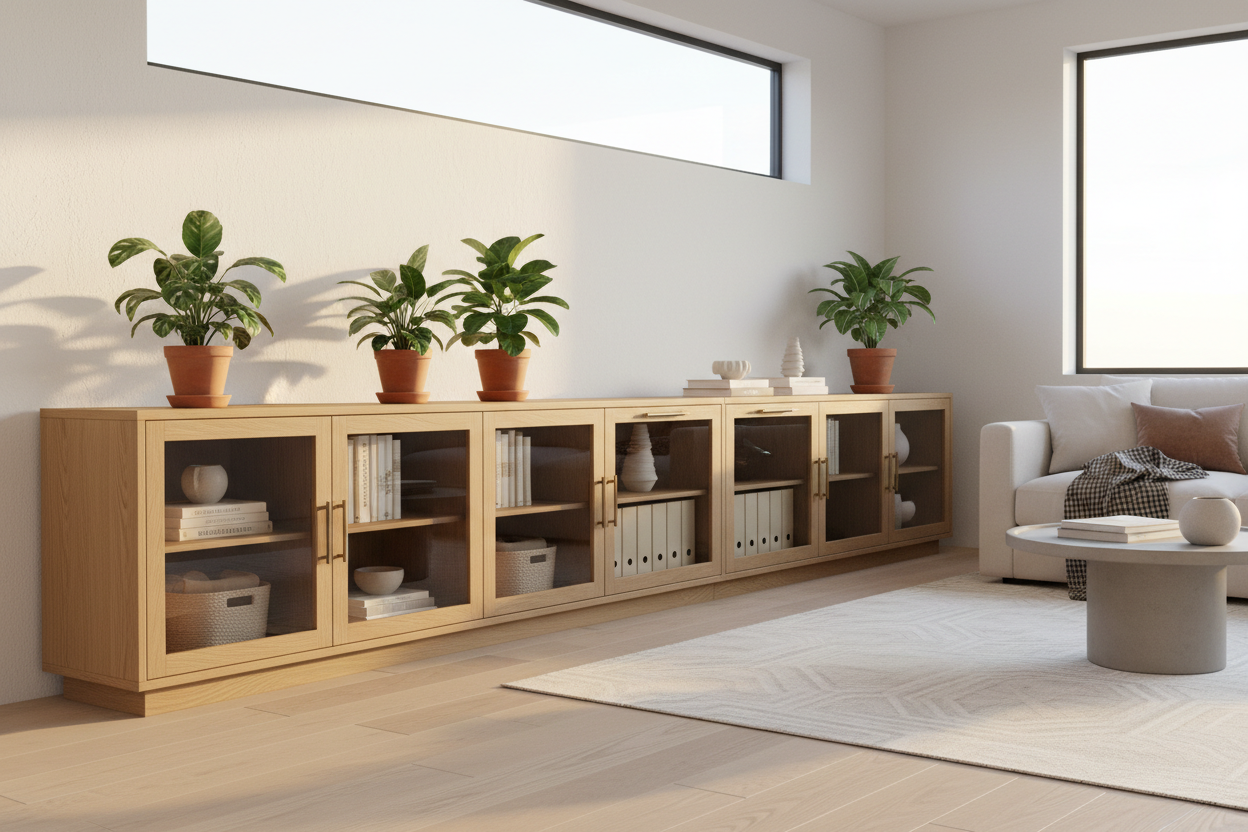
If your room layout requires walking past the unit, ensure you leave at least 36 inches of clearance between the front of the entertainment center cabinets and your coffee table or sofa. For narrower rooms, a shallow built in media console (around 12 to 14 inches deep) keeps the pathway clear while still successfully hiding cables and low-profile smart boxes.
The Secret to Affordable Custom Builds
Custom millwork is a significant investment, often starting at several thousand dollars for a basic setup. However, you can achieve a bespoke look for a fraction of the cost by rethinking your materials.
The Kitchen Cabinet Hack
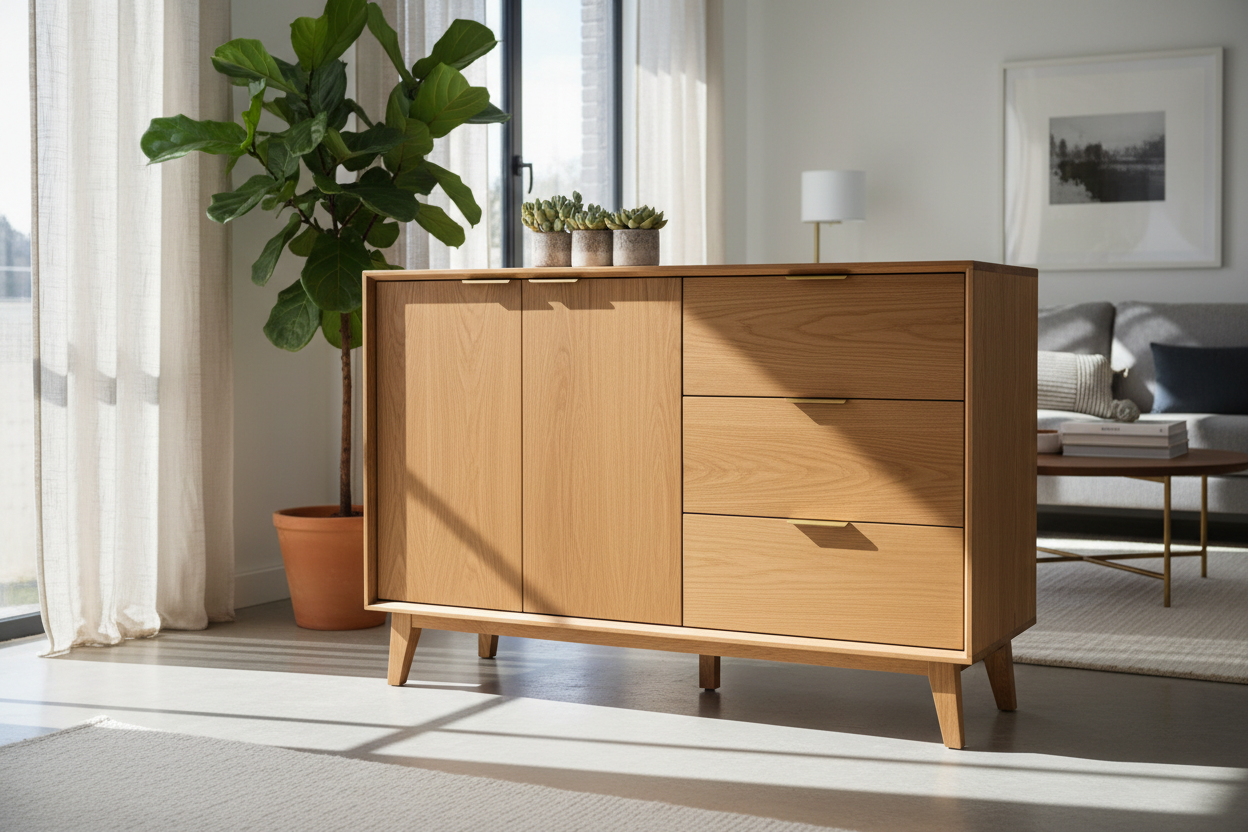
One of my favorite industry tricks is using kitchen cabinets as an entertainment center. Standard base cabinets for an entertainment center offer incredibly durable hardware, soft-close hinges, and a variety of deep drawer configurations perfect for storing board games and blankets. By securing these to the wall, adding a continuous wood top, and framing them out with filler strips, you create a seamless built in wall entertainment center. You can even use semi-custom kitchen cabinet entertainment center setups to get exact paint matches and premium door profiles.
Styling Your Entertainment Built In
A massive wall of solid doors feels visually heavy, while a wall of entirely open shelves looks chaotic. The sweet spot lies in combining closed lower storage with upper display areas.
Integrating Bookshelves
A built in bookshelves and entertainment center combination draws the eye up, making standard eight-foot ceilings feel taller. When styling a built in bookshelves entertainment center, leave about 30 percent of the shelf space empty. This negative space allows the eye to rest and prevents your custom built-in tv wall units from feeling like a crowded, messy library.
Lessons from My Own Projects
Over the last 15 years, I have designed dozens of built in entertainment center cabinets, and I have made my share of mistakes. Early in my career, I designed a stunning, midnight-blue built-in media cabinet for a client in Toronto. It looked incredible on installation day. But I failed to account for how much dust a dark, flat-panel wood surface shows in a sunlit room. The client had to dust it almost daily.
I also learned the hard way about wire management. I once built a beautiful built in tv console but only cut a standard 2-inch grommet hole for cables. When the client tried to thread a bulky power strip plug and three thick HDMI cables through it, they got stuck. Now, I always specify a wide, hidden raceway behind the drywall or a continuous drop-channel behind the entertainment wall built-in to ensure future wiring changes are effortless.
Frequently Asked Questions
How deep should a built-in media center be?
Most built-in tv entertainment center bases should be between 16 and 20 inches deep. This accommodates modern receivers, gaming consoles, and soundbars while leaving enough room in the back for plugs and cables so the cabinet doors can close fully.
Does a built-in living room entertainment center add value to a home?
Yes, high-quality permanent fixtures generally increase home appeal. A well-crafted entertainment built in is viewed as a premium architectural upgrade by buyers, provided the style is relatively transitional and the TV cavity is not sized too small for modern, larger screens.
Can I build cabinets for a built-in entertainment center myself?
Absolutely. Using pre-assembled base cabinets and adding your own trim, toe-kick, and countertop is a highly accessible DIY project. Just ensure you anchor the cabinets securely to the wall studs to handle the weight of the countertop and any upper shelving.

Leave a comment
This site is protected by hCaptcha and the hCaptcha Privacy Policy and Terms of Service apply.