










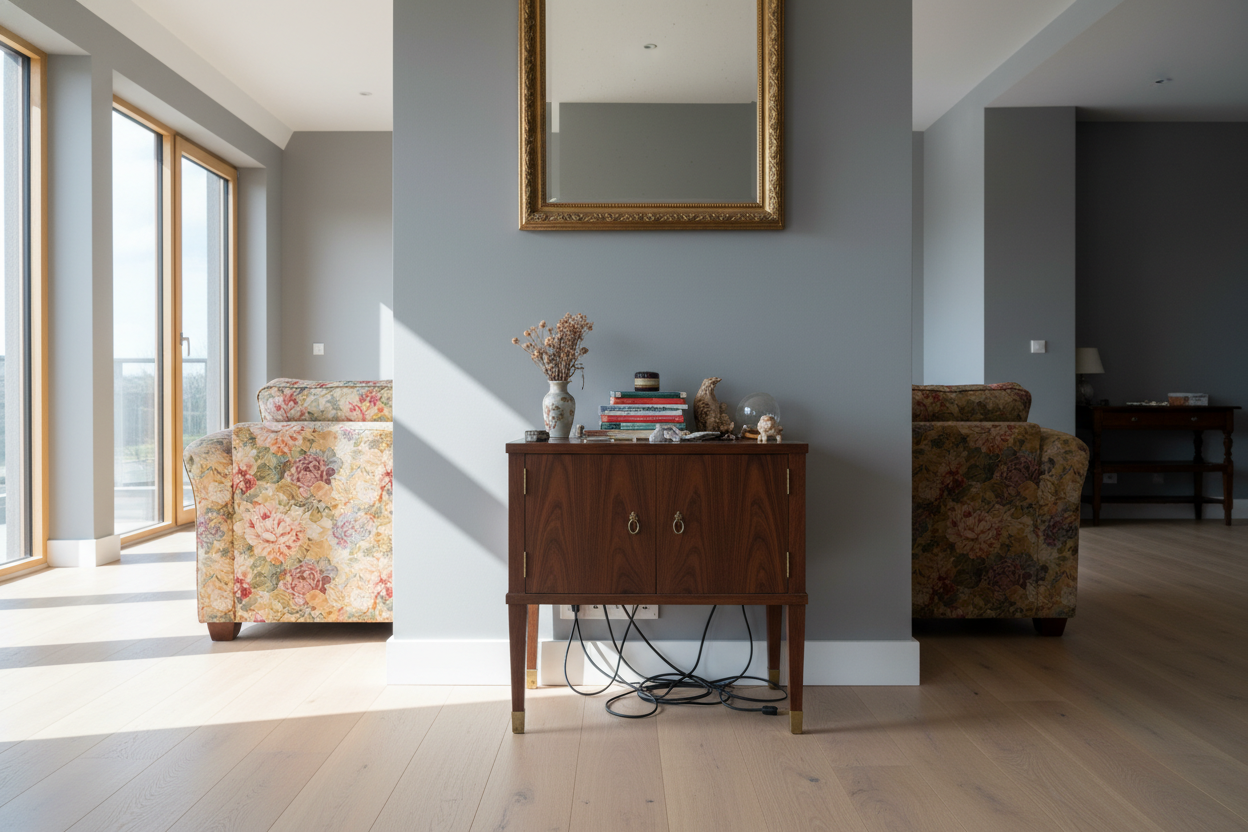
I constantly see clients struggling with the "black hole" effect in their living rooms. You buy a massive television, mount it on the wall, and suddenly the space underneath feels painfully empty. Or worse, you purchase a beautiful cabinet stand online, only to realize its bulky silhouette completely overwhelms your modest floor plan. Choosing the right base piece isn't just about hiding cables—it anchors the room's entire visual hierarchy.
By the end of this guide, you will know exactly how to select, size, and style a stand that looks intentional and high-end, avoiding the common pitfalls that make a room feel cramped or disjointed.
Quick Decision Guide
- Measure for clearance: Always leave at least 36 inches of walkway between your stand and a coffee table or sofa to maintain easy traffic flow.
- Scale matters: If placing a display on top, the stand should be 20 to 30 percent wider than the screen to balance the visual weight.
- Check wire management: Look for pre-drilled back panels; drilling your own holes in cheap veneer often leads to unsightly chipping.
- Consider the legs: Pieces raised on tapered or hairpin legs create negative space, making small rooms feel significantly larger.
Mastering Space Planning and Layout
In typical North American open-concept homes, furniture often floats in the middle of a room or anchors a massive, blank wall. Your storage piece needs enough presence to hold its own without eating up your traffic paths.
The Rule of Proportion
One of the most common styling errors is pairing a massive media setup with a narrow, flimsy base. If you are using it beneath a wall-mounted display, the cabinet should extend at least a few inches past the edges of the screen. This grounds the arrangement. If the stand is narrower than the items above it, the setup feels top-heavy and visually unstable.
Material and Build Quality
The materials you choose dictate both the longevity of the piece and how it handles the daily friction of a busy household with kids or pets.
Solid Wood vs. Engineered Alternatives
Solid oak or walnut offers incredible durability and a rich, organic texture that grounds a room. However, solid wood expands and contracts with seasonal humidity changes common in North American winters. High-quality engineered wood with a thick wood veneer is often a smarter choice for media storage. It resists warping from the heat of electronics while still offering that authentic grain pattern.
Styling and Visual Weight
How a piece sits on the floor dramatically affects the feeling of the room. A base that sits flush on the floor carries heavy visual weight, anchoring a large, airy room. Conversely, a piece lifted on metal or wooden legs allows light to pass underneath, creating negative space that benefits tight apartments.
Balancing Open and Closed Storage
I always recommend designs that offer a 70/30 split: 70 percent closed storage (doors or drawers) to hide routers, messy cables, and random remotes, and 30 percent open shelving to display curated art books or textured ceramics. This keeps the look tailored rather than cluttered.
Lessons from My Own Projects
Early in my career, I sourced a stunning, low-profile matte black cabinet stand for a client's mid-century modern condo in Toronto. It looked incredible in the showroom—sleek, minimal, and architectural. I learned the hard way that "low-profile" often means a nightmare for modern electronics.
The internal shelving was too shallow to house a standard AV receiver, and the matte finish showed every single fingerprint from their two toddlers. We ended up having to cut the back panel out entirely just to fit the cables, compromising the structural integrity of the piece. Now, I never buy a storage piece without physically measuring the internal depth and checking the hinge quality. Always assume your electronics need two more inches of breathing room than the specs claim.
Frequently Asked Questions
How tall should a cabinet stand be?
If you are placing a television on it, aim for a height between 20 and 28 inches. This keeps the center of the screen at eye level when you are seated on a standard sofa, preventing neck strain.
How do I style the top without it looking cluttered?
Stick to a few large, impactful items rather than dozens of small trinkets. A tall vase with branches on one side, paired with a low stack of design books on the other, creates an elegant, asymmetrical balance.
Is it safe to put heavy items inside?
It depends on the construction. Always check the weight capacity per shelf. Solid wood and metal frames can handle heavy books and vintage vinyl records, but particleboard shelves will bow over time if overloaded.

Leave a comment
This site is protected by hCaptcha and the hCaptcha Privacy Policy and Terms of Service apply.