










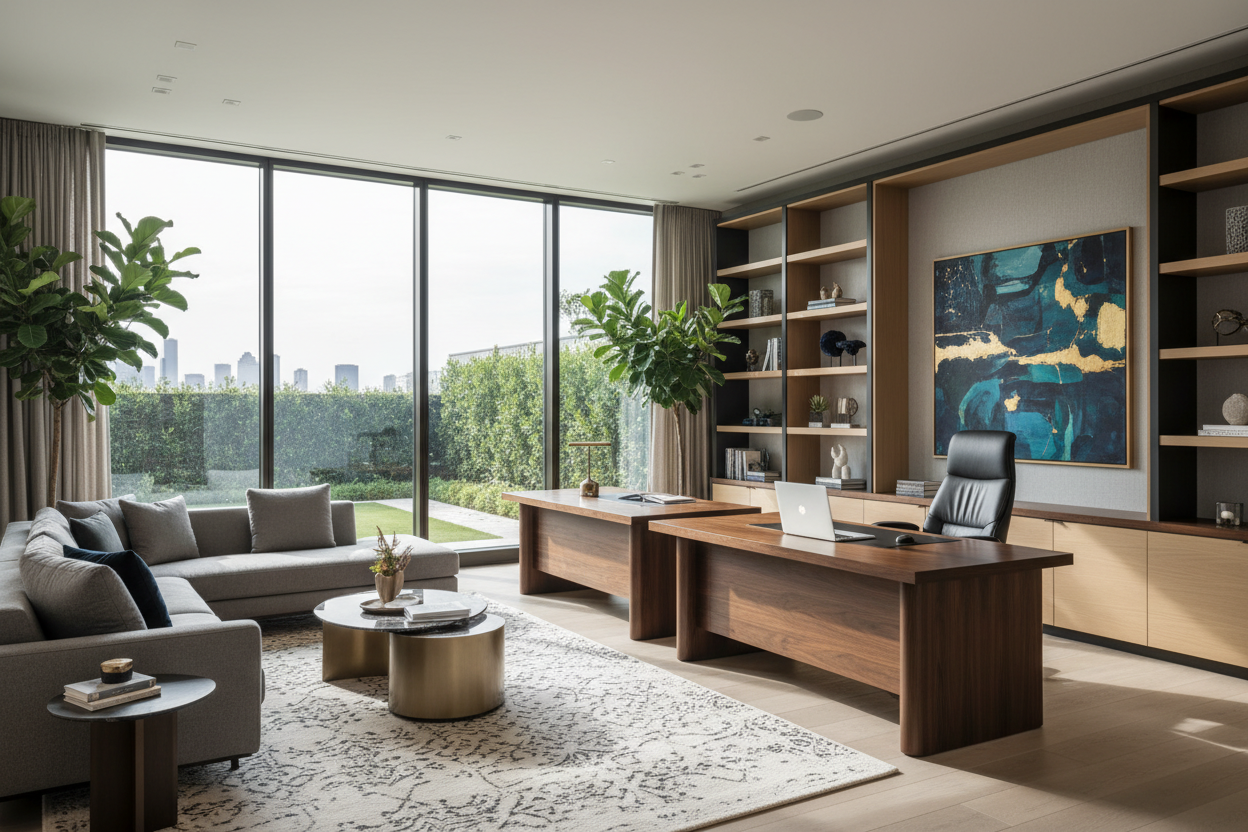
Designing a workspace that balances executive function with residential comfort is a nuanced challenge. Many homeowners struggle to find pieces that don't look overly "corporate" yet still perform during an eight-hour workday. Whether you are renovating a dedicated room in River Oaks or carving out a nook in a Heights bungalow, creating the perfect home office houston requires a strategic approach to materials, light, and ergonomics.
Key Features for a Productive Workspace
- Material Resilience: Choose finishes that withstand Houston’s unique humidity levels (e.g., high-quality veneers or sealed hardwoods).
- Ergonomic Calibration: Prioritize chairs with adjustable lumbar support and seat depth over purely sculptural aesthetics.
- Light Management: Select desk surfaces that minimize glare from the intense Texas sun.
- Acoustic Control: Incorporate textiles like rugs or upholstered panels to dampen echo in rooms with high ceilings.
Navigating Material Selection in a Humid Climate
When consulting on home office design houston projects, the first conversation I have with clients is about wood movement. Our local climate is humid, and even with central air conditioning, solid wood expands and contracts. While a solid live-edge walnut slab looks stunning, it requires maintenance.
For longevity without the fuss, I often recommend furniture constructed with a high-grade architectural veneer over a stable core. This offers the tactile warmth of wood without the risk of warping or cracking during seasonal shifts. If you prefer metal or glass, look for matte finishes; polished chrome or clear glass can become fingerprint magnets and create distracting reflections during video calls.
Space Planning and Orientation
The placement of your desk dictates the flow of the room. A common error is facing the desk directly toward a wall, which visually shrinks the space and limits creativity. Instead, position your desk to "command" the room—facing the door, but not directly in line with it.
Managing the Southern Light
Houston sunlight is unforgiving. If you position your screen opposite a window, the glare will cause eye strain within an hour. If you face the window, the contrast between the bright outdoors and your screen will fatigue your iris. The ideal orientation is perpendicular to the light source. If space constraints force a specific layout, invest in solar shades or heavy drapery to modulate the ambient light.
The Chair: An Investment in Health
Your chair is the most critical tool in the room. Aesthetically, we want something that complements the rug and millwork, but structurally, it must support your spine. Look for a synchro-tilt mechanism, which allows the seat and back to move in a ratio that keeps your feet flat on the floor while you recline. Avoid stiff, fixed-back dining chairs masquerading as office furniture; they will lead to fatigue before your workday ends.
Lessons from My Own Projects
I learned a hard lesson about finishes early in my career while designing a study for a client near Rice University. We selected a gorgeous, high-gloss lacquer executive desk in a deep navy blue. It looked incredible on installation day. However, I failed to account for the client's habit of wearing a heavy metal watch and working with stacks of paper files.
Within six months, the "landing zone" where his wrists rested was covered in micro-scratches that dulled the gloss, and the surface showed every single smudge from natural skin oils. It drove him crazy. We ended up having to refinish the top with a satin polyurethane and added a custom leather blotter inset. Now, I always insist on a leather insert or a matte finish for the primary work surface—it hides the wear and tear of daily grind beautifully.
Elevating Your Workday
Your workspace should be a reflection of your professional stature and your personal taste. By selecting materials that can handle the local climate and prioritizing a layout that protects your focus, you turn a simple room into an asset. Invest in quality pieces that age gracefully, and your office will serve you well for years to come.
Frequently Asked Questions
What is the ideal desk size for a home office?
For a primary workspace, aim for a desk at least 60 inches wide and 30 inches deep. This provides enough depth for a monitor and keyboard while leaving space for analog work like signing documents.
How do I mix wood tones in my office?
Keep the undertones consistent. If your floor is a warm red oak, look for furniture with warm walnut or cherry tones. Avoid mixing cool, gray-washed woods with warm, honey-colored woods, as this creates visual dissonance.
Should I use a rug on top of carpet?
Yes, layering a rug defines the workspace zone. However, ensure you use a rigid chair mat (glass or polycarbonate) or choose a very low-pile rug so your chair casters can roll smoothly without bunching the fabric.


Leave a comment
This site is protected by hCaptcha and the hCaptcha Privacy Policy and Terms of Service apply.