










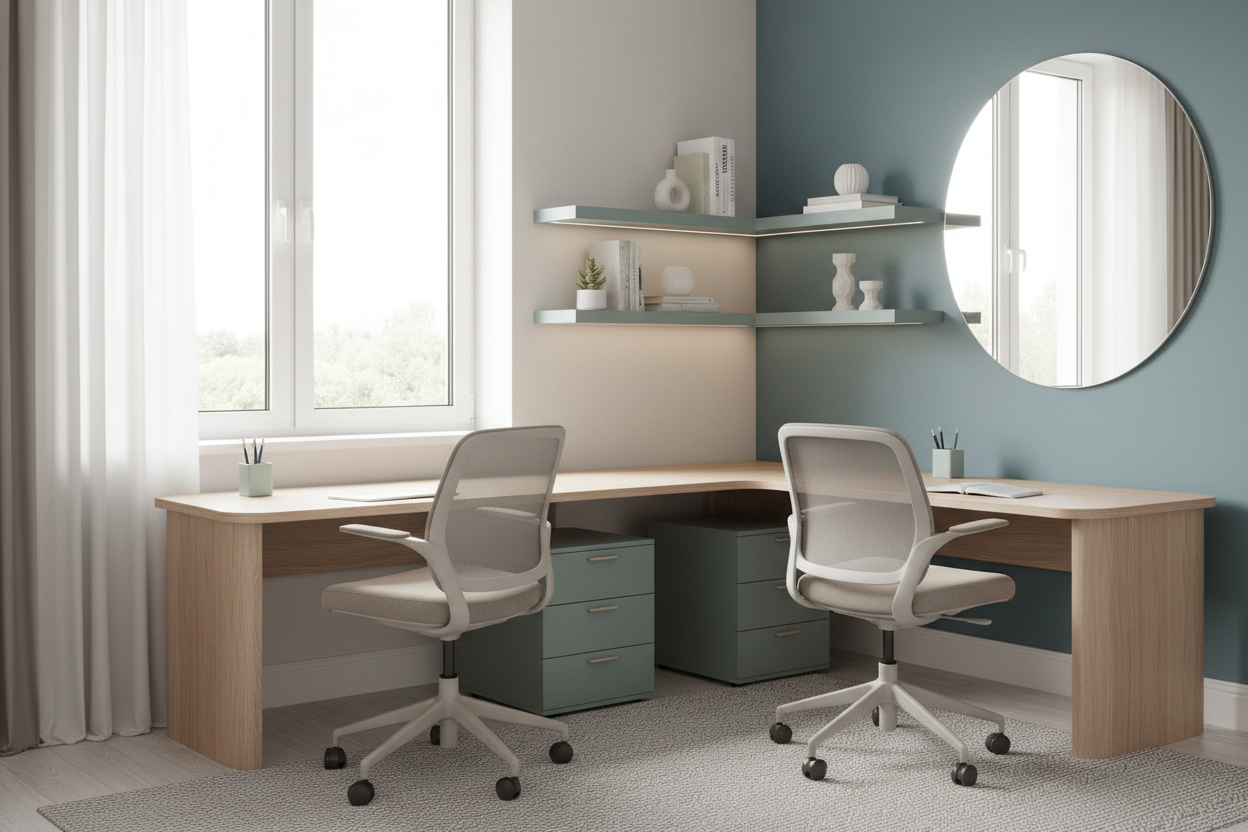
Designing a functional workspace within a limited footprint is one of the most common challenges I encounter in urban residential projects. The goal is not merely to squeeze furniture into a corner, but to curate a setup that respects the room's flow while providing professional-grade ergonomics. Finding the right desks and chairs for small spaces requires a shift in perspective: you must stop thinking about filling a room and start thinking about editing it.
Key Features to Look For
- Visual Permeability: Opt for materials like glass, acrylic, or thin wireframes that allow light to pass through, reducing the visual footprint of the furniture.
- Scale and Proportion: Choose mini office furniture or pieces with shallow depths (under 24 inches) to maintain traffic lanes.
- Dual-Functionality: Prioritize small bureau furniture or console tables that can transition into vanity or display surfaces after work hours.
- Vertical Integration: Look for modular office furniture for small spaces that utilizes wall height rather than floor width.
Mastering the Layout: Space Planning Essentials
When selecting office furniture for small offices, the placement is just as critical as the piece itself. In tight quarters, we want to avoid the "cubicle effect." Instead of facing a wall, consider floating a space saving desk and chair perpendicular to a window. This not only improves your psychological state via natural light but often opens up the room behind you.
For truly tight spots, compact office furniture designed for corners or alcoves is invaluable. However, ensure you measure the "pull-out" space for your chair. You need at least 23 to 30 inches of clearance behind the desk to sit and stand comfortably without hitting a bed frame or sofa.
The Desk: Silhouette and Materiality
The heavy, double-pedestal executive desk has no place in a small room office furniture plan. We want to look for "leggy" silhouettes—desks with slender legs and open bottoms. This exposes more floor area, tricking the eye into perceiving the room as larger.
Material Selection
For a modern office furniture for small spaces aesthetic, I often recommend glass or white lacquer. These reflective surfaces bounce light around. If you prefer warmth, a mid-century modern style with tapered legs in walnut or oak works well, as long as the joinery is delicate. Avoid chunky, solid wood slabs which can dominate small home office furniture layouts.
Seating: Comfort vs. Bulk
Selecting small office seating is a delicate negotiation between lumbar support and physical bulk. A high-back executive leather chair will suffocate a small room. Instead, look for mid-back task chairs with a mesh profile. The transparency of mesh serves the same purpose as a glass desk—it disappears visually.
If the workspace is in a living room, consider a "resimercial" approach—furniture for small home office setups that blend residential aesthetics with commercial durability. A fully upholstered dining-style chair with hidden ergonomic features (like a waterfall seat edge) often integrates better than a tech-heavy task chair.
My Personal Take on Desks and Chairs for Small Spaces
I learned a hard lesson early in my career regarding small office workstation setups. I once specified a beautiful, incredibly sleek ladder desk for a client's studio apartment. Visually, it was perfect—it leaned against the wall and looked like decor.
However, I failed to account for the "knee-knock" factor. Many small space home office furniture pieces, especially compact desks with shallow drawers, have a thick apron (the vertical piece under the desktop). My client couldn't cross their legs, and the arms of their ergonomic chair kept banging into the drawer front, preventing them from scooting in close. It ruined the ergonomics. Now, I always physically measure the clearance from the floor to the underside of the desk drawer, not just the desktop height. If you are tall, that 3-inch drawer might force you to sit in a posture that ruins your back, no matter how good the office furniture small space design looks.
Conclusion
Transforming a nook into a productive hub is entirely possible with the right strategy. By prioritizing visual lightness, accurate scaling, and ergonomic reality, you can integrate office furniture for small spaces that elevates your home rather than cluttering it. Measure twice, buy once, and prioritize the flow of your room.
Frequently Asked Questions
What is the minimum depth for a functional small desk?
While you can find console tables as shallow as 12 inches, a functional laptop workstation needs a minimum depth of 18 to 20 inches. If you use an external monitor and keyboard, aim for 24 inches deep to maintain proper focal distance.
Can I use a dining chair as a small office chair?
You can, but be cautious. Dining chairs lack height adjustment and lumbar support. If you choose this route for your small office furniture, add a lumbar pillow and ensure the seat height allows your elbows to rest at a 90-degree angle to the desk surface.
How do I define a workspace in an open-plan small room?
Use an area rug to anchor the office furniture for small room setups. Even a small 3x5 rug under the desk and chair visually separates the "work zone" from the "living zone" without erecting physical barriers.


Leave a comment
This site is protected by hCaptcha and the hCaptcha Privacy Policy and Terms of Service apply.