










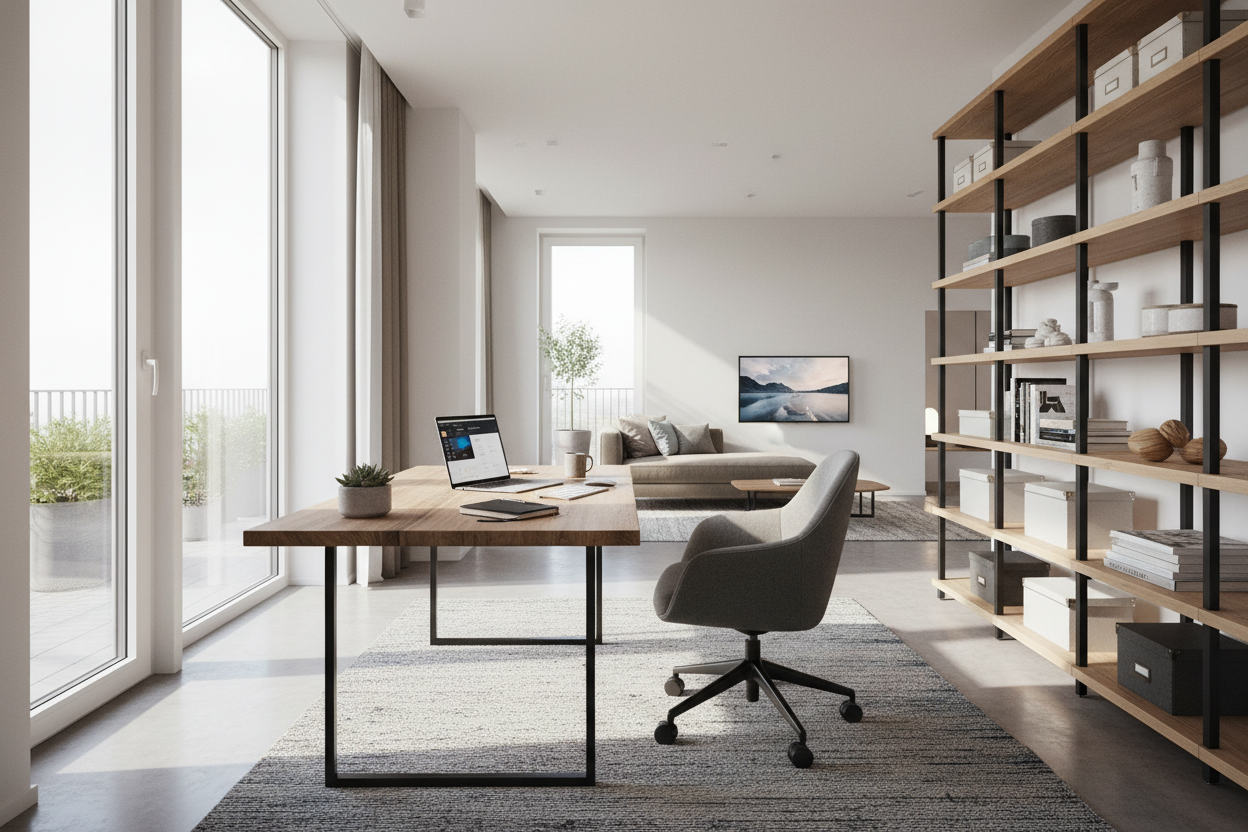
We often blame our lack of discipline when a morning schedule falls apart, but as a designer, I look at the floor plan first. A successful morning routine work from home isn't just about willpower; it is about environmental psychology and how your furniture facilitates movement. If your space creates friction—whether through poor lighting, uncomfortable seating, or a lack of transitional surfaces—your routine will suffer. This guide explores how to curate your interior to support a productive start to the day.
Key Design Elements for a Functional Routine
- Transitional Zoning: Establishing a physical boundary (rugs, dividers) that signals the shift from 'living' to 'working'.
- Circadian Lighting: Layered lighting fixtures that mimic natural daylight to trigger alertness.
- Tactile Comfort: Choosing upholstery and desk materials that are inviting to touch during early hours.
- The "Landing Strip": A dedicated console or side table for coffee and tech setup to prevent desk clutter.
Zoning Your Space for the Mental Shift
The biggest challenge with a daily routine for home is the lack of a commute to reset your brain. We need to build that commute into the furniture layout. I advise clients to create a "threshold" moment. This doesn't require a separate room; it can be achieved through the orientation of your furniture.
Position your desk so that you are not facing the dirty dishes in the kitchen. If you are in a multipurpose space, use a high-backed armchair or an open shelving unit to create a visual blockage. This separation is vital for the wfh morning routine because it allows you to "arrive" at work physically, helping the mind focus.
Materiality and The "First Hour" Comfort
When selecting furniture that supports your routine, pay attention to thermal comfort and texture. A glass or metal desk can feel incredibly cold in the morning, which subconsciously discourages you from sitting down immediately.
For the primary workspace, I recommend solid wood or high-quality veneers (walnut or white oak) which retain a neutral temperature and offer a warm, grounding tactile experience. If you incorporate a meditation or reading phase into your routine for working from home, invest in a lounge chair with performance fabric—something like a boucle or velvet that offers softness but is durable enough to withstand daily coffee spills.
Lighting: The Invisible furniture
Never rely solely on overhead recessed cans for your morning start. They cast shadows and create a sterile, clinical atmosphere that can induce anxiety before the day begins. Instead, layer your lighting.
Start with ambient light using a floor lamp with a linen shade to diffuse a soft glow while you check emails. As the morning progresses, switch on a task lamp with an adjustable arm (look for 3000K to 4000K color temperature bulbs). This mimics the rising sun and naturally stimulates cortisol levels, waking you up without the jar of harsh fluorescents.
My Personal Take on Morning Routine Work from Home
I learned a hard lesson about aesthetics versus function in my own home office regarding the "morning sun" concept. I initially positioned my vintage teak desk directly facing an east window. It looked stunning in photos, and I loved the idea of sipping espresso while watching the sunrise.
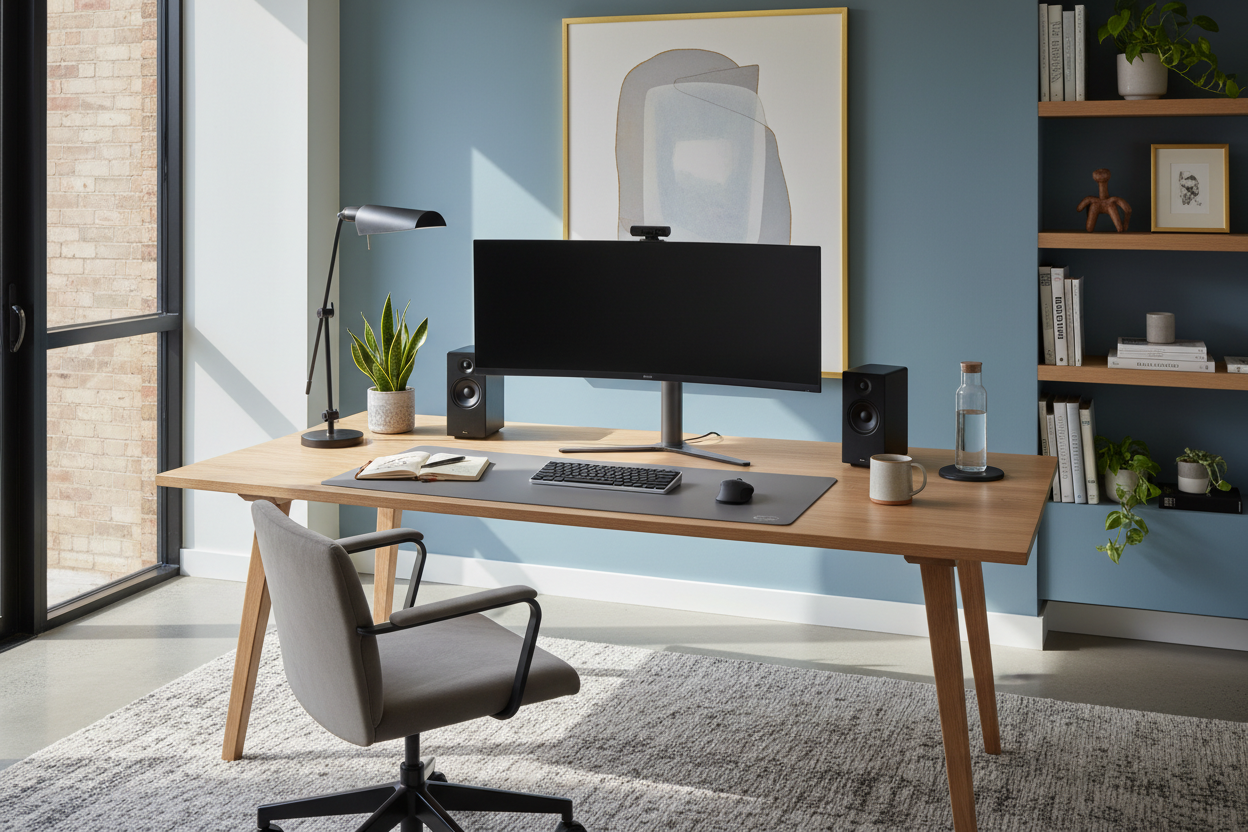
However, the reality was a disaster for my workflow. From 8:00 AM to 9:30 AM—my prime deep-work hours—the glare on my monitor was blinding. I spent the first twenty minutes of every day wrestling with blinds rather than working. I eventually rotated the desk 90 degrees perpendicular to the window. Now, I get the side-light (which is flattering for video calls) without the glare. It taught me that a morning routine work from home is fragile; if your furniture fights you, the routine breaks. Always test your layout at the exact time you plan to sit down.
Conclusion
Curating your home for work is not just about buying a desk; it is about designing a flow that pulls you into your day. By selecting warm materials, establishing clear zones, and mastering your lighting layers, you transform your environment from a passive backdrop into an active partner in your productivity.
Frequently Asked Questions
What is the best desk orientation for a morning routine?
Ideally, position your desk perpendicular to a window. This maximizes natural light (boosting energy) while minimizing direct glare on your screens, which prevents eye strain during your first hours of work.
How can I fit a morning routine zone in a small apartment?
Use a "C-table" paired with a comfortable accent chair. These tables slide over the arm of a sofa or chair, creating an instant, compact workspace for journaling or checking emails before moving to your main desk.
Is a standing desk necessary for a good WFH routine?
While not mandatory, a standing desk is excellent for momentum. Starting your day standing up can increase blood flow and energy levels. If the investment is too high, a high-top console table can serve as a standing station for the first 30 minutes of the day.

Leave a comment
This site is protected by hCaptcha and the hCaptcha Privacy Policy and Terms of Service apply.