










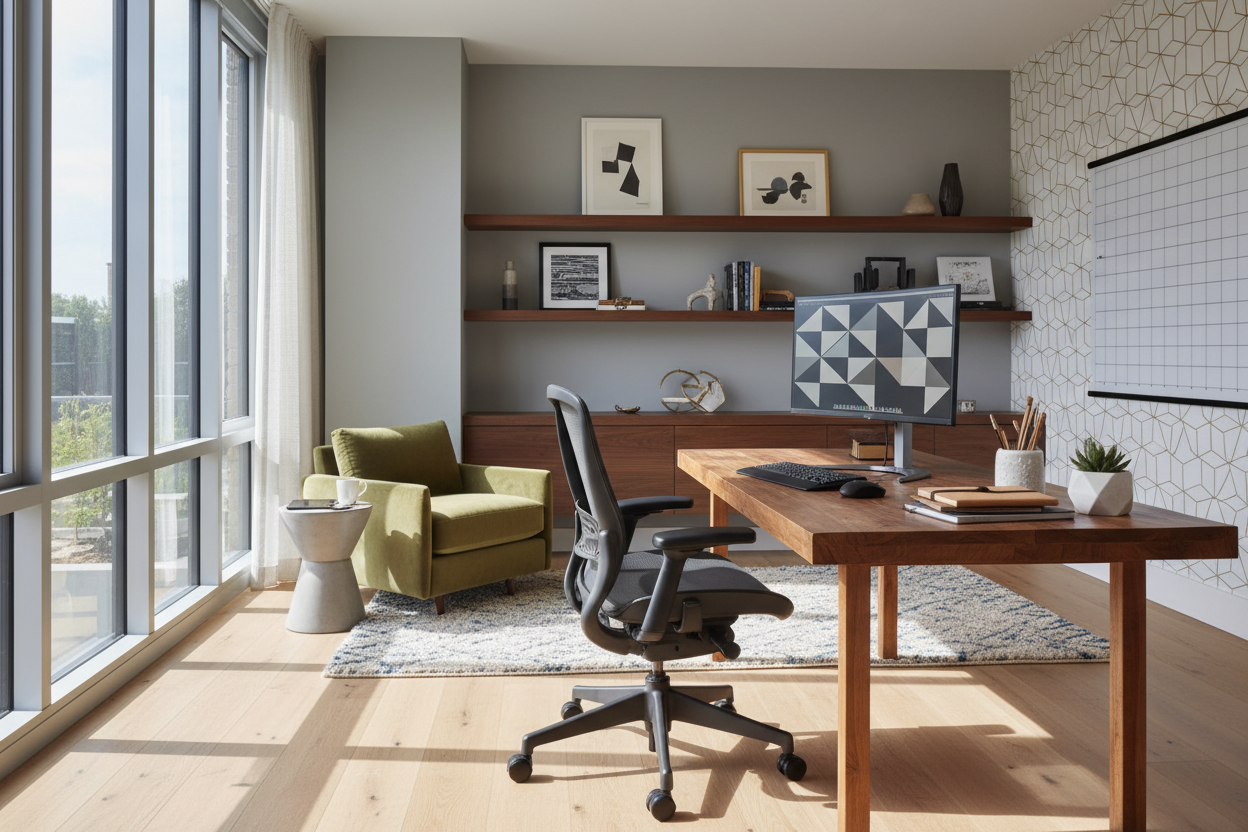
We often romanticize the idea of remote work, visualizing a laptop on a velvet sofa with a cup of coffee. However, the reality of sustainable home based career opportunities relies heavily on the architecture of your environment. As a designer, I see clients struggle not with the work itself, but with the lack of spatial support their homes provide. If you are transitioning from a corporate office, your home environment must pivot from a place of rest to a zone of high-performance focus without destroying the aesthetic integrity of your living space.
Key Features to Look For in a Home Office
Before investing in new pieces, consider these architectural and functional pillars that define a professional workspace:
- Ergonomic Integrity: Prioritize seating with adjustable lumbar support and seat depth over purely decorative accent chairs.
- Surface Durability: Look for scratch-resistant laminates or sealed hardwoods (oak or walnut) rather than soft pine or high-maintenance glass.
- Lighting Layering: Ensure a mix of ambient (overhead), task (desk lamp), and accent lighting to reduce eye strain.
- Acoustic Control: Incorporate soft furnishings like rugs or upholstered panels to dampen echo for video calls.
- Spatial Zoning: Clearly define the boundary where living ends and working begins.
Structuring Your Layout for Success
When you decide to work from home, the layout is your foundation. The most common error I see is facing the desk strictly against a wall. While this saves space, it creates a claustrophobic 'cubicle' effect. Instead, consider 'floating' your desk in the room or positioning it perpendicular to a window. This allows you to benefit from natural light without the direct glare affecting your monitors, which is crucial for people to work from home comfortably for eight hours a day.
Investing in the Right Desk
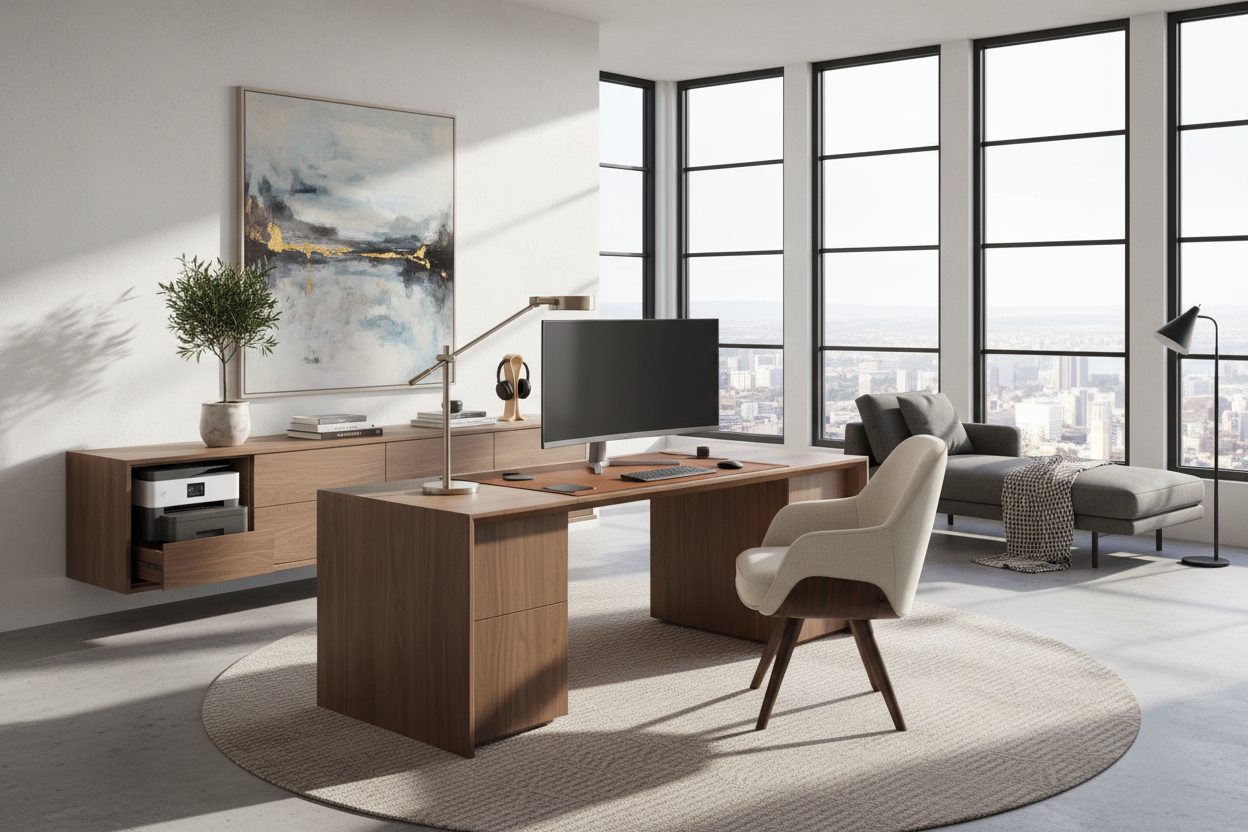
The desk is the command center. For those exploring various working from home options, the size of your surface dictates your workflow. If you use dual monitors, a standard 48-inch desk will feel cramped. Aim for a width of at least 60 inches. Regarding materials, solid wood offers a tactile warmth and longevity that veneer often lacks, though high-pressure laminate is a practical choice for heavy use. A solid walnut desk creates a focal point, grounding the room with a sense of permanence and authority.
The Ergonomic Equation
Many work from home programs fail to mention the physical toll of inadequate seating. A dining chair is designed for a 45-minute meal, not a 9-hour shift. You need a chair with a synchronous tilt mechanism—meaning the back and seat move in a specific ratio to support your body's natural movement.
Aesthetically, you don't have to settle for a bulky black plastic chair. Look for performance fabrics in heathered grays or deep navies that blend with your home's palette. Mesh backrests are excellent for thermal comfort, preventing heat buildup during long sessions.
Lighting and Acoustics
Transitioning from home to work mode requires a shift in sensory input. Lighting temperature plays a massive role here. Avoid warm, yellow bulbs (2700K) which induce relaxation. Opt for 3500K to 4000K bulbs for your task lighting to stimulate alertness. Furthermore, if you are handling a job at home that requires frequent calls, acoustics are vital. Hard surfaces bounce sound. Introduce a high-pile wool rug or heavy velvet drapery to absorb noise and eliminate that hollow, unprofessional echo.
My Personal Take on Home Based Career Opportunities
I learned a hard lesson about finishes during my own studio renovation. I fell in love with a matte black, soft-touch laminate desk. It looked sleek and modern in the showroom. However, within two weeks of actual use, it was a disaster. Every fingerprint showed, and the friction from my forearms created shiny patches on the matte finish that were impossible to fix.
It taught me that for any working from home programs or design tasks, the tactile experience is just as important as the visual. Now, I always steer clients toward textured wood grains or leather desk pads. It’s a small detail, but when you are at that desk for 40 hours a week, those wear patterns can make your high-end office feel shabby very quickly. Function must sustain the form.
Conclusion
Curating a space for home based career opportunities is an investment in your own efficiency. By selecting durable materials, respecting ergonomic principles, and managing your lighting, you create an environment that respects both your career and your home's aesthetic. Don't just buy furniture; build a system that works for you.
Frequently Asked Questions
What is the ideal desk depth for a home office?
For a laptop only, 24 inches is sufficient. However, if you use an external monitor and keyboard, aim for a depth of 30 inches to maintain proper focal distance and prevent eye strain.
How do I hide cables in an open-concept workspace?
Invest in furniture with integrated cable management channels or modesty panels. Alternatively, use magnetic cable spines that attach to the desk leg to route cords neatly to the floor.
Is a standing desk worth the investment?
Yes, for long-term health. If the industrial look of a standing desk clashes with your decor, look for models with solid wood tops or custom legs that mimic traditional furniture styles.

Leave a comment
This site is protected by hCaptcha and the hCaptcha Privacy Policy and Terms of Service apply.