










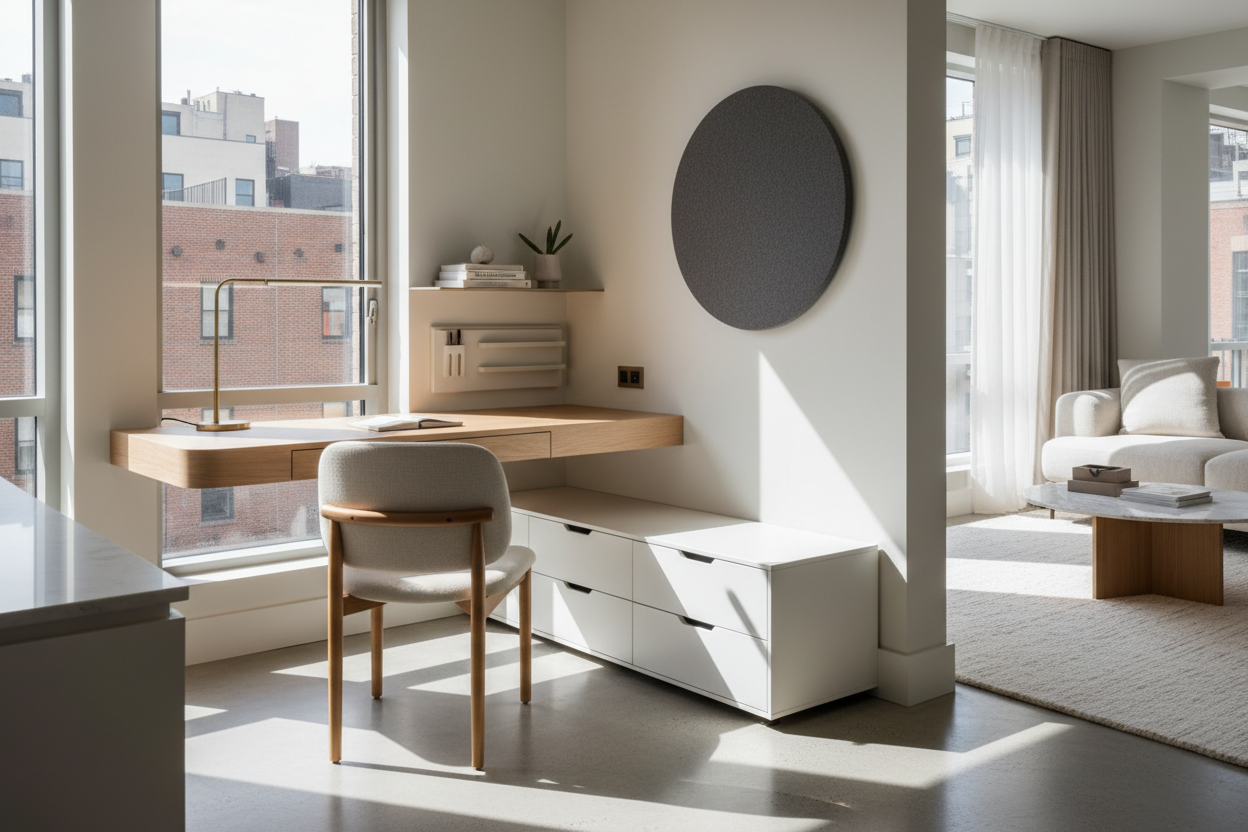
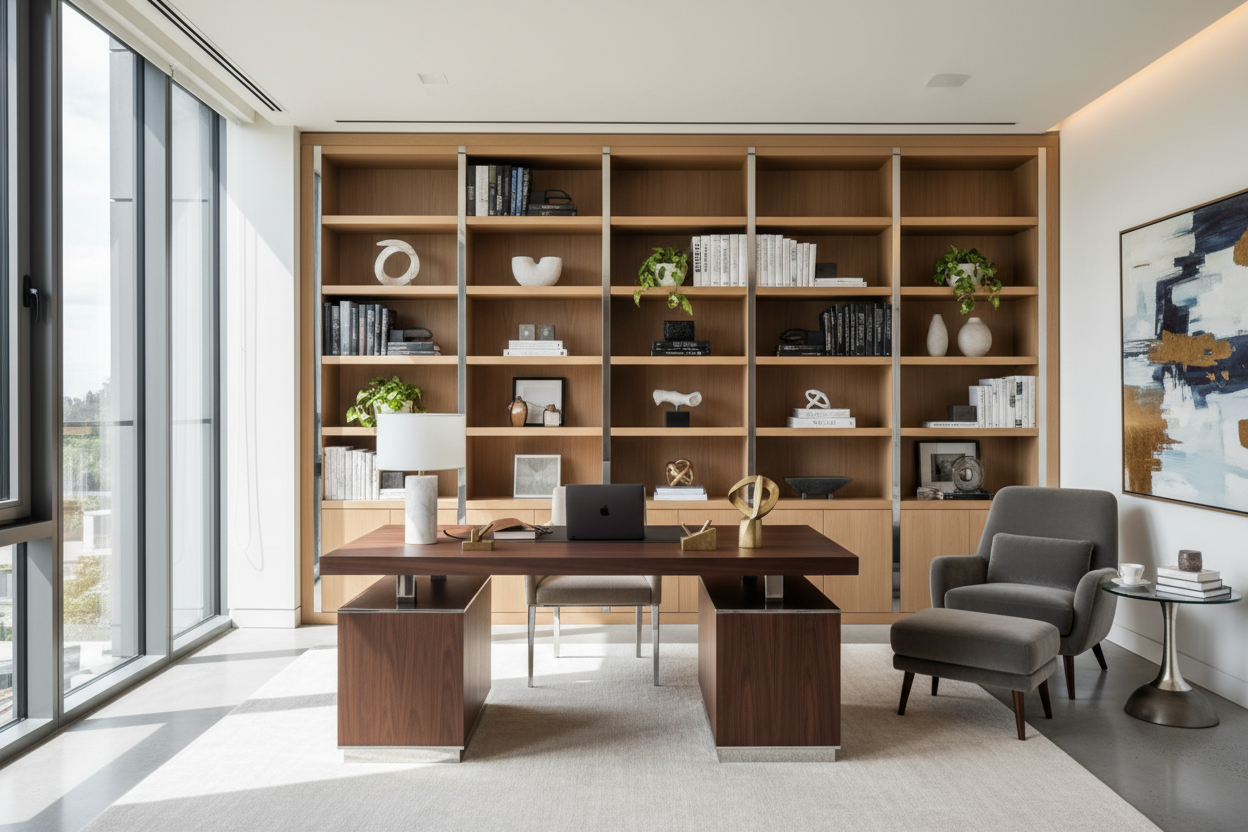
We often assume that productivity requires a sprawling mahogany desk and a dedicated room behind closed doors. However, the reality of modern living often dictates otherwise. The challenge isn't just finding space; it is carving out a functional zone that integrates seamlessly with your existing decor without feeling like an afterthought. Whether you are converting a closet or claiming a living room corner, designing a mini office requires a surgical approach to scale and aesthetics.
Quick Decision Guide: Essentials for Compact Workspaces
- Scale & Proportion: Avoid bulky executive desks. Look for writing desks with a depth between 20-24 inches to maintain traffic flow.
- Visual Weight: Opt for acrylic, glass, or slender metal legs. Heavy, solid wood bases can make an office mini setup feel claustrophobic.
- Vertical Storage: Utilize floating shelves above the desk to keep the floor clear and draw the eye upward.
- Multi-Functional Seating: Choose a chair that looks at home in a living room but offers hidden lumbar support.
Mastering the Layout: Flow and Clearance
When dealing with limited square footage, every inch of clearance counts. In my design practice, I often see homeowners force a standard-sized desk into an alcove, leaving no room to push the chair back comfortably. You need at least 30 to 36 inches of clearance behind your desk to sit and stand without hitting a wall or sofa. If your space is tighter, consider a wall-mounted drop-leaf desk that disappears when not in use.
Material Selection: Balancing Durability and Style
In a mini office, the furniture is often visible from the kitchen or living area. Therefore, the materials must harmonize with your home’s broader palette.
Wood vs. Veneer
Solid wood offers longevity, but it can be visually heavy. For a lighter aesthetic, high-quality wood veneers on engineered wood are excellent. They resist warping better than solid wood in fluctuating temperatures—common near windows or radiators. However, be wary of cheap paper laminates; they peel easily at the edges where your wrists rest.
The Role of Metals and Glass
For the tightest corners, I almost always recommend a glass top or a high-gloss lacquer. These surfaces reflect light, making the nook appear larger than it is. Pair this with brushed brass or matte black metal legs for a silhouette that feels architectural rather than utilitarian.
Ergonomics in Disguise
The biggest mistake in small office design is sacrificing your spine for style. A dining chair will hurt you after four hours. The market now offers "occasional chairs" that feature swivels and tilt mechanisms hidden within upholstered shells. Look for fabrics like performance velvet or bouclé, which add texture and warmth, softening the technical look of monitors and keyboards.
Lighting: The Invisible Design Element
Overhead can lighting casts shadows on your work surface. In a mini setup, floor space is premium, so floor lamps are often out of the question. Install an articulating wall sconce. It provides directed task lighting and frees up precious desktop real estate. Ensure the bulb temperature is around 3000K—bright enough for focus, but warm enough to blend with your living room’s evening ambience.
Lessons from My Own Projects: The "Armrest" Trap
I learned a painful lesson early in my career while designing a bespoke workspace for a client in a Manhattan studio. We selected a stunning, vintage mid-century modern armchair to pair with a custom floating console. It looked incredible in the renderings.
However, once installed, we realized the chair arms were exactly one inch higher than the desk’s drawer apron. The chair couldn't tuck in. In a room where every inch mattered, this left the chair protruding into the main walkway, creating a permanent tripping hazard and visual clutter.
The takeaway: Always measure the "clearance height" from the floor to the bottom of the desk drawer, and compare it against the "arm height" of your chair. For a truly seamless mini office, that chair needs to disappear under the desk when the workday ends.
Conclusion
A mini office does not mean mini ambitions. By prioritizing vertical storage, selecting visually light materials, and ensuring your chair actually fits your desk, you can create a workspace that enhances your home rather than cluttering it. Measure twice, buy once, and prioritize pieces that offer both form and function.
Frequently Asked Questions
What is the minimum depth for a mini office desk?
For laptop work, you can get away with 18 inches of depth. However, if you use an external monitor and keyboard, aim for at least 22 to 24 inches to maintain proper focal distance and prevent eye strain.
How do I hide cables in an open concept office mini setup?
Since the desk is likely visible from other rooms, cable management is vital. Use desks with built-in modesty panels or cable trays. Alternatively, use paintable cord covers that run along the back of the desk leg to the floor.
Can I use a console table as a desk?
Yes, but be careful with height. Console tables are often 30-32 inches high, while standard desk height is 29-30 inches. If you use a console, you may need an adjustable chair that can go higher, or you risk hunching your shoulders.


Leave a comment
This site is protected by hCaptcha and the hCaptcha Privacy Policy and Terms of Service apply.