










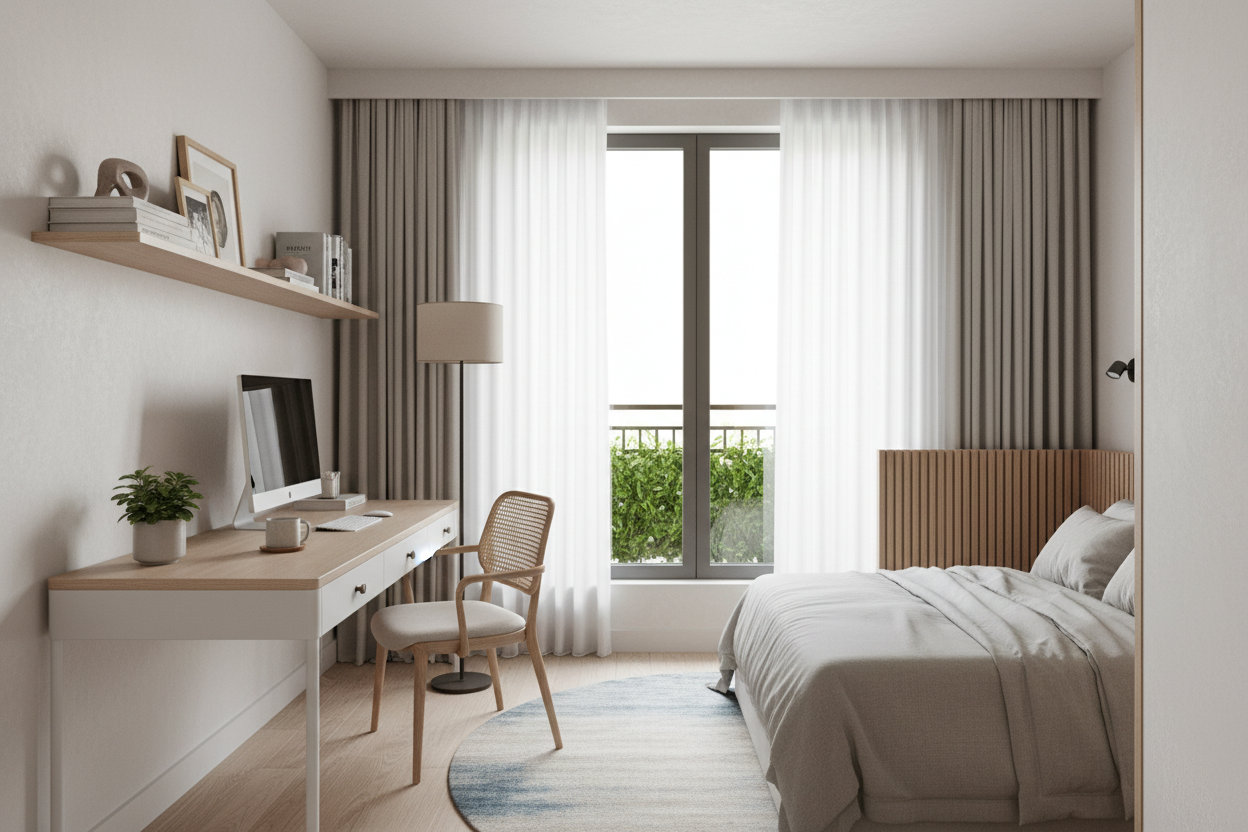
One of the most frequent dilemmas I encounter in modern residential projects is the conflict between rest and productivity. We are asked to merge a sanctuary for sleep with a zone for high-performance output. If not executed carefully, the visual clutter of cables and monitors can psychologically prevent you from winding down at night. However, when done correctly, a bedroom with working space can actually feel more organized and purposeful than a room devoted solely to sleeping.
Quick Decision Guide: The Essentials
- Zoning Strategy: Position the desk so it does not face the bed directly; visual separation is crucial for mental switching.
- Scale & Proportion: Avoid executive-sized desks. Opt for writing desks or consoles with a depth of 20-24 inches to maintain traffic flow.
- Material Warmth: Choose natural wood or matte finishes over cold glass or metal to keep the room feeling like a bedroom, not a cubicle.
- Lighting Layers: Ensure you have dedicated task lighting (3000K-4000K) that is separate from your warm, ambient bedside lighting (2700K).
Strategic Zoning and Layout Planning
When clients ask how to set up a home office in a bedroom, the first step is analyzing the floor plan. The goal is to create a 'room within a room.' If you have an alcove or a bay window, claim that territory. If you are working with a standard rectangular room, place the desk on the same wall as the headboard or perpendicular to it. This prevents the 'office' from being the focal point when you are lying in bed.
For those fortunate enough to have an architectural niche, creating an office off master bedroom—essentially a small anteroom or walk-in closet conversion—is the gold standard. It provides a physical door to close on the workday.
Furniture Selection: The "Anti-Office" Aesthetic
To maintain a luxury feel, the furniture must whisper 'residential,' not shout 'corporate.' Standard office laminates have no place here. Look for a desk with a silhouette that mimics a vanity or a console table. Solid walnut, white oak, or even lacquer finishes integrate beautifully with soft furnishings.
The Chair Dilemma
The biggest eyesore in work from home bedroom ideas is usually the chair. A high-back, black mesh ergonomic chair dominates the visual landscape. Instead, I recommend a mid-century modern bucket chair or a distinct task chair upholstered in velvet or bouclé. It provides the necessary lumbar support without disrupting the room's color palette.
Lighting and Acoustics
A work from home bedroom requires a sophisticated lighting plan. Relying on the overhead ceiling fan light is a design crime. You need task lighting that focuses strictly on the work surface. A brass or matte black directional lamp adds a sculptural element. Furthermore, consider the acoustics. Bedrooms are usually soft zones, but adding hard desk surfaces can create echoes. Use a wool rug under the desk area to dampen sound and visually anchor the workspace.
Designing for Small Footprints
If you are wondering how to set up home office in bedroom layouts that are tight, verticality is your friend. Wall-mounted shelving units with a drop-down desk leaf offer excellent utility without eating up floor space. For the ultimate space-saver, some clients attempt an office in bed setup using lap desks, but for long-term spinal health, I always advise a dedicated surface, even if it is a floating shelf installed at desk height (30 inches).
Lessons from My Own Projects
I want to share a specific realization from a project I completed last year in a compact city apartment. I initially specified a gorgeous, sleek glass desk to make the bedroom with home office feel airier and less cluttered. It looked perfect in the rendering.
However, two weeks after installation, the client called me. The issue wasn't the look—it was the sound and the maintenance. Every time she set down her coffee mug or typed on her mechanical keyboard, the glass amplified the clatter, which felt incredibly jarring in a quiet bedroom environment. Furthermore, the glass showed every single fingerprint and speck of dust, making the room feel messy even when it wasn't. We swapped it out for a leather-wrapped desktop. The difference was immediate: the leather absorbed the sound, felt warmer to the touch in the mornings, and developed a patina that looked better with age. It taught me that in a bedroom, tactile experience is just as important as visual aesthetics.
Conclusion
Integrating a workspace into your sleeping quarters doesn't require sacrificing style for function. By prioritizing warm materials, appropriate scale, and distinct zoning, you can curate a work from home bedroom office that supports your career by day and your dreams by night.
Frequently Asked Questions
How do I hide my computer when I'm not working?
If you use a laptop, designate a drawer in your nightstand or the desk itself to stow it away. For monitors, consider a cabinet desk (armoire style) that closes fully, or use a folding screen to physically block the view of the tech during the evening.
What is the minimum space needed for a bedroom office?
You need a minimum width of 24 inches for the chair to pull out comfortably. A desk depth of 20 inches is sufficient for a laptop; if you use a monitor, aim for 24-30 inches to maintain proper focal depth.
Can I put a desk in front of a window?
Yes, facing a window is excellent for reducing eye strain. However, ensure the window has light-filtering shades to manage glare during specific times of the day, which can wash out your screen.


Leave a comment
This site is protected by hCaptcha and the hCaptcha Privacy Policy and Terms of Service apply.