










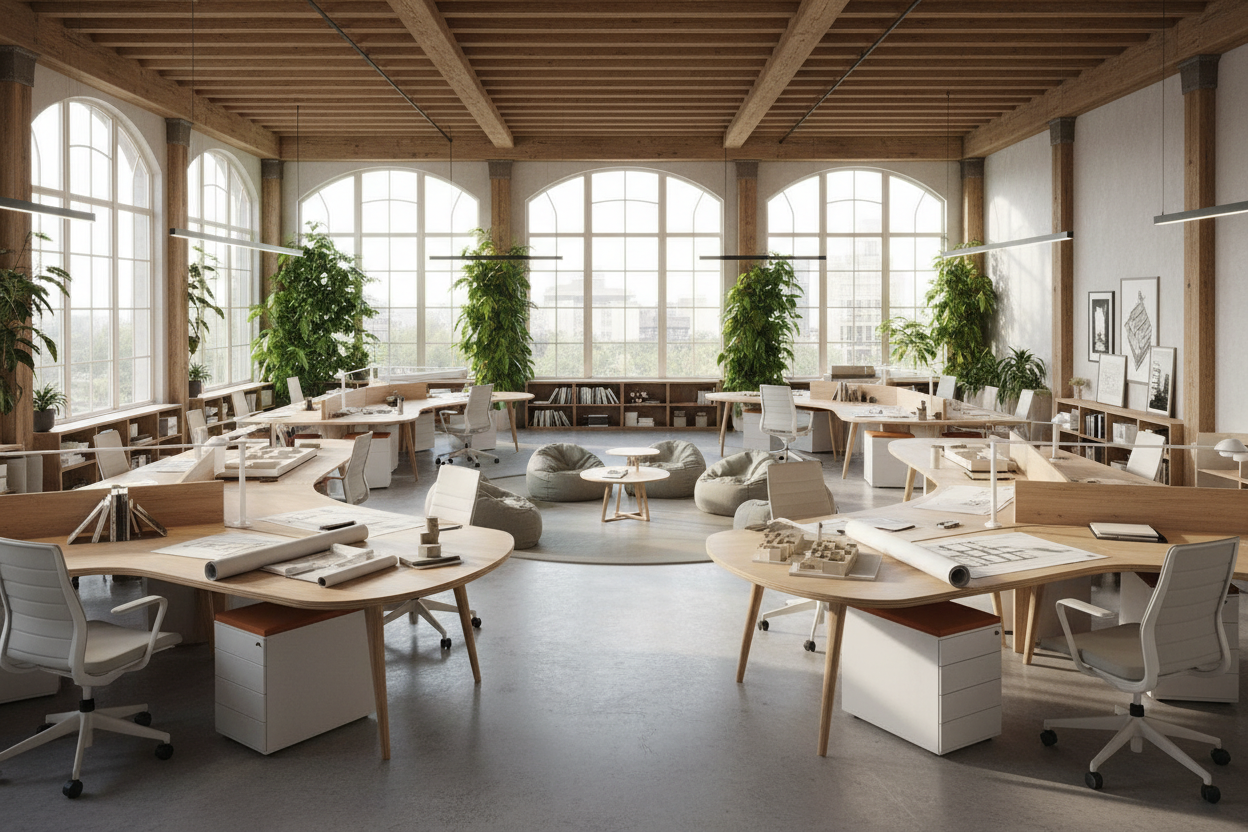
Nothing stifles a creative mind faster than a workspace that fights against its user. Whether you are establishing a boutique firm or refining a home studio, the friction caused by poor spatial planning can be invisible but exhausting. The solution lies in treating your interior not just as a room with desks, but as a piece of office plan architecture itself—where form follows function, and every square foot serves the workflow.
Key Elements for a Studio-Grade Layout
Before selecting finishes, consider these fundamental pillars of a high-performance workspace. Prioritizing these ensures your architect office layout remains functional for years to come.
- Zoning & Circulation: distinct separation between deep-work zones, collaboration areas, and material libraries.
- Light Orientation: Positioning workstations to maximize northern exposure (for consistent, shadow-free light) while mitigating glare.
- Acoustic Control: Integrating soft materials (rugs, baffles, upholstered seating) to dampen reverb in open office plans architecture.
- Ergonomics & Scale: Ensuring furniture scale matches the room volume; oversized drafting tables in small rooms create visual claustrophobia.
Structuring the Architect Office Layout
When we look at successful architecture office ideas, the common thread is 'breathing room.' In a professional design setting, you aren't just sitting at a computer; you are often unrolling large format drawings or reviewing material samples.
For the main workspace, avoid pushing desks flush against the wall if space permits. Floating the desk, or creating a 'peninsula' layout, allows for better circulation and creates a commanding focal point. If you are working with an architectural office floor plan that involves multiple people, consider a benching system. This fosters collaboration but requires high-quality acoustic dividers to maintain individual focus.
Mastering the Small Architect Office Interior
Not every firm starts in a warehouse loft. Designing a small architect office plan requires vertical thinking. Floor space is premium real estate, so move your storage up. utilize floor-to-ceiling shelving for binders and sample boxes.
In a small architect office interior, visual weight is critical. Opt for desks with slender, metal legs or cantilevered designs rather than heavy, solid wood pedestal desks. This exposes more floor area, tricking the eye into perceiving the room as larger than it is.
Materiality and Furniture Selection
The furniture you choose acts as the tactile interface of your office. For an architectural aesthetic, honesty in materials is paramount.
The Desk Surface
For drafting and reviewing plans, the surface material matters. A solid wood top (oak or walnut) offers warmth and durability, developing a patina over time. However, for a more modern, industrial edge, high-pressure laminate (HPL) or linoleum tops provide a softer writing surface and superior resistance to fingerprinting—a crucial detail when handling pristine vellum or client presentations.
Seating Dynamics
Never compromise on the task chair. Look for a silhouette that complements the architectural lines of the room—perhaps a mesh back for transparency or a structured leather for gravity. Functionally, ensure it has adjustable lumbar support and, crucially, armrests that can drop down or slide back to allow you to pull close to the desk for detailed drafting work.
My Personal Take on Office Plan Architecture
In my twenty years of designing workspaces, I’ve learned that the 'standard' measurements often fail in creative environments. I once designed a studio where we adhered strictly to the minimum 36-inch walkway clearance behind the desks. It looked perfect on the architectural office floor plan.
However, once the studio was live, we realized the mistake. Architects and designers don't sit still; they spin, they roll back to look at sketches, and they stand up to grab samples. That 36-inch gap became a bottleneck immediately. The backs of the chairs were constantly scuffing the wall, and the 'traffic jam' disrupted the flow of the room.
Since then, I always push for a minimum of 48 to 60 inches of clearance behind a creative workstation. It feels luxurious, but it’s actually functional necessity. Also, a small detail I swear by: matte finishes on desk surfaces. I specified a high-gloss lacquer table for a client once, and the reflection of the overhead track lighting on their tracing paper was blinding. Always go matte or satin for work surfaces.
Conclusion
Refining your workspace is an ongoing process of subtraction and adjustment. By applying architectural principles to your interior layout—prioritizing light, flow, and honest materials—you create a space that doesn't just house your work, but elevates it. Start with the plan, invest in the touchpoints, and let the design do the rest.
Frequently Asked Questions
What is the best desk depth for an architect's office?
While standard office desks are often 24 to 30 inches deep, an architect or designer usually benefits from a depth of 30 to 36 inches. This extra space accommodates large format paper sizes (like Arch D or E1) and leaves room for monitors without cramping the workspace.
How do I improve acoustics in a concrete-floor office?
Concrete floors are a staple of architecture office ideas, but they are noisy. To balance this, use 'absorbers' elsewhere: install acoustic baffles on the ceiling, use thick wool rugs in breakout areas, or choose tack-board material for wall pinning surfaces to reduce sound reflection.
Can I use residential furniture in a commercial office plan?
You can, but be cautious. Residential furniture is rarely rated for 'contract use,' meaning it may not withstand 8+ hours of daily wear. For a small architect office plan, mix commercial-grade task chairs (for durability) with residential accent chairs or lighting to soften the aesthetic.


Leave a comment
This site is protected by hCaptcha and the hCaptcha Privacy Policy and Terms of Service apply.