










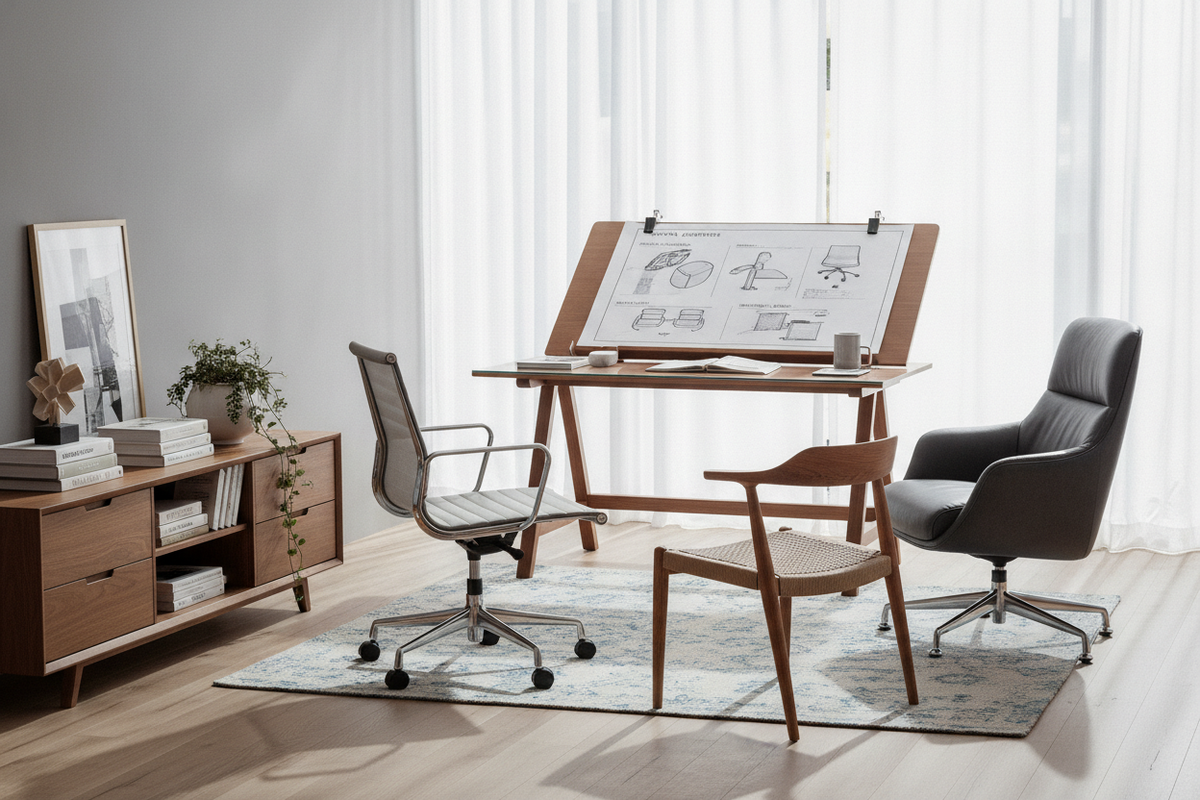
Executive Overview: Aligning Workstation Geometry and Seating Archetypes
Selecting a functional desk chair office setup involves balancing personal movement, structural proportions, and surrounding storage furniture. In residential workspaces and hybrid rooms, an office chair & desk pairing must adapt to diverse daily activities ranging from intense digital workflows to focused study sessions. Rather than treating seating as an isolated purchase, modern interior planning treats the seating unit and workstation as an integrated spatial ecosystem.
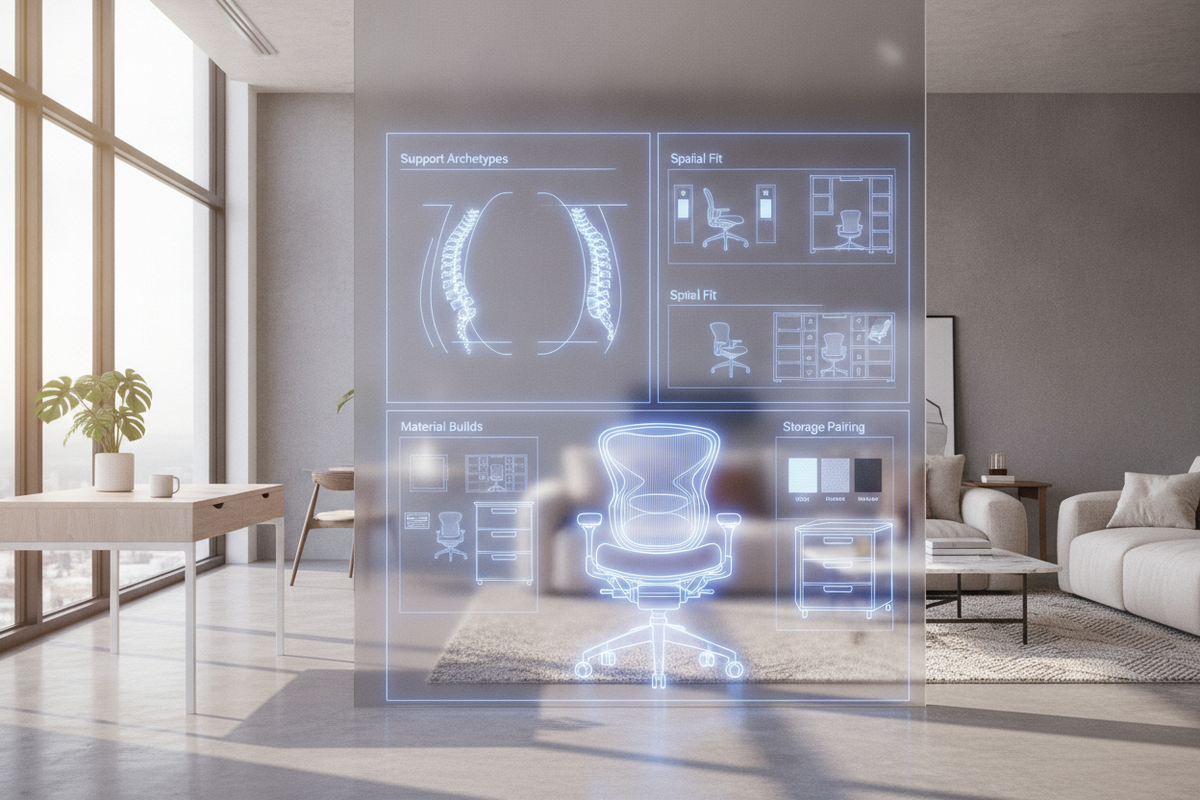
When planning a cohesive layout, evaluating your surrounding environment through a dedicated office study collection provides structural context for essential clearance margins, lateral pathways, and cabinet access. Four foundational pillars define a successful installation: spatial scale, structural archetype, surface breathability, and under-desk parking clearance.
Core Archetypes of the Office and Desk Chair
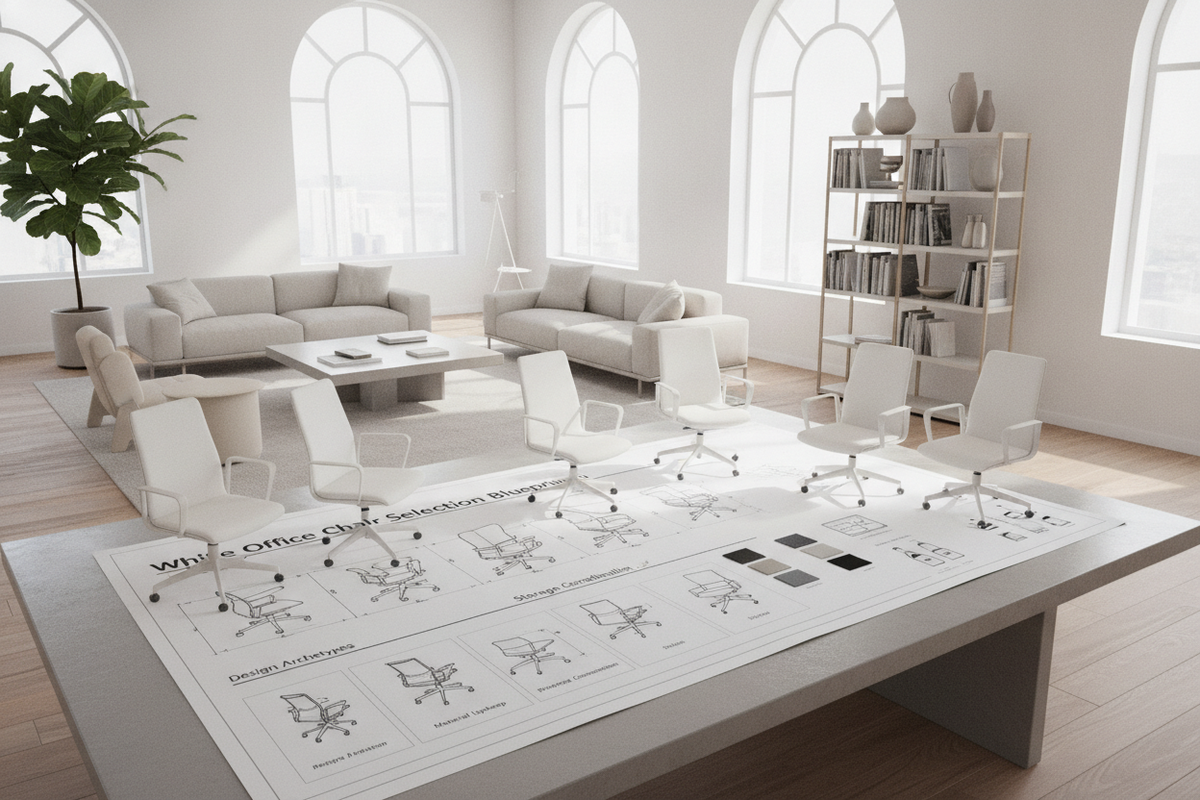
Different tasks and room dimensions call for distinct seating profiles. Understanding the core silhouettes of an office and desk chair ensures you choose the right balance of physical support and room scale:
- Low office chairs and compact task models: Characterized by low-profile backrests and armless or minimalist frame profiles, these designs work well in secondary workstations, compact study alcoves, and guest writing desks where visual bulk must be minimized.
- Mid-back office secretary chair designs: Featuring structured lumbar curves and a tailored footprint, an office secretary chair suits shared living rooms or executive nooks where furniture must blend seamlessly with decorative cabinetry.
- Dedicated home work chair and ergonomic profiles: Engineered for sustained multi-hour sessions, a full-featured home work chair incorporates adjustable armrests, synchronized tilt mechanisms, and multi-position pneumatic elevation.
- Chair for study desk environments: Lightweight, smooth-gliding seating engineered for study rooms, craft areas, and multi-user family zones where quick mobility and ease of adjustment take priority.
Before selecting a profile, review practical layout requirements in our work desk office guide to understand how different tasks shape seating demands across your room.
Dimensional Clearances and Under-Desk Parking Geometry
A frequent spatial failure in residential offices is the inability to fully park a desk seat beneath the desk apron. Proper spatial integration requires coordinating three physical dimensions:
First, evaluate knee-well width and apron height. Fixed armrests often collide with lower desk drawers or keyboard trays, preventing the chair from tucking away cleanly. Choosing flip-up or adjustable armrests allows the seat to slide completely beneath the worktop when not in use, preserving valuable walkway space in narrow rooms.
Second, account for the five-star caster base diameter. When configuring a workstation around a spacious office desk product, verify that the corner leg structure and lower privacy panels leave adequate clearance for smooth caster rotation without scratching vertical desk supports.
Third, verify vertical travel margins. The seat lift range should allow your feet to rest firmly on the floor while maintaining a level forearm angle relative to the desktop surface, avoiding awkward reaching angles.
Material Performance, Frame Mechanics, and Upkeep
The longevity and comfort of a desk chair office configuration depend heavily on frame construction and upholstery choice:
- Elastomeric Mesh: Offers continuous airflow and flexible tension distribution, making it suitable for warmer environments or high-activity work sessions.
- High-Density Foam with Fabric or PU Upholstery: Provides firm, contouring support and rich aesthetic texture that complements home decors, though it requires occasional surface wiping and dedicated fabric care.
- Base Frameworks: Molded reinforced nylon frames offer lightweight agility, while steel and chrome alloy bases deliver grounding stability and high impact resistance.
For consistent performance, inspect mechanical connections periodically. Clear debris and lint from caster wheel axels, check the gas lift cylinder for smooth vertical travel, and gently tighten seat plate bolts to maintain structural rigidity. To balance functional seating with refined room styling, explore our desk office work guide for practical decor and surface organization concepts.
Integrating Desk Seating with Workstation Storage Cabinets
Maintaining clear functional zones requires careful coordination between seating pushback clearance and cabinet accessibility. When operating an office chair & desk arrangement alongside credenzas, bookshelves, or file cabinets, ensure sufficient floor space behind the primary seating zone.
Users require ample pushback space to stand comfortably without impacting adjacent credenzas or lower filing drawers. In compact footprints, opting for integrated workstations—such as an all-in-one storage cabinet and office desk product—consolidates utility into a single footprint, maintaining open floor area for smooth chair rotation.
Keep high-frequency tools, stationery, and computing accessories within arm's reach while seated. Lower drawers and lateral cupboards should open without requiring you to completely vacate your desk seat, streamlining daily workflows.
Workstation Selection Checklist and Assembly Best Practices
Before finalizing your setup, run through this concise planning checklist:
- Measure Available Footprint: Verify total room depth, factoring in chair sweep radius and clearance for opening cabinet doors.
- Confirm Armrest and Apron Alignment: Ensure armrest heights clear the lowest edge of the desktop surface for seamless tuck-in parking.
- Select Archetype Based on Daily Use: Match compact low office chairs to secondary study nooks, and choose adjustable task chairs for full-time workstations.
- Execute Methodical Assembly: Insert the gas cylinder straight into the center base socket, align the seat mounting plate squarely with the underside pre-drilled holes, and hand-tighten all fasteners evenly before applying full torque.
By prioritizing dimensional clearance, material durability, and storage integration, your workspace seating will deliver lasting utility and clean visual balance across your home.

Leave a comment
This site is protected by hCaptcha and the hCaptcha Privacy Policy and Terms of Service apply.