










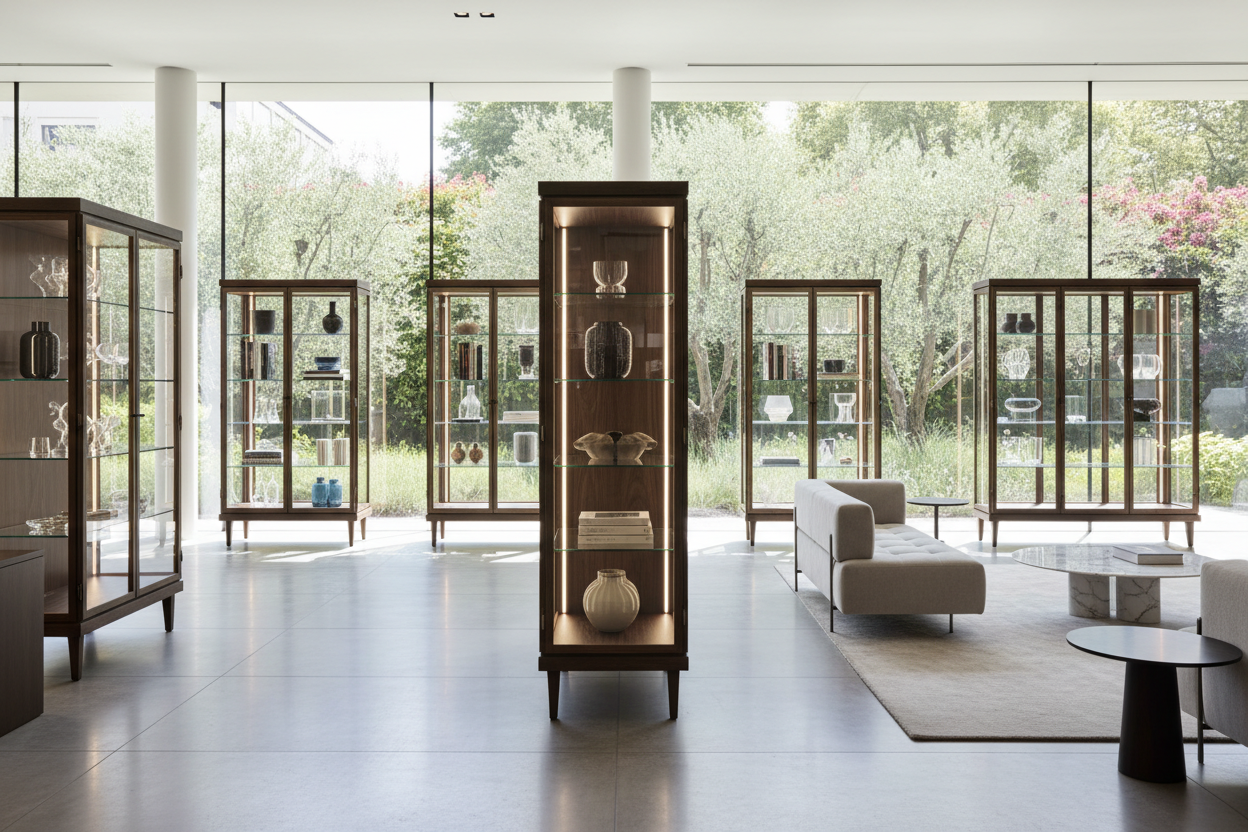
We have all been there: you have a beautiful collection of ceramics, vintage books, or family heirlooms, but they are scattered across random side tables or shoved into dark bookcases. The room feels cluttered rather than curated. When a display cabinets sale pops up, it presents the perfect opportunity to finally give your favorite pieces the architectural framing they deserve. However, buying large case goods on discount requires a strategic eye, or you risk bringing home a bulky mistake.
After fifteen years of sourcing furniture for North American homes, I have learned that a discounted price tag should never override scale, proportion, and build quality. Whether you are dealing with a sprawling suburban family room or a compact urban apartment, here is exactly what you need to know before you hit 'add to cart'.
Quick Decision Guide
- Measure your clearance: Always leave at least 36 inches of walkway space in front of glass doors so they can open fully without hitting other furniture.
- Check the shelf weight limit: Glass shelves should be tempered and rated for at least 25 pounds if you plan to display heavy books or pottery.
- Assess the lighting: Built-in LED lighting highlights your items and adds ambient warmth to the room; if it is missing, ensure there is an easy way to run your own puck lights.
- Consider the backdrop: A mirrored or painted back panel adds visual depth, while a glass back allows wallpaper or wall color to peek through.
Navigating Sizing and Proportion
Finding the Right Silhouette
Scale is your biggest priority when shopping a cabinet display sale. If you have an open-concept floor plan with vaulted ceilings, a large display cabinet is necessary to anchor the room. Anything too petite will look like dollhouse furniture against a massive wall. Conversely, if you are working with a wide but standard-height wall, a long display cabinet often balances the visual weight much better than a tall, narrow tower, doubling nicely as a credenza.
The Importance of Interior Dimensions
Do not just measure the outside. Pay close attention to the interior usable space. A deep display cabinet is essential if you plan to showcase bulky items like vintage serving bowls, large art books, or sculptural vases. Standard cabinets are often only 12 to 14 inches deep, which severely limits your styling options. Look for depths of 16 to 18 inches for maximum versatility.
Styling and Placement Strategies
Creating a Focal Point
A beautifully styled case piece does heavy lifting in your interior architecture. When sourcing a showcase cabinet for living room environments, consider its placement relative to your seating arrangement. It shouldn't compete with your fireplace or television; rather, it should sit on a perpendicular wall to balance the room's visual weight. To avoid a cluttered look, practice the 'rule of thirds'—leave about one-third of every shelf empty to create negative space, allowing your eye to rest.
Quality vs. Price: Spotting the Real Deals
Materials That Last
Finding display cabinets on sale feels like a major win, but you have to know what you are actually paying for. It is incredibly tempting to grab a cheap display cabinet just to fill an empty corner, but these often rely on flimsy particleboard frames and thin, non-tempered glass that rattles every time you walk by. Look for solid wood frames, high-quality wood veneers over MDF (which resists warping in humid climates), and sturdy metal hardware. A well-built piece will have adjustable shelving with heavy-duty metal pins, not cheap plastic pegs.
Lessons from My Own Projects
Early in my career, I sourced a stunning, matte black oak display cabinet for a client's dining room. It looked incredibly moody and sophisticated in the showroom. What I learned the hard way, however, is that dark wood interiors swallow light completely. Without built-in lighting, the client's beautiful white ironstone collection completely disappeared into the shadows. We had to retro-fit the piece with hardwired LEDs, which cost more than the cabinet itself.
Another honest caveat: glass doors require maintenance. If you have toddlers or large dogs, a cabinet with glass panes that go all the way to the floor will be covered in smudges daily. I always recommend finding a piece with solid wood doors on the bottom third to hide everyday clutter and keep the glass out of reach of sticky hands.
Frequently Asked Questions
How do I style the shelves without it looking messy?
Group items in odd numbers (threes or fives) and vary the heights. Use stacks of horizontal books to act as pedestals for smaller objects, and lean taller artwork against the back panel to add depth.
What size cabinet do I need for my room?
As a general rule, your cabinet should not occupy more than two-thirds of the wall it sits on. Make sure to leave at least 6 to 8 inches of breathing room between the top of the cabinet and the ceiling to prevent the room from feeling cramped.
Can I mix wood tones with my existing furniture?
Absolutely. In fact, matching all your wood tones can make a room look flat and dated. If your dining table is a cool-toned walnut, try a cabinet in a warm white oak or a painted finish like deep charcoal to add contrast and texture.

Leave a comment
This site is protected by hCaptcha and the hCaptcha Privacy Policy and Terms of Service apply.