










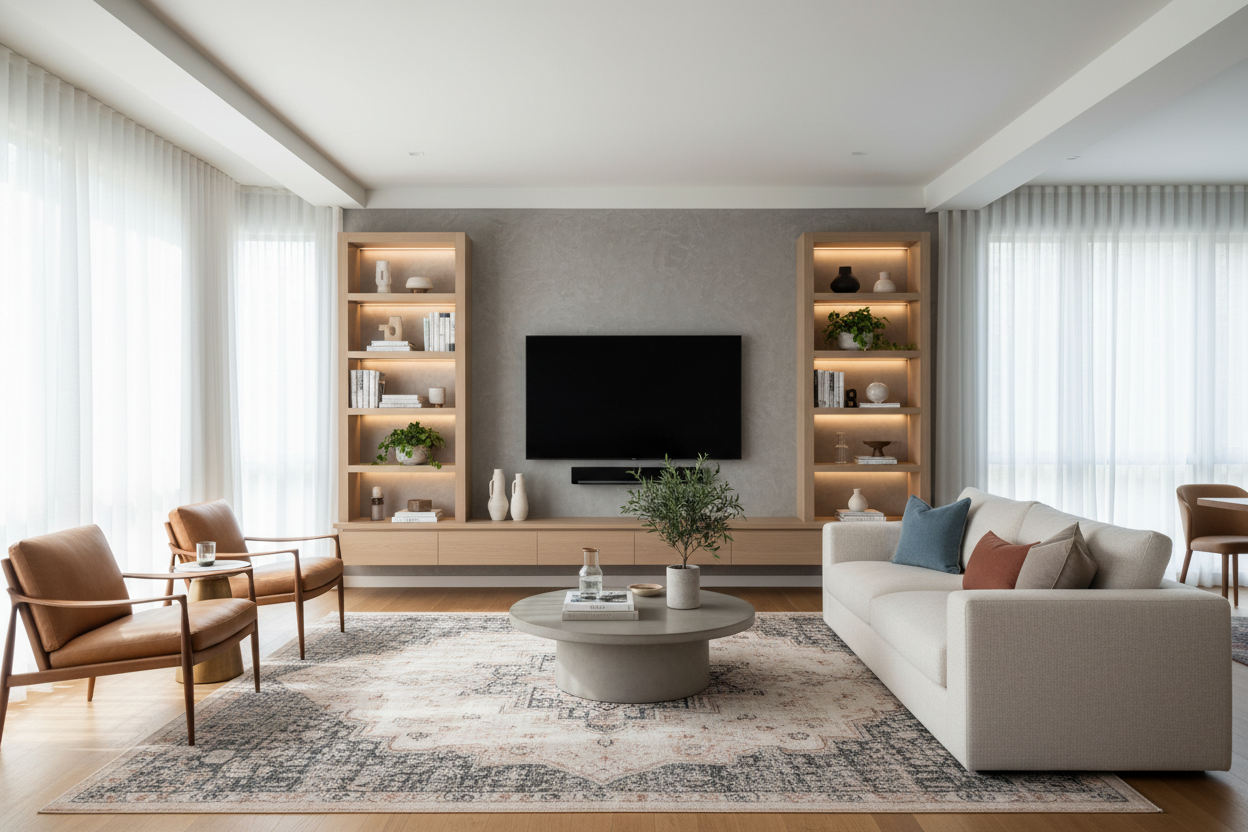
I spent three years living in a 600-square-foot apartment surrounded by 'small space' furniture. I had a tiny bistro table, a loveseat that barely fit two humans, and a spindly TV stand that looked like it belonged in a college dorm. My living room felt like a cluttered waiting room. It wasn't until I risked my security deposit on a massive wall unit entertainment center that the room finally started to breathe.
It felt like a mistake when the boxes arrived. They took up my entire hallway. But once it was up, the room didn't feel smaller—it felt finished. It turned a chaotic wall of wires and random bins into a cohesive architectural element. If you're staring at a wall of 'stuff' and wondering why your room feels cramped, the answer might be that your furniture is actually too small.
Quick Takeaways
- Large units create a single focal point, reducing the 'visual noise' caused by multiple small pieces.
- Vertical storage draws the eye upward, making standard 8-foot ceilings feel much taller.
- Depth is everything: stick to 12-16 inches to keep the floor plan open.
- Closed storage is your best friend for hiding the tangle of HDMI cables and routers.
The Small Furniture for Small Spaces Lie
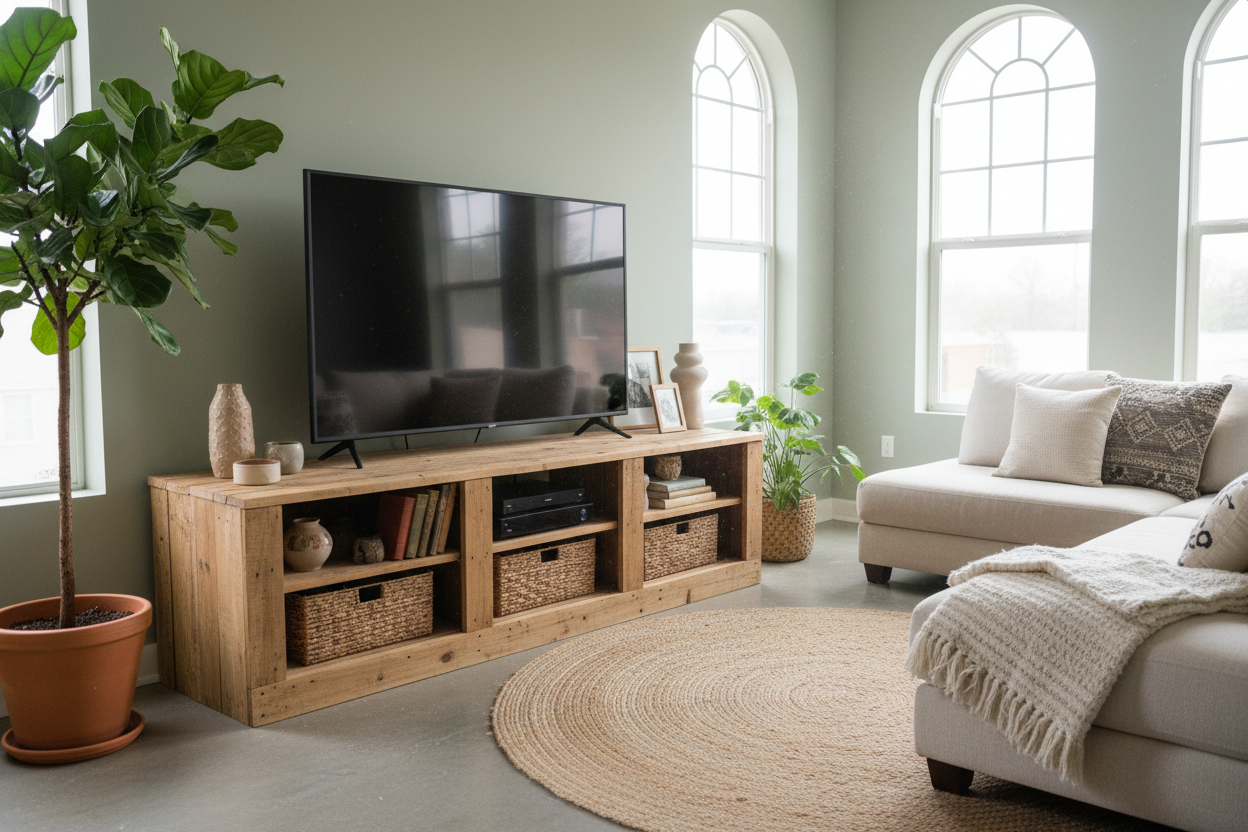
We've been told for decades that if your room is small, your furniture should be small. That is a flat-out lie. When you fill a room with five or six tiny pieces—a bookshelf here, a console there, a basket for blankets in the corner—you create visual static. Your eyes never rest because they’re jumping from one small object to the next.
A full wall entertainment center does the opposite. It provides a single, massive focal point. By committing to one large piece of cabinetry, you actually eliminate the need for all those smaller, disjointed units that eat up your floor plan. It sounds counterintuitive, but one big thing is much less 'loud' than ten small things. I found that once I moved my books and tech into one unit, I could finally get rid of those two wobbly IKEA shelves that were doing nothing for my decor.
Why Going Big Actually Tricks the Eye
There is a specific kind of magic that happens when you take furniture all the way to the ceiling. It’s a designer trick: vertical lines suggest height. When you install a large entertainment center wall unit, you aren't just adding storage; you're essentially adding a new wall. This makes the boundaries of the room feel more intentional and solid.
If you're currently using a flimsy, low-slung stand, upgrading to a proper entertainment center collection can make the room feel twice as wide. The sheer scale of a wall-to-wall unit tricks your brain into thinking the room was built to handle that size. It stops the 'floating furniture' look where everything feels like it might drift away if you open a window.
Consolidating the Clutter Zones
My old setup was a nightmare of 'clutter zones.' I had a media center wall for the TV, then a separate bookcase wall unit for my novels, and a basket for the Xbox controllers. It was a mess. By switching to an entertainment bookcase wall unit, everything found a home. You’d be surprised how much floor space you gain when you stop spreading your belongings horizontally and start stacking them vertically.
Will It Swallow My Room Whole? (The Depth Rule)
This is where most people mess up. They buy a unit that is 24 inches deep because they think they need the 'heft.' Don't do that. A 24-inch deep unit in a standard living room feels like a barricade. It’s a wall that’s closing in on you. For a wall to wall entertainment center to work, you want to keep the depth between 12 and 16 inches.
Most modern tech is thin. You don't need a massive footprint for a flat-screen. When you choose a modern entertainment center wall unit, look for those slim profiles. A 14-inch deep unit provides plenty of room for books and decor but leaves enough floor space for you to actually walk past it without shimmying. I once tested a 20-inch unit in my narrow living room and I felt like I was living in a hallway. I swapped it for a 13-inch version and the difference was night and day.
Open vs. Closed Doors: Striking the Right Balance
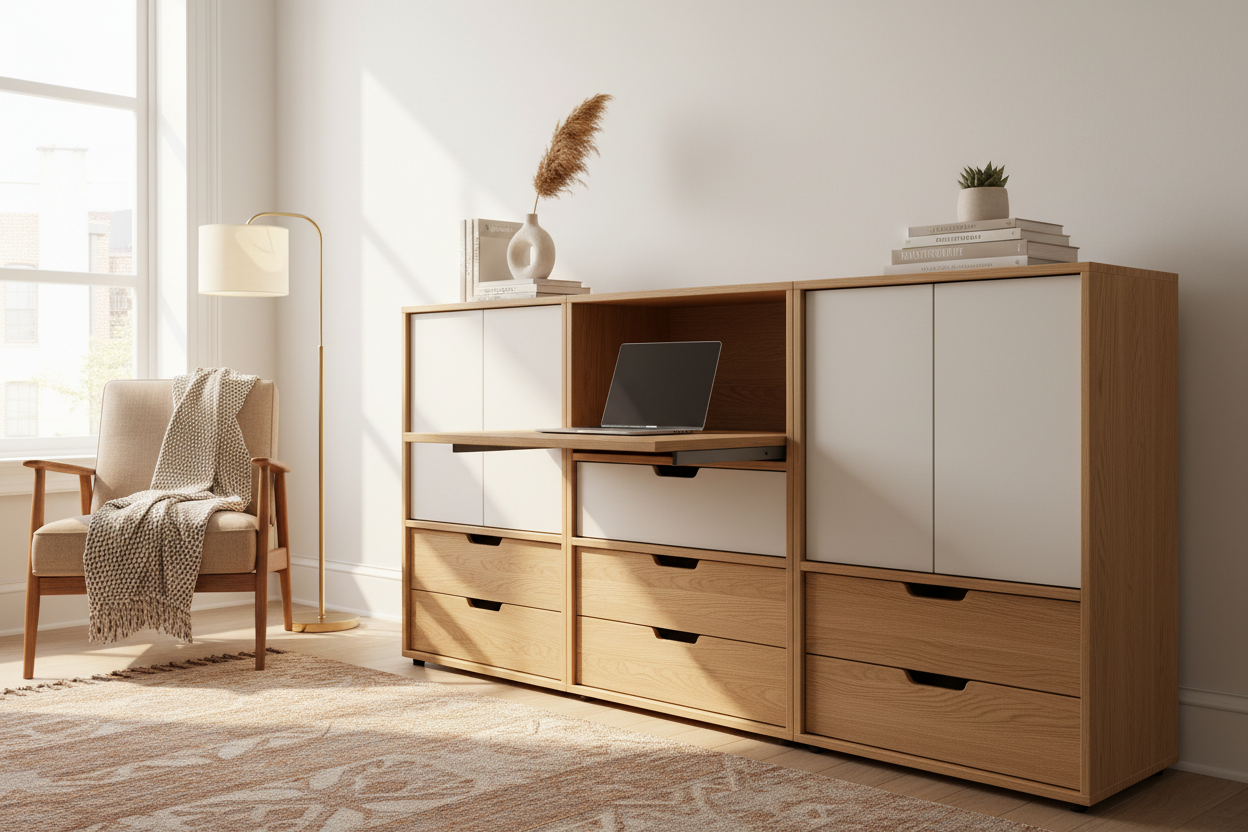
A solid wall of cabinets can feel heavy and oppressive, like a giant wardrobe. On the flip side, a unit that is 100% open shelving looks like a cluttered garage sale within a week. The secret to a great media entertainment center wall unit is the 70/30 rule: 70% closed storage, 30% open display.
You want doors at the bottom to hide the 'ugly' stuff—the power strips, the messy stacks of board games, and the router. Use the open shelving at eye level for your curated items. If you're worried about a floor-to-ceiling unit feeling too bulky, you can always opt for a wall mounted media console as the base. Pairing a floating base with separate upper shelving gives you that 'full wall' look while keeping the floor visible, which is a classic trick to make a room feel airy.
The Verdict After Living With a Giant Media Wall
After a year with my massive wall unit, I’m never going back to small consoles. The room feels grounded. It feels like a 'grown-up' space. My biggest mistake was waiting so long to do it because I was afraid of the size. Yes, assembly took me six hours and a lot of swearing, but the result was worth every minute.
My living room finally has a spine. It’s cozy, it’s organized, and ironically, I have more floor space now than I did when I had 'small' furniture. If you’re on the fence, go big. Just measure your depth twice and make sure you have a friend to help you anchor it to the wall.
FAQ
Will a wall unit make my low ceilings look lower?
Actually, no. If you choose a unit that goes nearly to the ceiling, it creates a vertical line that draws the eye upward, making the ceiling feel higher than it is. Just avoid units that stop 2 feet below the ceiling, as that 'dead space' can make the room feel squat.
How do I handle all the cords in a full wall unit?
Look for units with built-in cable management ports. If the unit doesn't have them, don't be afraid to use a 2-inch hole saw bit to create your own behind the TV area. Use adhesive cable clips on the back of the shelves to keep everything tidy.
Can I put a wall unit in a rental?
Yes, but you must anchor it for safety. Most leases allow for small screw holes for furniture anchors. When you move, a little bit of spackle and paint makes those holes disappear. It’s much safer than having a free-standing tall unit that could tip.

Leave a comment
This site is protected by hCaptcha and the hCaptcha Privacy Policy and Terms of Service apply.