










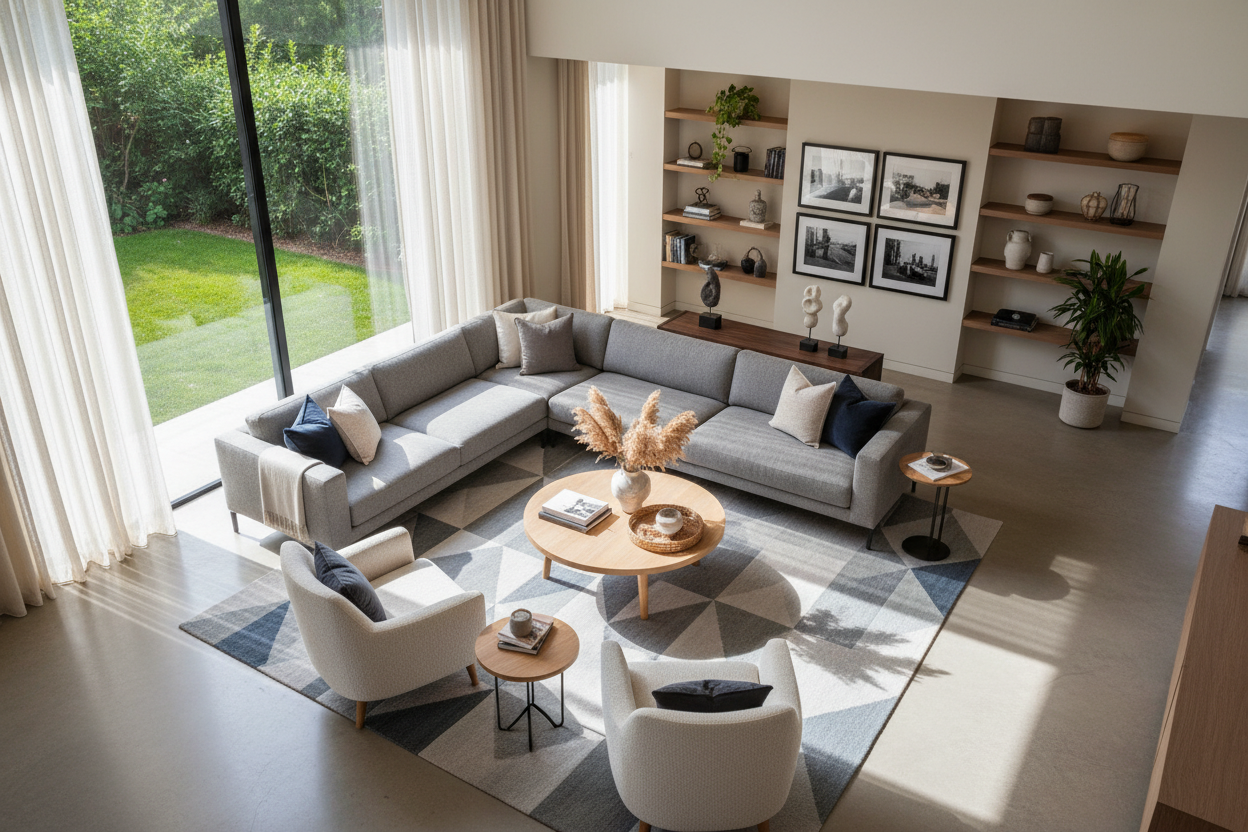
There is a fine line between a cozy, inviting gathering space and a room that feels completely swallowed by furniture. In my years designing residential interiors, sectional living rooms are the most frequent request I receive, yet they are also the source of the most common purchasing regrets. Clients often fall in love with a sprawling silhouette in a showroom, only to realize it disrupts the traffic flow or dominates the visual balance once it arrives home. This guide will walk you through the technical and aesthetic considerations to ensure your investment anchors the room without overwhelming it.
Key Features to Look For
- Frame Construction: Look for kiln-dried hardwood frames rather than soft pine or particleboard to prevent warping over time.
- Configuration & Orientation: Determine if you need 'Left-Arm Facing' (LAF) or 'Right-Arm Facing' (RAF) based on your focal point (TV or fireplace).
- Cushion Fill: High-density foam wrapped in down offers structure; 100% down requires daily fluffing and maintenance.
- Seat Depth: Standard depth is 21-24 inches; deep-seated lounging styles (25+ inches) require more floor clearance.
- Upholstery Durability: Check the 'double rub' count; family rooms need fabrics rated for 25,000+ rubs.
Mastering the Layout and Flow
The success of sectionals living room furniture arrangements relies entirely on negative space. A common error is pushing the furniture flush against the walls. In a large room, this creates a 'dead zone' in the center. Instead, float the piece. Pulling the sofa 12 to 18 inches away from the wall creates a shadow line that makes the room feel airier.
Pay close attention to the 'pinch points.' You need a minimum of 30 inches of walking path around the back of the sofa if it creates a corridor. Furthermore, if you are eyeing a sectional couch living room setup with a chaise, ensure the chaise doesn't block the primary entry into the seating zone. The flow should invite you in, not force you to shimmy around an ottoman.
Choosing the Right Silhouette and Material
Visual Weight and Balance
A sectional sofa for living room usage is a massive visual entity. To prevent it from looking like a heavy block, consider the legs. If your room is small, choose a sofa with exposed, tapered legs. Being able to see the floor underneath the sofa tricks the eye into perceiving more square footage. Conversely, a skirted or base-to-floor style works best in grander rooms with high ceilings where you want to ground the space.
Fabric Selection for Real Life
When browsing living room sectionals for sale, look beyond the color. I always advise clients to check the weave. A tight, flat weave (like a performance velvet or canvas) resists snagging from pet claws better than a loose boucle or linen weave. If this is a high-traffic area, look for solution-dyed acrylic fabrics; the color goes all the way through the fiber, making it virtually stain-proof against red wine or muddy paws.
Integrating Other Furniture
Pairing tables with a living sectional sofa requires specific geometry. A standard rectangular coffee table often fails here because it becomes difficult to reach from the corner seat. A round or oval coffee table is superior; the curves contrast the hard angles of the sofa and allow for easier navigation around the knees. Alternatively, a sectional sofas set often pairs well with nesting tables, which offer flexibility when entertaining crowds.
Lessons from My Own Projects
I learned a hard lesson early in my career regarding modular sectionals. I specified a beautiful, low-profile modular piece for a client with polished concrete floors. It looked stunning. However, two weeks later, the client called to say the pieces were drifting apart every time someone sat down, creating dangerous gaps.
I hadn't accounted for the lack of friction. While most high-end sectionals come with 'alligator clips' underneath to lock pieces together, this particular European model relied on weight alone. We ended up having to install heavy-duty rubber non-slip pads and aftermarket metal brackets to keep the configuration tight. Now, I personally flip every floor model I inspect to check the connector hardware quality before recommending it. If the brackets are plastic, I walk away. It’s a small, unpolished detail that determines whether your living room stays tidy or becomes a constant puzzle to fix.
Conclusion
Designing a space around a sectional requires a balance of rigorous measuring and aesthetic intuition. By prioritizing frame quality, respecting traffic flow, and selecting the right silhouette for your square footage, you can create a sanctuary that is both functional and sophisticated. Don't just fill a room; curate it.
Frequently Asked Questions
Can I put a sectional in a small living room?
Absolutely. For smaller spaces, look for a 'bumper chaise' style, which has a backrest on a portion of the chaise but no arm. This reduces the visual bulk. Also, ensure the scale is appropriate—look for a sectional for family room areas with a depth of under 38 inches to save floor space.
How do I keep the cushions from looking messy?
If you prefer a tailored look, avoid loose back cushions and opt for a tight-back or semi-attached back style. If you love the look of loose cushions, rotate them weekly to ensure even wear and prevent the 'favorite spot' indentation.
What is the difference between Left-Facing and Right-Facing?
This is the most common ordering mistake. Stand in front of the spot where the sofa will go, facing the sofa (as if you are looking at it). If the arm is on your left, it is Left-Arm Facing (LAF). If it is on your right, it is Right-Arm Facing (RAF).


Leave a comment
This site is protected by hCaptcha and the hCaptcha Privacy Policy and Terms of Service apply.