










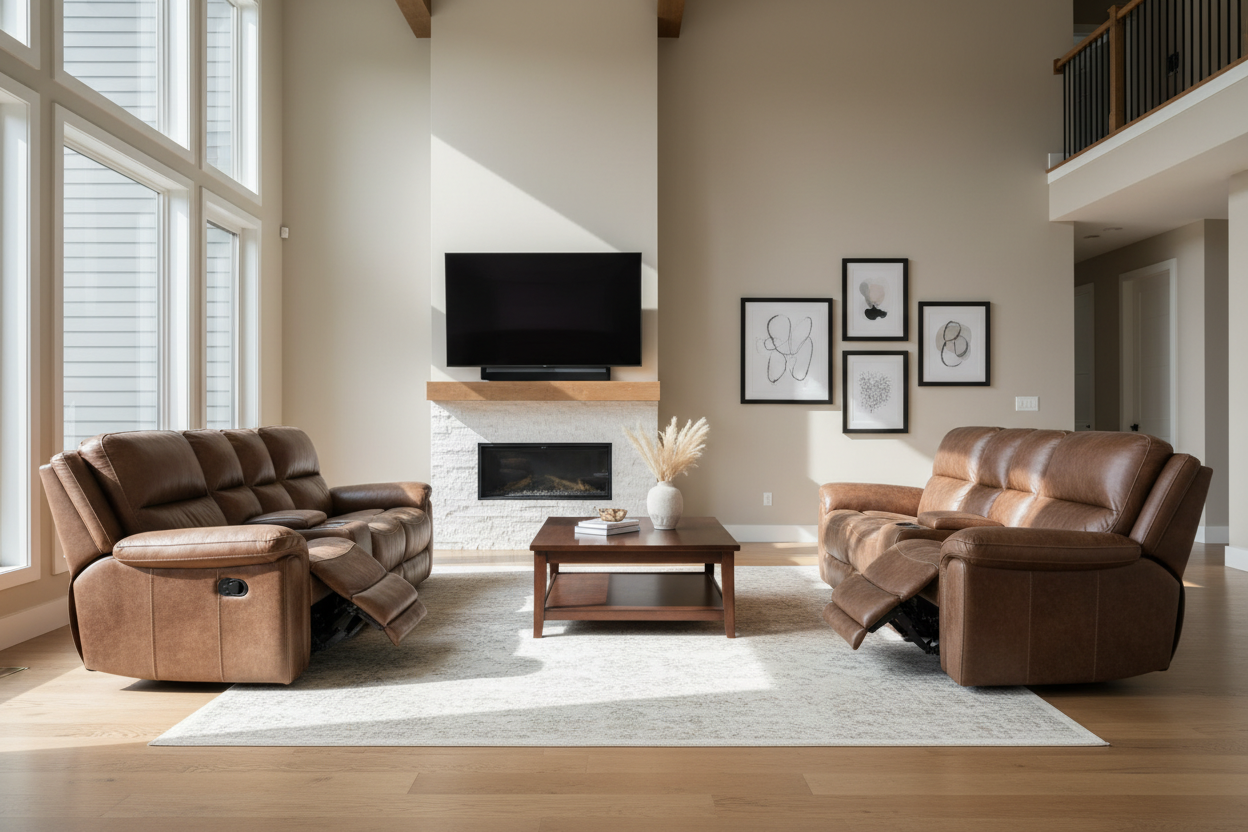
The battle between high-design aesthetics and Sunday afternoon comfort is a tale as old as interior design itself. Clients often approach me wanting the sleek silhouette of a track-arm sofa but the deep relaxation of a recliner. For years, this was a binary choice. However, the modern manual reclining sectional has bridged that gap, offering a sophisticated compromise that doesn't require sacrificing your living room's visual integrity for the sake of putting your feet up.
Quick Decision Guide: Key Features to Look For
Before committing to a purchase, review these critical factors to ensure the piece meets both your functional needs and design standards:
- Mechanism Smoothness: The reclining action should be fluid, not jerky, and the release latch must be accessible without straining.
- Upholstery Grade: For a leather manual reclining sectional, insist on top-grain leather rather than bonded varieties which tend to peel over time.
- Wall Clearance: Unlike power models, many manual reclining sectionals require 3-6 inches of clearance behind the frame to fully extend.
- Seat Density: Look for high-resiliency foam (2.0 density or higher) to prevent the "sinking" effect common in motion furniture.
Choosing the Right Material: Leather vs. Fabric
When selecting a manual reclining leather sectional, the tactile experience is paramount. In high-traffic family rooms, a protected aniline leather offers a buttery hand-feel while resisting spills. It ages beautifully, developing a patina that adds character to the room. However, be wary of lower-tier "leather match" options on a leather sectional manual recliner; the vinyl sides often fade at a different rate than the genuine leather seating areas.
If you prefer warmth over sleekness, performance fabrics like Crypton or heavy-weight chenille can soften the look of manual reclining sectionals. These textures absorb sound and create a cozier ambient atmosphere compared to the cooler touch of leather.
Space Planning and Configuration
The footprint of a manual reclining sectional sofa is often deceptive. While the static dimensions fit your floor plan, you must account for the fully extended footrest. In my design practice, I always map out the "traffic flow" with the recliners open. You don't want to trap a guest in the corner because the footrest blocks the pathway to the kitchen.
The Chaise Dilemma
A popular configuration is the manual reclining sectional with chaise. This offers a fixed lounging point alongside the motion seats. Visually, this breaks up the uniformity of the sofa. However, ensure the chaise is placed on the side of the room with the least traffic, as it creates a permanent visual barrier.
The Mechanics: Why Choose Manual?
In an era of smart homes, why choose a sectional with manual recliners over a power option? The answer lies in reliability and freedom. A manual sectional can float in the center of a room without unsightly cords snaking across your rug to the nearest outlet. Furthermore, the mechanical simplicity means there are fewer motors to burn out. A sectional manual recliner relies on gravity and tension springs—time-tested engineering that rarely fails.
Styling Your Sectional
To keep a sectional sofa with manual recliner from looking heavy or dated, balance is key. Since these pieces have substantial visual weight, pair them with a coffee table that has "legs" rather than a solid block base. This allows light to pass through, making the room feel airier. Incorporate textured throw pillows to hide the seam lines that separate the reclining modules, unifying the look of the piece.
My Personal Take on Manual Reclining Sectionals
I want to share a specific detail from a project I completed in a downtown loft last year. We installed a stunning cognac leather manual sectional. It looked incredible, but there was an initial "break-in" period that no brochure mentions.
For the first three weeks, the tension springs on the recliners were stiff. My client actually called me thinking the latch was broken because she had to use significant core strength to push the footrest back down into the locked position. This is normal. Unlike power recliners that do the work for you, a manual mechanism relies on your leg strength to close it. It loosens up after about a month of use, but it’s a tactile nuance you should be prepared for. Also, be mindful of the "clunk" sound when the latch releases; it's mechanical and audible, unlike the silent hum of a motor.
Conclusion
Investing in a manual reclining sectional is about finding the equilibrium between durability, style, and comfort. It offers a cord-free, reliable solution for relaxation without dominating your design scheme. By focusing on high-quality leather or performance fabrics and planning your layout carefully, you can curate a living space that invites you to relax without compromising on elegance.
Frequently Asked Questions
How much space do I need behind a manual reclining sectional?
Generally, you need between 4 to 12 inches of wall clearance depending on the specific "wall-hugger" mechanism. Always check the manufacturer's spec sheet for the specific "fully reclined depth."
Are manual recliners harder to operate than power ones?
They require physical effort. You pull a latch or handle to open, and use leg strength to push the footrest closed until it clicks. They are not recommended for individuals with severe back issues or limited leg strength.
Can I customize the configuration of a manual sectional?
Yes, most high-end retailers allow you to choose modular pieces. You can mix a manual reclining sectional with chaise, add a corner wedge, or insert a console with cup holders to fit your specific room dimensions.


Leave a comment
This site is protected by hCaptcha and the hCaptcha Privacy Policy and Terms of Service apply.