










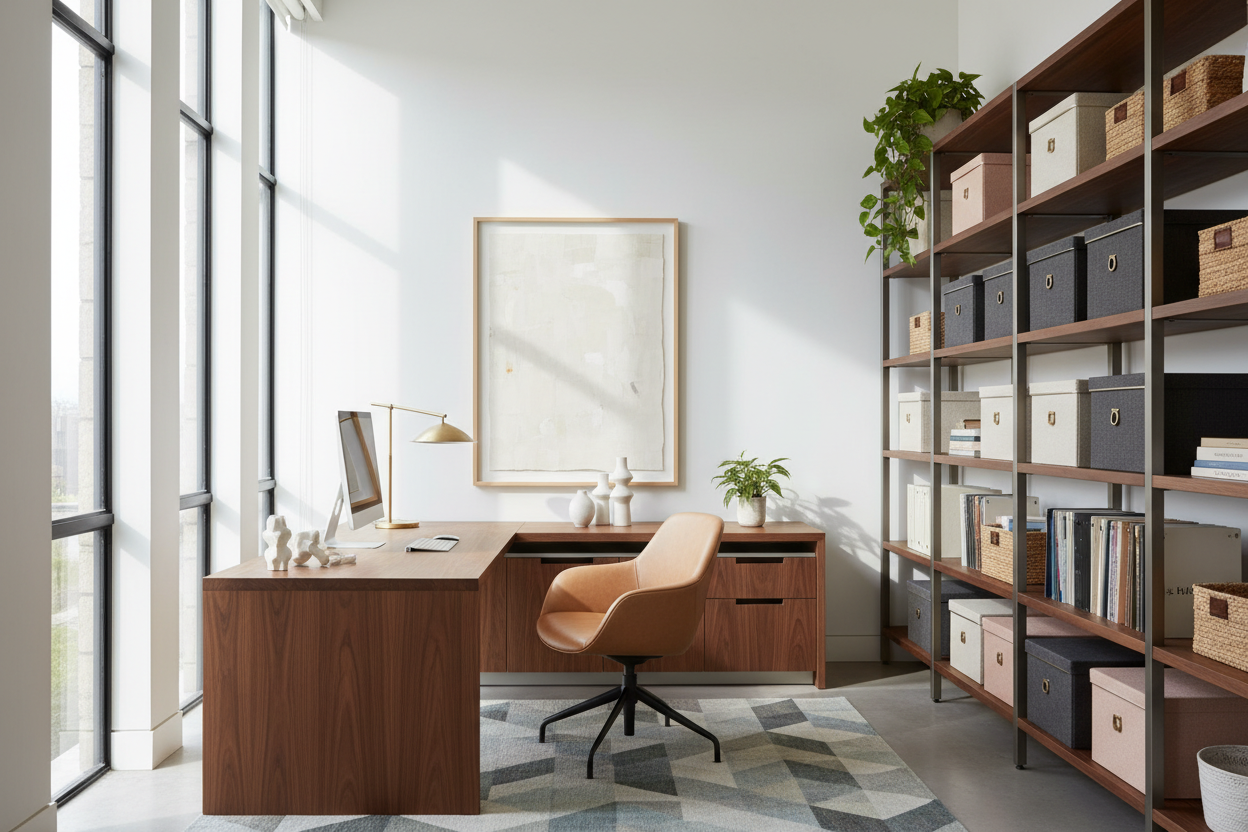
There is nothing that disrupts the visual flow of a curated study quite like a stack of unorganized paperwork or, worse, a utilitarian beige metal cabinet. As designers, we often treat storage as architecture rather than mere containment. Finding sophisticated ideas for file storage requires balancing accessibility with aesthetic integrity. We are moving away from the industrial look of the corporate cubicle and embracing joinery, texture, and clever concealment to keep your sanctuary looking pristine.
Key Features to Look For in File Furniture
- Hardware Quality: Look for full-extension ball-bearing glides. Paper is incredibly dense; cheap runners will buckle under the weight of a fully loaded drawer.
- Visual Weight: In smaller rooms, opt for pieces with legs rather than solid bases to maintain a sense of openness.
- Material Continuity: Ensure the wood veneer or lacquer finish complements your existing desk to create a cohesive suite rather than a piecemeal look.
- Adaptability: Check if the filing rails can be adjusted for both letter and legal-sized documents to future-proof your storage.
Elevating the Material Palette
The first step in upgrading your file storage ideas for home setups is to abandon sheet metal. In high-end residential design, we prioritize materials that offer tactile warmth. Solid wood or high-quality veneers like walnut or white oak bring an organic element that softens the rigidity of office work.
The Power of Texture
Don't overlook texture. A filing cabinet wrapped in shagreen, leather, or linen introduces a layer of luxury. These materials absorb light rather than reflecting it, helping the piece recede into the room's design rather than standing out as a piece of machinery.
The Art of Camouflage
For those whose workspace is part of a living area, home filing storage ideas must focus on concealment. The goal is double-duty furniture that hides its administrative function until needed.
The Credenza Strategy
A lateral file credenza is often the superior choice over a vertical pedestal. It offers a broader surface area for styling—think a sculptural lamp or a stack of art books—while the drawers below hold your archives. When closed, it reads as a sideboard, not a file cabinet. This is essential for maintaining a residential atmosphere in a multi-purpose room.
Verticality and Built-ins
If floor space is at a premium, look upward. Custom built-ins or high-quality modular shelving systems can incorporate file drawers at the bottom with open display shelving above. This draws the eye upward to your decor and away from the utility of the storage below.
Lessons from My Own Projects
I learned a hard lesson about file storage early in my career during a renovation for a lawyer who worked from home. We selected a stunning, vintage mid-century modern chest to repurpose for his legal files. It looked incredible in the showroom.
However, I failed to account for the sheer density of paper. A single drawer of tightly packed files can weigh upwards of 50 pounds. Two months in, the vintage joinery on the drawer bottom gave out, and the piece essentially collapsed inward. Since then, I always physically test the drawer bottoms and the rail mechanisms myself. If I can't lean my body weight on the open drawer without it bowing, I won't specify it for a client who has heavy archiving needs. It’s a tactile check you can't get from an online spec sheet.
Conclusion
Organizing your documents doesn't mean sacrificing your home's aesthetic. By selecting pieces that prioritize high-quality materials, sturdy hardware, and clever integration, you turn a necessity into a design asset. Treat your storage with the same consideration as your upholstery, and your workspace will thank you.
Frequently Asked Questions
How do I maintain wood file cabinets?
Treat them like fine furniture. Dust regularly with a microfiber cloth and avoid harsh chemical cleaners. If the piece is in direct sunlight, rotate your decor items on top occasionally to prevent uneven fading of the wood finish.
What is the best solution for small apartments?
Mobile pedestals with upholstered tops are excellent. They can roll under a desk when not in use or serve as extra seating for a guest, maximizing functionality in a tight footprint.
Should I choose lateral or vertical filing?
Lateral filing (wide drawers) is generally more space-efficient and easier to organize visually, as you can see more tabs at a glance. Vertical filing is deeper and better suited for narrow nooks where width is restricted.

Leave a comment
This site is protected by hCaptcha and the hCaptcha Privacy Policy and Terms of Service apply.